Amex casino sites in Australia: payment guide
 Available in AU
Payment acceptance is separate from an operator’s legal status, and deposit or withdrawal rules can vary by casino.

- The Legal Context Behind Amex Payments
- Where American Express Is Accepted—and Where It Is Not
- What Happens When an Amex Deposit Is Submitted
- When an Amex Payment Is Declined
- How Amex Fits Alongside Other Australian Payment Choices
- The Difference Between Paying by Amex and Playing Online
- Amex Withdrawals: Eligibility and Restrictions
- Withdrawal Timing, Fees and Currency Conversion
The Legal Context Behind Amex Payments
An Amex payment and the service it is sent to sit on different sides of the legal question. A card transaction can be discussed as a payment mechanism, but that does not make the online casino receiving it lawful for people in Australia. The starting point is the Interactive Gambling Act 2001, which prohibits operators from providing real-money online casino games to people located in Australia.
That prohibition covers casino-style services such as poker, blackjack, roulette and pokies. It is directed at the operator offering the service, rather than creating an explicit offence for an Australian player who uses an offshore site. Those are distinct points, and collapsing them can make the legal position sound either harsher or safer than it is.
The Australian Communications and Media Authority, or ACMA, oversees enforcement of the Act. Its role is not to approve offshore casinos for Australian customers. The market position is restrictive: online casino services are prohibited, and offshore services are subject to blocking and enforcement. A foreign licence does not create an Australian authorisation or displace the domestic rules.
For Australian players considering Amex, confirm payment support directly: the details available here do not establish which sites accept it. These notes summarise the verified licensing, minimum deposit and payout details provided for each operator.
License: Curacao eGaming OGL/2023/174/0082 (Dama N.V.) · Min. deposit: A$15 LevelUp Casino is licensed under Curacao eGaming OGL/2023/174/0082 through Dama N.V. Its minimum deposit is A$15.
License: Curacao · Payout speed: crypto 30-60 minutes, fiat 1-5 days · Min. deposit: A$10 Wild Tokyo lists a Curacao licence and a minimum deposit of A$10. Its stated payout times are 30–60 minutes for crypto and 1–5 days for fiat.
License: Curacao Gaming Control Board OGL/2023/176/0095 (Hollycorn N.V.) LuckyVibe is licensed by the Curacao Gaming Control Board under OGL/2023/176/0095, with Hollycorn N.V. named as the operator.
License: Curacao Gaming Control Board OGL/2023/176/0095 (Hollycorn N.V.) Rollero Casino is licensed by the Curacao Gaming Control Board under OGL/2023/176/0095, with Hollycorn N.V. named as the operator.
License: Curacao eGaming (Dama N.V.) JeetCity Casino is listed as licensed by Curacao eGaming, with Dama N.V. named as the operator.
License: Curacao eGaming OGL/2024/923/0383 (Antillephone N.V.) · Min. deposit: A$30 WinSpirit Casino is licensed under Curacao eGaming OGL/2024/923/0383 through Antillephone N.V. Its minimum deposit is A$30.
License: Curacao (operating since 2017) · Min. deposit: A$20 Uptown Pokies is listed as a Curacao operator and has been operating since 2017. Its minimum deposit is A$20.
License: Curacao · Min. deposit: A$20 (POLi) Lucky Dreams is listed as a Curacao operator. Its minimum deposit is A$20 when using POLi.
License: Curacao eGaming (Roby Games Ltd) Roby Casino is listed as licensed by Curacao eGaming, with Roby Games Ltd named as the operator.
Payout speed: crypto under 1 hour, PayID 1-3 business days · Min. deposit: A$20 (A$30 to qualify for the bonus) Ricky Casino lists crypto payouts in under an hour and PayID payouts in 1–3 business days. The minimum deposit is A$20, or A$30 to qualify for the bonus.
I have found that payment language can blur this distinction. A page may describe an Australian online casino that accepts Amex, but “Australian” can refer only to the intended audience or the currency offered. It does not establish that the operator is licensed under Australian law, or that the service is lawful to provide here. A familiar card brand does not settle that question. Nor does a successful transaction turn a prohibited service into a permitted one.
The same distinction matters when a site presents itself as accessible from Australia. Practical access is not proof of legal status. Offshore services may be targeted at Australians despite the restrictions, while enforcement measures seek to limit their availability. The existence of a website, or a payment option displayed in its cashier, should not be mistaken for an endorsement by Australian authorities.
There is also an important limit on consumer protection. Australian consumer law does not protect players using offshore casinos. In practical terms, that means the protections a person might expect when dealing with a domestic business cannot simply be assumed to apply to an offshore gambling operator. A dispute about an account, a payment or an unpaid balance may cross jurisdictions, with no Australian consumer-law remedy available merely because the customer is in Australia.


That is not a small qualification buried in the terms. It changes the position of the customer. The operator may be based overseas, subject to another legal system, and outside the ordinary local consumer framework. A logo, an Australian-facing page or an Amex option can make a service look locally familiar, but none of those details supplies the protections absent from the underlying relationship.
I would separate three questions whenever payment claims are encountered: whether an operator is allowed to offer the service in Australia; whether a particular payment channel is technically available; and what legal protections apply if something goes wrong. The first is governed by the national gambling law, the second by commercial and payment arrangements, and the third by the customer’s legal relationship with the operator. They are related, but one answer does not decide the others.
This distinction also prevents a common misreading of the law. The fact that the Act does not explicitly criminalise players using offshore sites is not permission for operators to offer prohibited casino services to Australian residents. It is equally not a guarantee that a player will have recourse under Australian consumer law. The operator’s prohibition and the player’s legal position are separate parts of the framework.
So an Amex reference in an offshore casino’s payment information should be read narrowly: as a claim about a payment method, not as evidence of Australian legality, regulatory approval or consumer protection. The legal context remains the same regardless of whether a site mentions cards, mobile access or another way to pay. The method does not alter the service’s status.
No local endorsement follows.
Legal Warning
Under the Interactive Gambling Act 2001, providing real-money online casino games to people in Australia is prohibited, and Australian consumer law does not protect players using offshore casinos.
Where American Express Is Accepted—and Where It Is Not
Amex acceptance is not a fixed feature across offshore casino websites described as serving Australian customers. Some specialist reviews report that deposits by Amex are available at certain sites, while other specialist reviews report that some sites do not accept the card. Those accounts describe differing payment arrangements; they do not establish a universal rule or guarantee that an option remains available.
That distinction matters because a payment logo or a review entry can look like a firm promise. In practice, a review may reflect information collected at a particular time, while payment arrangements can change. A site’s general claim to accept Amex also does not establish that every card or transaction will work. Acceptance can depend on the particular payment arrangement, and a listed method is not the same as an assurance of access.
The phrase “accepts Amex” can also blur separate questions. It may refer to the card appearing in a payment description, rather than confirming that a deposit can be made successfully in every circumstance. Nor does acceptance by a payment channel establish that the casino service is lawful in Australia. These are different issues, often collapsed into one short line of promotional copy.
The legal boundary is central. Under the Interactive Gambling Act 2001, operators must not provide real-money online casino games to people in Australia. The Australian Communications and Media Authority enforces the law. Australian consumer law does not protect people who use offshore casinos, so an Amex payment option does not supply local consumer safeguards or make an offshore service lawful.

For that reason, references to Australian casino sites that take Amex should be read as descriptions of reported payment availability, not as an endorsement or a recommendation. They do not confirm that a site is authorised to provide casino services in Australia, that access will be available, or that a payment will be accepted. The wording is narrower than it sounds.
The most accurate summary is limited: specialist reviews report Amex deposits at some offshore sites and non-acceptance at others. There is no basis for treating the card as universally available, or for assuming that the same information applies across all sites or remains current. A payment method is only one part of the picture. It cannot resolve the legal position or the lack of Australian consumer protection.
What Happens When an Amex Deposit Is Submitted
A payment flow described as accepting Amex has a simple sequence on screen: Amex is selected in the cashier, card details and an amount in AUD are entered, and the payment request is submitted. That sequence explains the mechanics of a card transaction; it does not establish that an offshore casino is authorised to offer gambling services in Australia. The Interactive Gambling Act 2001 prohibits operators from providing real-money online casino games to people in Australia. This is not a recommendation to make a deposit.
Amex Deposit Process
Select Amex in the casino cashier.
Enter the card details and the desired amount in AUD.
Submit the payment request for processing.
The amount appears in Australian dollars before submission. That matters because the cashier is asking for a deposit value, not setting a permanent account allowance. A figure entered for one transaction should not be confused with either the casino’s deposit ceiling or the card issuer’s own controls. The payment screen handles the request; other rules determine whether it can proceed and how much may be deposited.
In the ordinary mechanics of a card payment, submitting the form sends the transaction request for processing. Amex deposits at casinos are described as being processed instantly: the account balance may be credited as soon as the payment is accepted. “Instant” refers to the deposit process, not a promise that every request will succeed or that every screen will update at the same moment. A payment can be submitted without being approved, and the cashier’s status is the record of what happened to that particular request.

I have seen operators make this distinction easy to miss. A deposit button can make the transaction feel like a single action, but the interface is only one layer. The entered details, the requested AUD amount and the processing result are separate pieces of the transaction. A balance change reflects the outcome reported by the payment flow; it does not explain the operator’s legal position or turn an offshore service into a locally authorised one.
The amount is not the limit
Deposit limits are a separate matter from the amount typed into the cashier. The limit is set by the individual operator, and Amex deposit and withdrawal limits can differ between online casinos. A specialist review may report a limit or describe a particular payment setup, but that is not a universal Amex threshold. Terms can also be revised, so a stated figure should be treated as specific to the service and the time it was checked, rather than as a card-network rule.

This is why a cashier amount and an account limit should not be read as interchangeable. The cashier records the value being requested for that transaction. A limit describes a boundary imposed elsewhere in the operator’s payment arrangements. If the two do not align, the requested payment may not fit the account’s stated conditions. The key point is structural: the card does not set one shared casino deposit ceiling.
The same distinction applies to processing time. A deposit being processed instantly says nothing by itself about the maximum amount allowed, and a limit says nothing about how quickly an accepted payment is credited. Those are independent terms. Casino interfaces sometimes place them close together, which can make them seem like one package. They are not.
What the submission confirms
A successful submission confirms only that the payment request has reached an outcome shown by the cashier. It should not be read as confirmation that the service is lawful in Australia, that every later transaction will be treated identically, or that a displayed deposit amount will be available under every account condition. The process is transactional, not a guarantee.
There is also a broader Australian boundary. Real-money online casino services are prohibited for operators under the Interactive Gambling Act 2001, and the Australian Communications and Media Authority enforces that law. Australian consumer law does not protect players using offshore casinos. A smooth-looking card flow does not change those facts.
Transaction Components
A payment consists of three separate elements: the request entered in the cashier, the processing result shown in the payment status, and the operator’s specific account limits.
From the payment-counter perspective, the useful distinction is between the request, its processing result, and the operator’s own limits. The first is entered in the cashier; the second is reflected in the payment status; the third belongs to the individual service. Treating them as separate avoids mistaking a quick balance update for a wider assurance.
That is the mechanics, not an endorsement.
When an Amex Payment Is Declined
A failed Amex payment does not, by itself, show that the card details were entered incorrectly. The decision can sit with the card issuer, the payment network, or the site’s payment arrangements. Those are separate points in the chain, and the same decline message may not reveal which one stopped the transaction.
Australian banks can apply their own controls to gambling-related card payments. In that case, the restriction is imposed by the issuer, rather than being a general statement about whether Amex works at a particular online casino. A card may be usable for other purchases while a gambling transaction is refused. That distinction matters: changing a cashier selection cannot override a bank-level block.
There is also a separate possibility at the Amex end. A specialist review has reported that Amex may block payments to a particular website. That is a site-specific restriction, not proof that every Amex casino payment is blocked or that the card itself is unusable elsewhere. Acceptance can therefore fail even where a site displays Amex as an available option; the payment attempt still has to pass the relevant checks.

From the counter side, I would treat a decline as a signal to identify the point of failure, not as an invitation to keep submitting the same payment. Repeated attempts do not resolve an issuer restriction or a block tied to the website. The practical distinction is simple: an issuer decision concerns the bank or card account, while a website-related block concerns whether that destination can receive the payment through Amex.
A decline can also be temporary or reflect a site-specific payment condition, but the message shown to the customer may be too general to distinguish those causes. The useful next step is to check with the issuer whether it rejected the transaction, then consult the site’s payment support if the issuer reports no block. Neither answer should be assumed in advance.
“Accepted” is not the same as “approved.” The cashier may show Amex, yet approval remains a separate decision at the time of the transaction. That is where a simple payment label stops being a guarantee.
How Amex Fits Alongside Other Australian Payment Choices
In Australia, payment habits are not tied to one card brand. Contactless credit and debit cards are accepted almost everywhere in everyday commerce, and mobile wallets such as Google Pay and Apple Pay have similarly broad acceptance. Consumers are also comfortable moving between cards, phone-based wallets and services linked to bank accounts, including PayPal. That variety is part of the local payment landscape; it does not mean every method is available for every kind of transaction.
Reported to have potentially higher transaction limits but may be less widely accepted than Visa.
Common card brands reported as being potentially more widely accepted than Amex.
Includes Google Pay and Apple Pay, which are widely accepted in everyday Australian commerce.
A bank-linked service providing an alternative way to make payments.
I have seen payment choice treated as a simple matter of preference. In practice, the payment route has to be supported by the merchant and its processing arrangements. A card that works for ordinary contactless purchases may not be available for a particular online service. Nor does a familiar wallet automatically make a transaction eligible. Familiarity is not the same as acceptance.
Cards do not have identical reach
Amex, Visa and Mastercard are all card brands, but their acceptance footprints are not interchangeable. A specialist review of Australian online gambling payments describes Visa as potentially more widely accepted than Amex. That is a reported comparison, not a fixed rule for every service or a guarantee about an individual transaction. Payment options can depend on the merchant’s arrangements and can change.
A separate specialist review reports that Amex transaction limits may be higher than the limits offered for Visa or Mastercard. That comparison also needs to be read narrowly: it reflects a reported finding, not a market-wide standard. A higher stated ceiling, where one applies, does not establish that a particular payment will be accepted or that the same conditions apply across payment methods.
This is where the neat advertising label—“more choice”—can obscure the practical distinction. A payment method may appear in a list of options while remaining subject to its own acceptance conditions. The logo is only the visible part.

Australian use of tap-to-pay and digital wallets can make the range of options seem uniform. It is not. Contactless acceptance across ordinary retail says little about the payment arrangements for a specific online service. Wallet availability in daily life does not establish that the same wallet can be used for every online transaction, either.
Wallets and bank-linked services
Google Pay and Apple Pay are widely accepted in Australia, while PayPal gives consumers another way to make payments through a service linked to a bank account. These methods sit alongside physical cards in the broader payment mix. Each has its own path between the customer, the payment provider and the merchant; they are not simply alternate names for a card transaction.
That distinction matters when comparing Amex with a wallet or a bank-linked service. A mobile wallet is a way of presenting or accessing a payment method, while PayPal is a separate service. Their presence in everyday Australian commerce does not show that they are available in any particular online setting. The relevant acceptance depends on the service and its payment arrangements.
I would not treat a long row of logos as a ranking. It can show that several routes are presented, but it does not tell the whole story about acceptance or conditions. The useful comparison is narrower: Amex may be less broadly accepted than Visa in Australian online casino payment contexts, according to a specialist review, while the reported limit comparison points in the other direction. Neither observation makes one brand universally preferable.

Reading comparisons without overreading them
Payment comparisons are often compressed into a single claim: one card is “better” because it is accepted more widely, or another because its reported transaction limits are higher. Those statements answer different questions. Acceptance concerns whether a payment route is offered; a limit concerns the maximum transaction amount allowed under the relevant terms. One does not prove the other.
The figures and conditions behind a comparison can also be specific to the service reviewed. A finding from a specialist review should not be turned into a blanket description of every Australian-facing service. Brand acceptance and limits are not permanent features of the Australian payment system.
The broader context is straightforward: Australians move comfortably among contactless cards, mobile wallets and bank-linked services, but that flexibility does not erase the differences between payment methods. Amex sits within that mix, alongside Visa and Mastercard, rather than replacing them. Reach and limits are separate measures. Keep them separate.
The Difference Between Paying by Amex and Playing Online
Amex is a payment method, not a casino game. The distinction matters because payment language can make two separate activities sound like one: a card may be discussed as a way to move money, while the service receiving that money may involve gambling. The card does not change the legal character of the service.

In Australia, operators are prohibited from providing real-money online casino games to people in the country. Describing an Amex payment option does not make those games lawful or turn a prohibited service into an ordinary retail transaction. Nor does a payment label establish that an operator is permitted to serve Australian residents. Separate questions, separate rules.
I have seen cashier terminology do a lot of quiet work. “Payment option” sounds administrative; it says how a transaction might be handled, not whether the underlying activity is permitted. The wording is narrow. The consequence is not.
A further distinction is between a payment step and identity checks. Online casinos commonly require customers to complete a Know Your Customer assessment before they can carry out financial transactions. That assessment is intended to establish who holds the account and whether the relevant details can be verified. It is an account-control process, not a game feature and not evidence that the service is lawful in Australia.
So references to casino payments by Amex should be read as references to a financial method, not as a description or endorsement of casino games using the card. Payment acceptance, account verification and the legality of the service are distinct matters. One does not settle the others.
That is the line.
Amex Withdrawals: Eligibility and Restrictions
An Amex withdrawal is not simply the reverse of making a card deposit. Whether a casino offers the option is a separate condition, and a specialist review reports that some Australian-facing online casinos do not allow withdrawals to American Express. Payment options can change, so the cashier’s current withdrawal methods and the operator’s terms determine what is available.
Withdrawal Restriction
An Amex card cannot be used as a first-time payout method unless a qualifying deposit has previously been made with that card.
There is also a prior-use requirement: a player must have deposited with Amex before requesting a casino withdrawal to that card. In practical terms, an Amex card cannot be selected as a first-time payout method when no qualifying deposit has been made. The earlier deposit establishes the card as a payment route on the account; it does not guarantee that a later withdrawal will be approved or that Amex will appear as an available option.
That distinction is easy to miss in payment descriptions. “Amex accepted” can refer only to deposits. It does not, by itself, mean that winnings can be sent back to the same card. I read cashier labels narrowly: a method shown for adding funds is not evidence that the method is supported for withdrawals. Deposit and payout eligibility are separate.
Gift cards have a tighter boundary. An Amex gift card may be used to deposit where American Express is accepted, but it is limited to deposits and cannot serve as the destination for a withdrawal. A gift card therefore does not meet the prior-deposit condition in the same way as a withdrawal-capable Amex card.
The useful distinction is between card acceptance, prior card use and payout eligibility. Each is its own condition, and none should be inferred from another. An online casino with Amex withdrawal support must make that option available under its own payment rules; a deposit made by Amex alone does not create that support. No shortcut.

Withdrawal Timing, Fees and Currency Conversion
An Amex withdrawal does not move at the speed of an Amex deposit. A deposit can be processed instantly, while a withdrawal is a separate transaction that must be approved and cleared. A specialist review reports that casino withdrawals to Amex can take up to five days to clear. That is a stated upper timeframe, not a promise that every payment will arrive within it; the casino’s handling and the card transaction’s processing remain distinct steps.
The difference matters because “instant” is often used loosely in payment descriptions. It may describe the moment a deposit is authorised, not the time it takes winnings to return to a card. On a withdrawal, a request can be pending before it is sent, then take additional time to clear. The deposit experience is no reliable guide to the return journey.
A card withdrawal also depends on the casino’s payment rules. Where Amex is offered as a return method, the stated processing window should be read alongside any conditions or charges attached to that route. A specialist review notes that some casinos may add a withdrawal fee for Amex, while others may not permit winnings to be paid to the card at all. Those are operator-specific terms, not a universal feature of Amex.
How timing and fees fit together
A withdrawal fee and a delay are separate issues. A payment may take time to clear without a fee being charged, or a fee may apply even when the transfer proceeds within the stated timeframe. The relevant terms need to be read as a package: whether Amex is available for the withdrawal, whether the casino deducts a charge, and what clearing time it states.
Potential Amex Costs
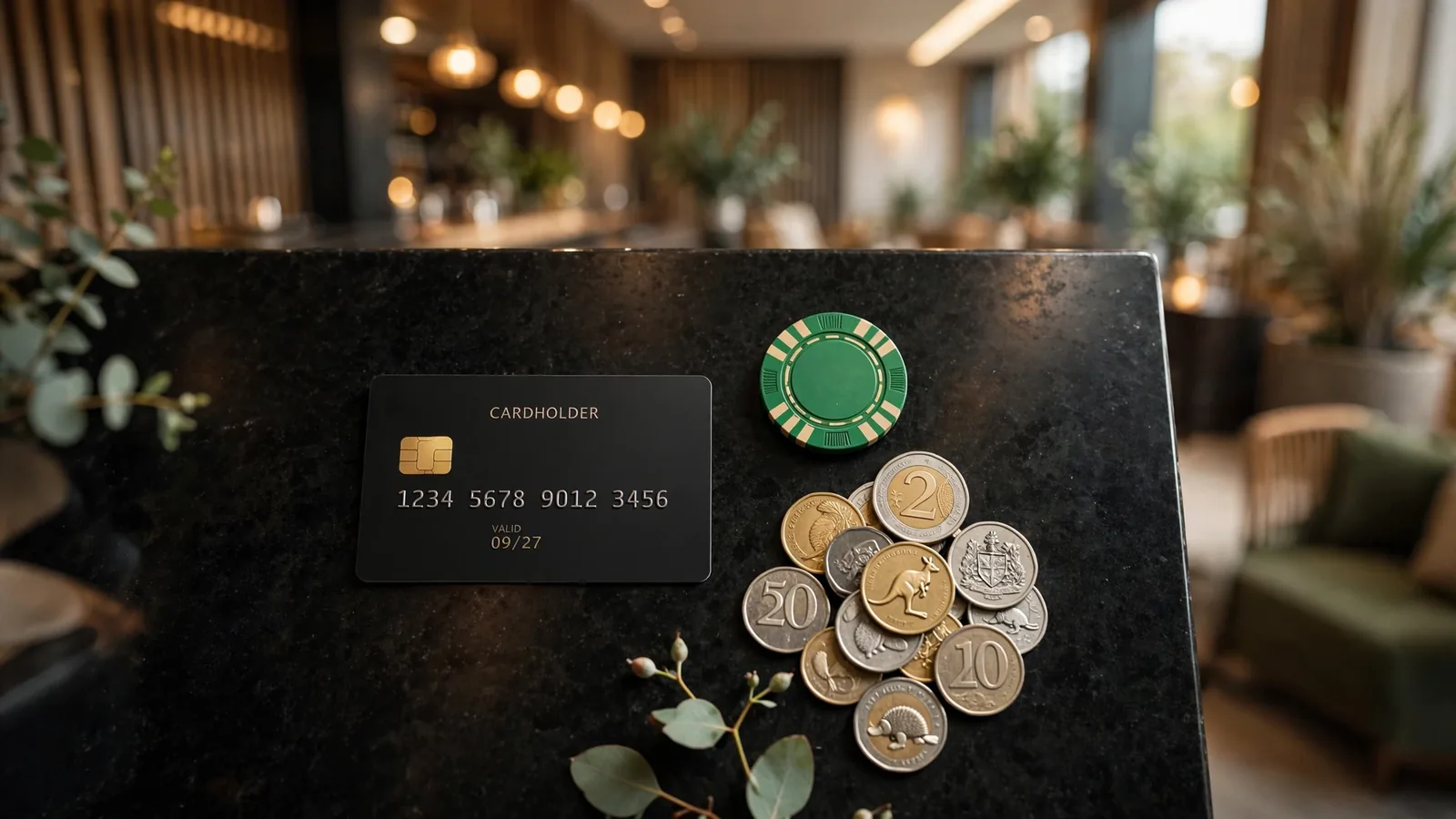
Users may encounter a withdrawal fee imposed by the casino, a possible surcharge (e.g., 1.5% as reported in some reviews), or a currency conversion fee (reported around 3%) if the transaction is not settled in AUD.
This is where promotional language can obscure the mechanics. “Fast” describes an impression, not a processing commitment. A stated timeframe is more useful, but it still needs to be understood as the period for clearing rather than a guarantee about when a request will be approved or released. The stages are different. The distinction is practical.
Fees also need to be separated by source. A specialist review says Amex gambling deposits are generally described as fee-free, but that does not establish that every casino handles deposits the same way, nor does it settle the cost of a withdrawal. Withdrawal charges can depend on the casino or bookmaker, and a separate Amex withdrawal fee may be disclosed in the payment terms. A charge should not be assumed merely because a card is used, but neither should a deposit with no fee be taken as evidence that a withdrawal is free.
One specialist review describes a possible surcharge of 1.5% on Amex transfers. That figure should be treated as a conditional charge, not a standard deduction from every payment. Whether it applies depends on the operator’s stated terms and the transaction concerned. A fee schedule or cashier notice is the place where the charge should be made clear before a transfer is submitted.
Currency conversion is another cost, and it is not the same as a withdrawal surcharge. A specialist review reports a 3% currency-conversion fee for Amex cards. The relevant issue is whether the transaction is processed in a currency other than Australian dollars. If conversion is involved, the cardholder may face a conversion cost in addition to any casino-side transfer fee; the two charges arise for different reasons.
When the payment is not in Australian dollars
An Australian-dollar balance does not by itself prove that a transaction is settled in Australian dollars. A casino may display or process a payment in another currency, and the conversion is then part of the card transaction. The currency shown at the payment stage matters: an amount that appears as a familiar value may still be converted before it reaches the card account.
The reported 3% conversion fee should not be confused with a percentage charged by the casino for handling a withdrawal. One relates to converting currencies; the other is an operator-side surcharge. If both apply to a particular transfer, they may contribute separate costs. If the transaction is settled in Australian dollars or the operator does not impose a surcharge, those particular charges may not arise. The wording of the terms determines the outcome.
That distinction can change the amount ultimately credited. The casino’s withdrawal figure may not match the amount recorded on the card statement if conversion or a separate fee is applied. The timing can also differ: the casino may mark a withdrawal as sent before the card transaction has finished clearing. A posted casino status and a completed card credit are not necessarily the same event.

The careful way to read an Amex withdrawal notice is therefore to look for three separate details: the stated clearing time, any withdrawal fee, and the currency in which the transfer will be processed. A specialist review’s “up to five days” timeframe gives a reference point, while the operator’s current terms determine the route and any casino-side charge. Conversion terms sit alongside those conditions rather than replacing them.
No single phrase such as “instant withdrawal” resolves these details. The transaction may be initiated promptly and still take time to clear; it may be available without a casino fee but involve currency conversion; or an operator may set an additional transfer charge. The decisive details are the processing status, the fee wording, and the settlement currency. That is the whole accounting picture.
Which online casinos accept American Express for deposits?
Jackpot City Casino, Spin Palace, Ruby Fortune, Ignition Casino, Joe Fortune and PlayAmo are listed as supporting Amex deposits for Australian players. Acceptance can vary, so check the cashier before attempting a deposit.
How can I know if an online casino will accept American Express?
Check the casino’s cashier for American Express as a deposit option. A listed option does not guarantee every card or transaction will work.
How safe is my money when using American Express at online casinos?
Using Amex does not provide Australian consumer-law protection when you use an offshore casino. A payment option or familiar card brand is not a guarantee of local recourse if a payment or account dispute arises.
Is it safe to use American Express for transactions at online casinos?
Amex does not make an offshore casino service lawful in Australia or provide Australian consumer-law protection. Consider that lack of local protection when assessing the risks of a transaction.
Can I use Amex to withdraw winnings from an Australian online casino?
Some casinos do not allow withdrawals to Amex, while others may require you to have made a previous deposit with the card. Where available, a withdrawal can take up to five days to clear.
Why does my Amex deposit get declined at some casinos but not others?
Some casinos do not accept Amex, and Amex or your Australian bank may block gambling payments to a particular website. Acceptance can therefore vary by casino and payment arrangement.
Can you use an American Express gift card at an online casino?
Yes, an Amex gift card can be used for deposits at casinos that accept American Express, but it cannot be used to withdraw winnings.
Prepared by the Supabet Casino editorial staff.