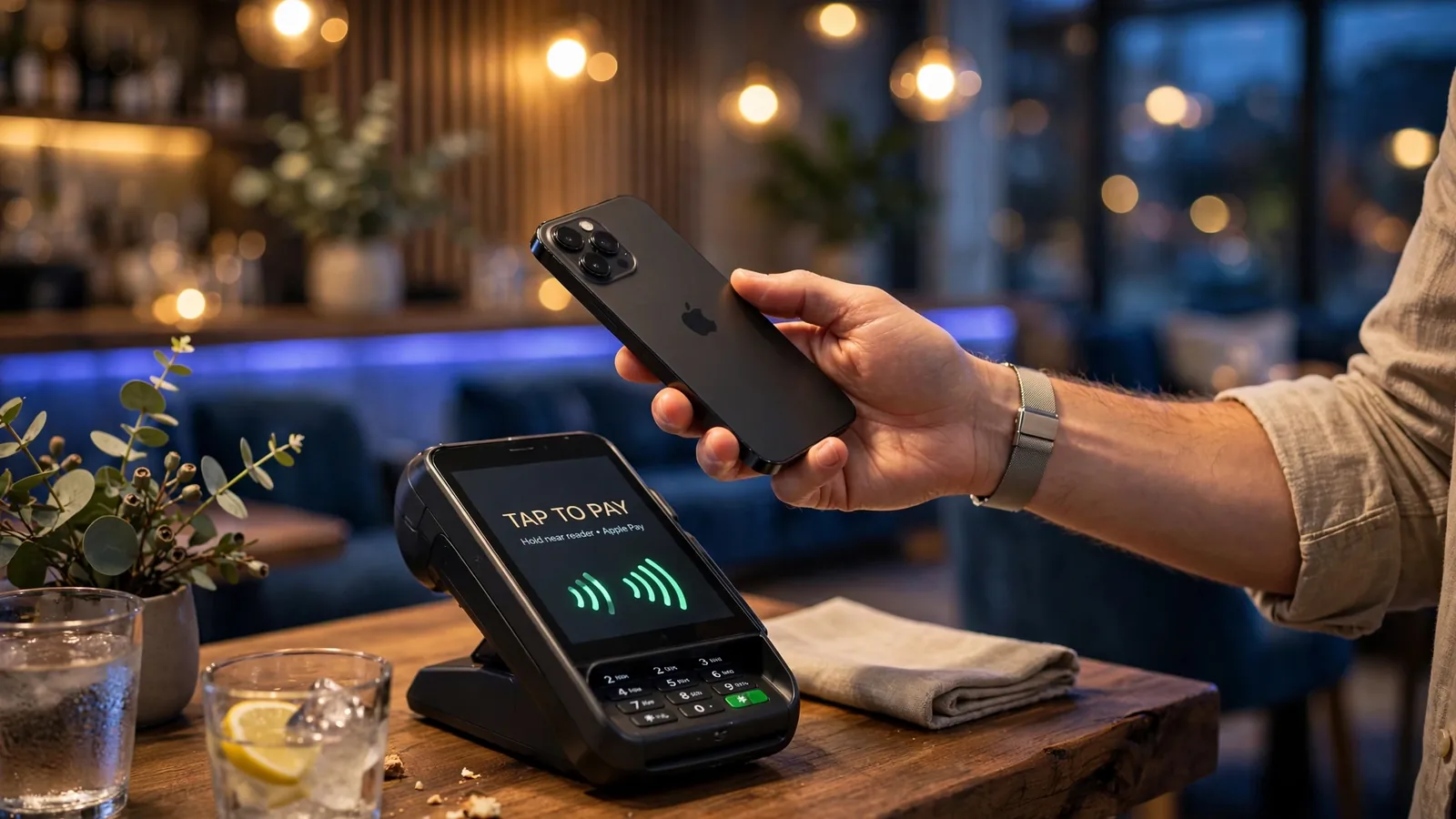
Online pokies with PayID in Australia: payments
 Available in AU
PayID uses a linked mobile number or email to address a bank transfer; it is not a casino account or a wallet holding funds.

- How PayID Moves Money Between a Bank and a Casino
- Real-Money Deposits: Minimums, Matching Details and Reversals
- What “Best” PayID Pokies Means in Practice
- Australian PayID Transfers and the Bank-Side Catch
- PayID Casino Sites: Check the Cashier Before Anything Else
- PayID in Australia: Limits and Transfer Costs
- Withdrawals: Casino Reviews, Pending Periods and Arrival Times
- PayID Bonuses and Facebook Free-Credit Claims
- Sites That Accept PayID: Confirm the Payment Route and Account Details
How PayID Moves Money Between a Bank and a Casino
PayID is an Australian digital payment system built around an identifier rather than the need to share ordinary bank account details for each transfer. That identifier can be a mobile number or email address linked to a bank account. The payment still moves between banks; the PayID is the addressing method that helps direct it.
The rail behind PayID is the New Payments Platform (NPP), which connects participating banks for fast transfers. In practical terms, PayID supplies a recognisable destination, while the NPP carries the payment between financial institutions. The distinction matters: PayID is not a casino account, a wallet holding funds, or a separate pool of money. It is part of the route a bank transfer can take.
The basic sequence is straightforward. A payment instruction is made using a PayID, the relevant banking systems identify the destination associated with it, and the transfer is carried through the NPP. The identifier makes the destination easier to specify than a string of account details. It does not change the underlying fact that funds are moving from one bank account to another.

In descriptions of online PayID pokies, the payment method can sound like a direct connection between a player and a casino. That is a simplified way to describe the experience, not the full payment path. A website may present a PayID option, but the transfer itself is handled through the banking payment infrastructure. The cashier is the point where the site presents its payment route; it is not the rail carrying funds.
This is where wording such as “instant” needs care. PayID is designed for quick bank-to-bank transfers, and a transaction can be completed within seconds. That describes the payment system’s capability. It does not establish that every site will accept a transfer, that every payment attempt will be processed identically, or that a casino’s own account records update at the same moment. The bank rail and the recipient’s systems are separate parts of the process.
PayID is also described as secure. The useful point is that an identifier can be used in place of disclosing bank account details for the transfer. That is not a blanket assurance about every website or business displaying PayID. A payment method cannot certify the conduct of the party on the other end. It cannot establish that a site is fair, properly operated, or willing to return funds.

That separation is easy to miss because the payment name appears inside a casino cashier. From the customer’s view, one screen presents the amount and destination; behind it, the bank transfer relies on PayID and the NPP. The payment rail performs a narrow job: it moves a bank payment to the selected destination. It does not assess the casino’s terms or decide whether the underlying service may lawfully be offered.
That legal distinction is especially important in Australia. Under the Interactive Gambling Act 2001, providing real-money online casino games, including pokies, to people physically located in Australia is illegal for operators. The presence of PayID on a site does not alter that position. Nor does it turn the payment service into an endorsement of the recipient.
For anyone assessing the phrase “PayID pokies Australia,” the technical answer is therefore narrower than the marketing shorthand suggests. PayID identifies a bank destination, and the NPP supports the transfer between banks. The casino interface may describe how it accepts payments, but the payment system itself says nothing about the status of the service attached to that interface.
The rail moves money. Nothing more.
Real-Money Deposits: Minimums, Matching Details and Reversals
A real-money deposit has two separate checks: the amount accepted by the payment page and whether the PayID details used for the transfer belong to the bank account holder. A low minimum does not remove the second check. If the details do not line up, the payment may not be handled as expected.
The published minimum is set by the operator, not by PayID itself. Many operators set an opening deposit between AU$10 and AU$20. A specialist review has reported an operator offering a AU$5 starting deposit, but that is a specific reported case, not a dependable market-wide threshold. Minimums can differ between payment methods and venues, so a figure seen elsewhere should not be treated as the amount available in a particular cashier.
Deposit minimums are set by the operator, not by PayID. Typical starting deposits range between AU$10 and AU$20, though some cases as low as AU$5 have been reported.
That distinction matters when a search for PayID pokies with a small real-money deposit turns into a decision to transfer. The minimum is a condition for that operator’s payment route; it is not evidence that the route is available to every account or that another operator uses the same terms. The cashier’s displayed instructions are the relevant terms for the payment being made.
PayID details also need to correspond to the identifier registered with the player’s bank. A mobile number or email address used as a PayID is not interchangeable with another person’s identifier simply because that person can make a transfer. The bank registration is the reference point. Where a casino profile and the bank-side payment details are inconsistent, the deposit may not be credited as expected, and resolving that mismatch can become a separate account issue.
This is why the name and payment details should be checked before confirming a transfer, rather than after the money has left the account. A deposit screen can make the action look routine: select a method, enter an amount, follow the instructions, confirm. But the decisive point is the final confirmation. PayID transfers cannot be reversed once confirmed. A mistaken amount or wrong destination is not equivalent to cancelling an unsubmitted form.
I have seen payment problems become harder to untangle when the account holder treats the confirmation step as a preview. It is not. Before confirming, the amount, destination and PayID details should agree with the instructions shown for that transaction. If anything differs, the sensible action is to stop and clarify the discrepancy rather than send funds and assume the operator or bank can simply undo it. No undo button.
The irreversible nature of the transfer changes how a minimum should be interpreted. A small entry amount can reduce the amount committed in one transaction, but it does not make a payment reversible or remove the need to verify the recipient. Nor does a low minimum establish anything about a venue beyond the amount it says it will accept. Payment access is a narrow feature, not a measure of fairness, reliability or legal status.
Legal Warning
Under the Interactive Gambling Act 2001, providing real-money online casino games to people physically located in Australia is illegal for operators.
There is also an important Australian context. Under the Interactive Gambling Act 2001, operators are prohibited from providing real-money online casino games, including pokies, to people physically located in Australia. The practical mechanics of a PayID transfer do not change that legal position. A payment method being technically available is not permission to use an online casino service, and it should not be read as an endorsement.
For someone reviewing a payment screen, the useful distinction is between an amount displayed as the minimum and a transfer that has actually been confirmed. The first is an operator’s stated condition; the second is an instruction to move money through the bank. Once confirmed, the transfer is irreversible. Matching the bank-registered PayID and checking the transaction details before that point are therefore more consequential than finding the smallest advertised entry amount.
A deposit can appear simple because PayID makes the transfer itself direct. The operator’s minimum, the bank-registered identifier and the confirmation step still have different roles. The minimum determines whether the amount meets the operator’s stated threshold. The identifier links the payment to the bank registration. Confirmation commits the transfer. Keeping those checks separate prevents a convenient payment flow from being mistaken for a reversible one.
What “Best” PayID Pokies Means in Practice
For online pokies with PayID in Australia, check whether PayID is actually available at the casino before depositing. These listings highlight the operator details provided, so treat payment options and terms as things to verify directly.
License: Curacao eGaming OGL/2023/174/0082 (Dama N.V.) · Min. deposit: A$15 LevelUp Casino lists a Curaçao eGaming licence held by Dama N.V. Its minimum deposit is A$15.
License: Curacao · Payout speed: crypto 30-60 minutes, fiat 1-5 days · Min. deposit: A$10 Wild Tokyo lists a Curaçao licence and a minimum deposit of A$10. Its stated payout times are 30–60 minutes for crypto and 1–5 days for fiat.
License: Curacao Gaming Control Board OGL/2023/176/0095 (Hollycorn N.V.) LuckyVibe lists a Curaçao Gaming Control Board licence, OGL/2023/176/0095, held by Hollycorn N.V.
License: Curacao Gaming Control Board OGL/2023/176/0095 (Hollycorn N.V.) Rollero Casino lists a Curaçao Gaming Control Board licence, OGL/2023/176/0095, held by Hollycorn N.V.
License: Curacao eGaming (Dama N.V.) JeetCity Casino lists a Curaçao eGaming licence held by Dama N.V.
License: Curacao eGaming OGL/2024/923/0383 (Antillephone N.V.) · Min. deposit: A$30 WinSpirit Casino lists a Curaçao eGaming licence, OGL/2024/923/0383, held by Antillephone N.V. Its minimum deposit is A$30.
License: Curacao (operating since 2017) · Min. deposit: A$20 Uptown Pokies is listed as operating since 2017 and holding a Curaçao licence. Its minimum deposit is A$20.
License: Curacao · Min. deposit: A$20 (POLi) Lucky Dreams lists a Curaçao licence and a A$20 minimum deposit for POLi.
License: Curacao eGaming (Roby Games Ltd) Roby Casino lists a Curaçao eGaming licence held by Roby Games Ltd.
Payout speed: crypto under 1 hour, PayID 1-3 business days · Min. deposit: A$20 (A$30 to qualify for the bonus) Ricky Casino lists crypto payouts in under an hour and PayID payouts in 1–3 business days. The minimum deposit is A$20, or A$30 to qualify for the bonus.
“Best” is a sales label, not a payment feature. In practice, it can only mean that a service meets specific criteria—and PayID appearing somewhere in promotional copy is not enough to establish even that. The cashier is the relevant place to check whether PayID is presented as a deposit method. If it is absent there, a banner or search-result description does not make it available.
That distinction matters because payment access says little about the rest of a service. PayID availability does not establish that an operator is licensed, that game outcomes are fair, that return-to-player information is transparent, or that winnings will be paid. Those are separate questions. A payment logo answers only a narrow one: whether the cashier currently presents that route.
There is also a legal boundary that promotional language tends to obscure. Under the Interactive Gambling Act 2001, providing real-money online casino games, including pokies, to people in Australia is illegal for operators. A page describing a payment method does not change that status. Nor does a polished cashier, a familiar payment name or a label such as “trusted.” The label is not evidence.
What a minimum can—and cannot—tell
Deposit minimums are one of the few concrete details that can be compared, but they are easy to overread. A specialist review reported PayID minimums in the AUD 10–20 range. Another specialist review described minimums across sites as falling between AUD 10 and AUD 30. These are reported ranges, not a fixed PayID rule or a dependable promise about any particular cashier.

The difference between those ranges is itself instructive. A minimum is set by the operator, not by PayID as a payment system. It can also vary with the cashier’s current terms or the payment option selected. A low figure does not prove that the service is better, safer or more straightforward; a higher one does not establish the opposite. It is a condition to read, not a quality score.
“Low minimum” sounds generous. What it really tells us is how little the operator allows for a transaction under that particular set of terms. It says nothing by itself about what happens after a deposit, the fairness of the games, or the conditions attached to an offer. Those matters require their own scrutiny and cannot be inferred from a payment threshold.
The same caution applies to phrases such as “best PayID pokies.” They can suggest a tested ranking, when the wording may simply group together services that mention PayID. Without clear, current criteria, a ranking is difficult to assess. A meaningful comparison would need to distinguish payment availability from other claims, explain how the information was checked, and avoid treating one convenient feature as proof of overall quality.
- Check the cashier for actual PayID availability
- Verify the stated deposit minimum
- Review clear and current terms
- Rely on banners or search results
- Assume a low minimum implies better quality
- Use “best” labels as proof of fairness
A more precise reading of “best”
For a payment-focused assessment, the useful questions are narrow: does the cashier actually show PayID, what minimum does it display, and are the stated terms clear? The answers can establish whether a payment route is presented and what threshold is attached to it. They cannot establish the broader qualities often smuggled into “best.”
That is why a “PayID list” is not automatically a list of recommended services. Inclusion may mean only that a page or cashier mentions the method. It should not be read as verification of legality, fairness, account security or payout conduct. A payment method is infrastructure, not a seal of approval.
In my experience, the word “best” does its most useful work when it is unpacked instead of repeated. For PayID, the cashier display and the stated minimum are measurable details; everything beyond them needs separate evidence. And in Australia, any discussion of real-money online casino services also has to retain the legal context: operators may not provide those games to people physically located in the country. No payment option changes that.
Australian PayID Transfers and the Bank-Side Catch
A PayID transfer can fail before a casino’s payment system has a chance to process it. That distinction matters: a message from a bank declining a payment is not the same as a casino reporting a deposit as pending or unsuccessful. The transaction has two separate sides, and the first decision may be made by the bank.

A specialist review has reported that some Australian banks, including members of the Big Four, may occasionally block PayID transfers identified as going to gambling merchants under their acceptable use policies. That is a reported possibility, not a rule that applies to every bank or every transfer. Policies and their application can change, and a bank’s response to one payment does not establish what it will do with another.
The wording “occasionally” is important here. A categorical claim that Australian banks block these payments would overstate the available information; a claim that bank-side restrictions never occur would ignore it. The relevant point is narrower: a bank may refuse a transfer because of its own policies, even if a payment page presents PayID as an option.
That creates a common attribution problem. From the customer’s perspective, the same outcome—money not appearing at the destination—can look like a failed PayID payment. But the cause can sit at different points in the chain. A bank can decline to send the payment; a payment route can fail to match the information supplied; or a receiving service can fail to credit a transfer it has received. Those are not interchangeable explanations. The status shown by the bank and any message from the receiving service are more informative than the bare fact that a balance has not changed.
Bank policy is also distinct from a technical PayID fault. PayID is the identifier used to address a transfer; it does not override the sending bank’s decisions about whether to process it. A payment can therefore be rejected even when the identifier appears correctly entered. Conversely, a bank-side block should not automatically be read as proof that the receiving service has rejected the payment. The source of the decision matters.
Attention Some Australian banks, including members of the Big Four, may block PayID transfers to gambling merchants under their acceptable use policies.
The bank’s role is broader than screening individual payments. A specialist review also notes that the bank sets the daily limit for PayID transfers. That makes the bank the point to distinguish when a payment is declined because of an account’s transfer settings from one declined under a policy concerning the recipient. The bank’s own explanation is the useful evidence; guessing from the timing or the payment label is not.
This boundary is easy to blur in marketing. “PayID available” describes a payment option being presented by a service; it does not mean the sending bank will approve a transfer. Nor does the presence of PayID establish anything about an operator’s legal status, fairness, or willingness to pay. Payment access is not a regulatory endorsement.
There is a separate and more fundamental Australian context. Under the Interactive Gambling Act 2001, providing real-money online casino games—including pokies—to people physically in Australia is illegal for operators. The law treats these services as prohibited interactive gambling services. A payment method does not change that position, and a bank’s decision to block or process a transfer cannot make an otherwise prohibited service lawful.
From an operational point of view, a refusal at the bank stage leaves the receiving service without a completed transfer to credit. If the bank indicates that it did not send the payment, the issue belongs first to the bank’s decision or settings, not to a casino cashier queue. If the bank shows a completed transfer, that is a different situation and the receiving side may need to account for it. The distinction is basic, but it prevents a bank restriction from being mistaken for a payment delay.

I have seen payment support conversations go in circles when every failure is labelled a “PayID problem.” That label conceals the only question that matters at the outset: which party stopped the transaction? Bank policy, bank limits and receiving-side processing are separate mechanisms. Treating them as one makes the cause harder to identify.
No workaround should be inferred from a refusal. A bank’s policy is not a technical obstacle to route around, and a different payment route does not alter the legal status of real-money online casino services in Australia. The bank-side catch is precisely that PayID is a transfer method, not permission.
PayID Casino Sites: Check the Cashier Before Anything Else
A site’s payment page is the only useful place to establish whether it lists PayID. A logo in a footer, a banner, or a search result is not confirmation that the cashier offers that route. The cashier should name PayID explicitly among its payment options; if it does not, a general claim about “fast bank payments” does not establish PayID availability.
That check answers a narrow question: whether the site presents PayID as a payment method. It says nothing about whether the service is lawful in Australia, whether games are fair, or whether winnings will be paid. Payment access is not a quality mark. I have seen promotional language blur those points because one reassuring feature is easier to sell than the less convenient questions around it.
Verify PayID Availability
- Locate the cashier page
- Confirm PayID is explicitly listed
- Check if it supports deposits, withdrawals, or both
- Read any attached conditions for the route
The legal position matters. Under the Interactive Gambling Act 2001, providing real-money online casino games, including pokies, to people physically in Australia is illegal for operators. A cashier listing PayID does not change that. Nor does calling a site a “PayID casino” make it an authorised Australian service. This is a payment label, not a licence.
The practical distinction is between a method being named and a transaction being available. The cashier may identify PayID as a deposit route, a withdrawal route, or both; those are separate functions and should not be assumed to match. PayID can support money moving in either direction, but the presence of the method on a site’s page does not establish that every account can use it or that a particular payment will be processed.
A specialist review has reported that the sites it tested, including Ricky Casino and Bizzo Casino, accepted PayID deposits with minimums in the A$10–A$20 range. That is a report about a particular set of checks, not a standing market rule. Cashier details and conditions can change, so a review cannot replace the site’s own payment information—and payment availability should not be read as an endorsement.
For a neutral site-level check, look for the exact PayID name in the cashier rather than inferring it from a generic bank-transfer option. Read whether the listing refers to deposits, withdrawals, or both, and note any stated conditions attached to that route. If PayID is absent or described ambiguously, the site has not clearly established that it offers PayID. That is all the check can prove.

PayID in Australia: Limits and Transfer Costs
PayID does not set a universal daily spending ceiling for Australians. The limit applied to a transfer is set by the bank holding the sending account, so the amount available can depend on that bank’s rules and the account’s settings. A specialist review also describes the daily PayID cap as bank-set; it should not be read as a fixed limit shared by every Australian customer.
That distinction matters when a payment is being planned. A payment method can be available while the bank still restricts the amount that can leave an account. The relevant figure is therefore the limit shown by the bank, not a supposed PayID-wide allowance. PayID itself is the transfer system; it does not override the bank’s controls.
The cost side is simpler. PayID does not levy a transfer fee. Reputable venues also do not add a separate charge for a PayID deposit or withdrawal, according to the stated payment terms. These are separate points: a fee charged by PayID would be a system charge, while a charge added by a business would be that business’s own fee. I have found that wording can blur the two, making a payment method appear more expensive than it is—or making an operator’s separate charge look like part of the bank transfer.
A cashier’s terms still need to be distinguished from the payment rail itself. The absence of a PayID fee does not establish that every service accepts PayID, or that all other terms are cost-free. Nor does payment access establish anything about a service’s legal status. In Australia, providing real-money online casino games to people in the country is prohibited under the Interactive Gambling Act 2001.
PayID does not charge a transfer fee, and reputable venues typically do not add separate charges for deposits or withdrawals using this method.
For ordinary transfers, then, the practical mechanics are narrow: the bank controls the sending limit, while PayID does not charge for the transfer. No hidden universal PayID cap.
Withdrawals: Casino Reviews, Pending Periods and Arrival Times
A PayID withdrawal has two separate clocks: the casino’s handling of the request, then the transfer after approval. Combining them into a single “payout time” can make a cashier estimate sound more certain than it is. The payment rail does not control how long an operator takes to review a withdrawal.
The first stage is an internal check. A casino may review the request and the account’s identity-verification status before releasing funds. If documents are outstanding or a check is still underway, the request has not yet reached the bank-transfer stage. That distinction matters: a delay before approval is not evidence that a PayID transfer itself is slow.
A specialist review reports that some casino-initiated PayID withdrawals can remain pending for 24–72 hours before funds leave the operator’s system. This is a reported practice, not a fixed rule for every venue. The same type of review places the PayID transfer at 12–24 hours after approval and describes a total request-to-receipt timeframe of 2–4 days when the pending stage is included. These figures are best read as estimates tied to the operator and account, not as a promise.
Two clocks.

Once approved, the withdrawal moves into the payment stage. PayID operates through Australia’s New Payments Platform, but that does not eliminate the earlier casino review or make every request arrive at the same time. The meaningful point of comparison is therefore whether a published estimate begins at request submission, approval, or release of funds. Those are different milestones.
From the counter side, “instant” can describe the transfer mechanism while leaving the customer waiting through a separate approval queue. That wording is incomplete if it does not say when the clock starts. KYC status and the casino’s own review process can affect the time before approval; after that, the transfer estimate applies.
Timing information from reviews should be treated cautiously because procedures can change and individual checks differ. A stated window is not a guarantee of receipt by a particular hour. If a request is still marked pending, the relevant issue is the operator’s review; if it has been approved, the transfer stage has begun.
Real-money online casino games, including pokies, are prohibited services when provided to people in Australia under the Interactive Gambling Act 2001. These timing distinctions describe payment mechanics, not an endorsement or invitation to use such services.
PayID Bonuses and Facebook Free-Credit Claims
A Facebook post promising free credit for PayID pokies can make two separate things look like one offer: a payment method and a bonus. PayID describes how money is transferred; it does not explain whether credit can be withdrawn, what conditions apply to bonus-linked winnings, or whether a post is genuine. The promotional wording is the easy part. The terms carry the cost.
Attention Bonus credits are not unrestricted cash; they often carry wagering requirements, such as 30x–45x the bonus amount, before winnings can be withdrawn.
The key distinction is between a credit added to an account and cash available to withdraw. Bonus terms may require wagering before bonus-linked winnings become eligible for withdrawal. A specialist review reports requirements of 30x–45x the bonus amount. That is a substantial condition, not a minor footnote: the stated multiple is applied to the bonus amount, so the amount of activity required can be much greater than the credit itself.
“Free” is therefore a marketing label, not a description of unrestricted cash. The terms determine how the credit can be used and when any resulting balance may be withdrawn. If a post highlights the credit but leaves the wagering requirement hard to find, the headline is doing more work than the offer details.
Read the full terms attached to the offer, not just the Facebook caption or an image shared between accounts. The conditions should explain how wagering is counted and identify any restrictions that could affect bonus-linked winnings. A maximum-bet condition matters: exceeding the stated limit during bonus wagering can void the bonus and associated winnings. The wording may be presented as a technical rule, but its effect is direct.
Account rules matter too. Creating multiple accounts at the same casino can lead to a ban or forfeiture of winnings. A social-media promotion does not make that risk disappear; the relevant account terms still apply. A claim that credit is available through a particular payment route is not evidence that the account or the offer meets its conditions.
Facebook posts can be copied, edited or detached from the terms they originally referred to. A familiar logo or a comment thread does not establish that the offer is current or that the account posting it is authorised. The same caution applies to reposts and forum discussions: they can point to a claim, but the operative conditions are the ones attached to the offer by the service itself. Do not treat a post as proof of an available bonus.

There is also a broader Australian context. Under the Interactive Gambling Act 2001, providing real-money online casino games, including pokies, to people physically in Australia is illegal for operators. A PayID mention or a free-credit claim does not alter that legal position.
From the counter side, the wording that matters is rarely the largest line on the promotion. It is the condition that decides whether a bonus-linked balance can leave the account. Read that part first. Mark the difference between credit and cash.
Sites That Accept PayID: Confirm the Payment Route and Account Details
A site may mention PayID in promotional copy, but the practical check is whether it appears as a payment option in the cashier. That confirms the route the operator currently presents for deposits; it does not establish that the service is safe, fair or likely to pay winnings.
The account details matter just as much when money is meant to come back. The PayID used for a transaction must be registered with the player’s bank, and the details need to match. A mismatch can interrupt the payment process or create questions during account checks. The name on the bank account should also match the name on the casino profile; inconsistent details can cause withdrawal problems.

This is where “accepted” can mean less than it sounds. A payment method appearing on a page is one thing; a transfer linked to the correct bank-registered PayID and account holder is another. I have seen payment issues begin with that basic distinction, rather than with the transfer technology itself. Details first.
For anyone comparing pokies sites that accept PayID, the useful record is simple: the cashier lists PayID, the account information is accurate, and the bank-registered PayID belongs to the same person named on the casino account. If any of those details differ, the payment route may not work as expected.
PayID availability is only a payment detail. It says nothing by itself about licensing, game fairness or payout reliability. In Australia, real-money online casino services are prohibited under the Interactive Gambling Act 2001. A payment option does not change that legal position.
How do I deposit money into an online casino using PayID?
Select PayID in the cashier and follow the displayed transfer instructions using a PayID registered with your bank. Check the destination and amount before confirming, because a confirmed PayID transfer cannot be reversed.
Do online casino sites in Australia use PayID?
Some online casino sites offer PayID deposits, but availability can vary. A PayID option in a cashier does not mean the site is endorsed by the payment system or that its service is lawful in Australia.
Are online pokies legal in Australia?
No. Under the Interactive Gambling Act 2001, providing real-money online casino games, including pokies, to people physically located in Australia is illegal for operators.
How can I enjoy PayID pokies in Australia?
PayID can transfer funds quickly, but it does not make online pokies lawful: providing real-money online casino games to people in Australia is illegal for operators. A PayID payment also does not establish that a site is fair or will return funds.
How do I set up PayID for pokies sites?
PayID uses a mobile number or email address linked to your bank account. Use the identifier registered with your bank, and check the cashier’s instructions and destination before confirming a transfer.
Is it legal to play pokies games with PayID in Australia?
Using PayID does not change the legal position: providing real-money online casino games, including pokies, to people physically located in Australia is illegal for operators.
What security measures are in place at casino sites that use PayID?
PayID uses an identifier instead of requiring you to share ordinary bank account details for each transfer, and transfers use the New Payments Platform between banks. This does not certify a casino site’s security, fairness, or willingness to return funds.
Written by the editors at Supabet Casino.