Apple Pay at Australian Casinos: What’s Verified
 Available in AU
Everyday wallet use does not prove casino acceptance, and deposit, withdrawal and bonus details require separate verification.
- How Mobile Wallets Fit Australia’s Payment Habits
- What an Apple Pay Deposit Can—and Cannot—Be Confirmed to Involve
- Comparing Payment Acceptance Without a Verified Apple Pay Shortlist
- Withdrawal Timing Depends on the Payment Route
- The Legal Boundary Behind Offshore Casino Payment Searches
- Payment Method and Game Access Are Separate Questions
- Australian Wallet Use Does Not Confirm Casino Acceptance
- Apple Pay Withdrawals: What the Available Evidence Does Not Establish
- Apple Pay and Casino Slots: Acceptance Is Not Verified
- Bonus Conditions Cannot Be Confirmed for Apple Pay
How Mobile Wallets Fit Australia’s Payment Habits
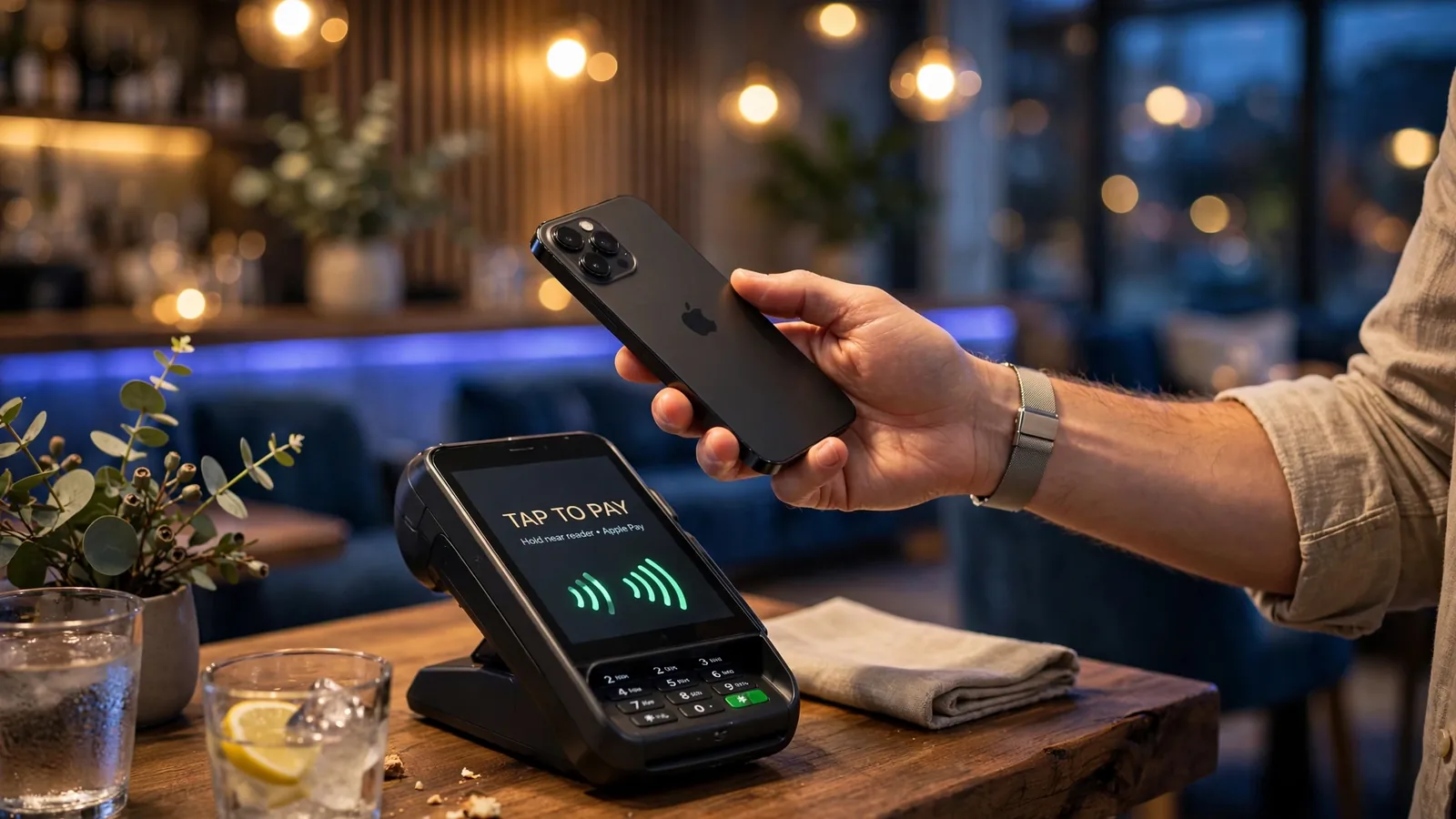
Mobile wallets are part of ordinary payment life in Australia. Apple Pay and Google Pay are accepted almost everywhere, so paying with a phone is familiar well beyond any single industry. That broad familiarity explains why people may expect a wallet option when they encounter a digital service. It does not, by itself, tell them which payment methods a particular service supports.
I have found that the word “accepted” can carry more weight than it should. In everyday conversation, it often means that a payment method feels normal and is widely usable. In a business setting, it means something narrower: a particular merchant has enabled that method for a particular transaction. Those meanings are easy to blur, especially when the same wallet is common in shops and other services across the country.
The distinction matters because a phone payment is not a universal pass. Apple Pay is a way to use an eligible card through a mobile device; its widespread use does not make every business that accepts cards an Apple Pay merchant. A service’s own payment options remain a separate matter. Familiarity is not confirmation.
Apple Pay availability can vary by casino and payment setup, so check the cashier before choosing how to deposit. This list provides a concise reference to the stated licensing and payment details for casinos featured on this page.
License: Curacao eGaming OGL/2023/174/0082 (Dama N.V.) · Min. deposit: A$15 LevelUp Casino lists a Curacao eGaming licence held by Dama N.V. Its stated minimum deposit is A$15.
License: Curacao · Payout speed: crypto 30-60 minutes, fiat 1-5 days · Min. deposit: A$10 Wild Tokyo lists a Curacao licence. Its stated payout times are 30–60 minutes for crypto and 1–5 days for fiat, with a A$10 minimum deposit.
License: Curacao Gaming Control Board OGL/2023/176/0095 (Hollycorn N.V.) LuckyVibe lists a Curacao Gaming Control Board licence, OGL/2023/176/0095, held by Hollycorn N.V.
License: Curacao Gaming Control Board OGL/2023/176/0095 (Hollycorn N.V.) Rollero Casino lists a Curacao Gaming Control Board licence, OGL/2023/176/0095, held by Hollycorn N.V.
License: Curacao eGaming (Dama N.V.) JeetCity Casino lists a Curacao eGaming licence held by Dama N.V.
License: Curacao eGaming OGL/2024/923/0383 (Antillephone N.V.) · Min. deposit: A$30 WinSpirit Casino lists a Curacao eGaming licence, OGL/2024/923/0383, held by Antillephone N.V. Its stated minimum deposit is A$30.
License: Curacao (operating since 2017) · Min. deposit: A$20 Uptown Pokies lists a Curacao licence and has been operating since 2017. Its stated minimum deposit is A$20.
License: Curacao · Min. deposit: A$20 (POLi) Lucky Dreams lists a Curacao licence. Its stated minimum deposit is A$20 when depositing via POLi.
License: Curacao eGaming (Roby Games Ltd) Roby Casino lists a Curacao eGaming licence held by Roby Games Ltd.
Payout speed: crypto under 1 hour, PayID 1-3 business days · Min. deposit: A$20 (A$30 to qualify for the bonus) Ricky Casino lists crypto payouts in under an hour and PayID payouts in 1–3 business days. Its minimum deposit is A$20, or A$30 to qualify for the bonus.
That is the practical backdrop to searches about Australian online casinos and Apple Pay. The interest is understandable: a payment habit that works in many everyday settings may seem like a natural fit for online spending too. But the national picture only describes how common mobile-wallet acceptance is in Australia generally. It cannot establish that any particular casino offers the wallet, or that the same arrangement applies across different operators.
The same caution applies to language around “mobile casino” payments. The phrase can describe the device used to access a service, the way a payment is made, or both. A site working on a phone does not thereby accept payments from a phone wallet. Device compatibility and payment acceptance are different things, even when promotional copy makes them sound like one feature.
In my experience, broad payment labels are where assumptions start to creep in. A business may accept card payments without supporting every card or every way of presenting one. A wallet can also be widely recognised by consumers while remaining absent from an individual merchant’s options. These are not contradictions; they are simply different levels of acceptance. National familiarity describes the environment. The merchant’s own payment choices describe the transaction.
This is why general Australian habits are useful context but a poor substitute for specific confirmation. A person accustomed to tapping a phone at everyday businesses may reasonably look for the same convenience elsewhere. That expectation is about consumer behaviour, not evidence of an online service’s capabilities. The boundary is plain. Common does not mean universal.


The phrase “cashless convenience” can also hide the distinction. In ordinary use, it may simply mean that people are comfortable paying without handing over physical cash. It does not identify which wallet, card, or bank-linked service a merchant accepts. Nor does it say whether acceptance applies to every kind of transaction. The appealing label is broad; the actual payment arrangement is particular.
Australia’s widespread mobile-wallet acceptance therefore explains the expectation behind searches for Apple Pay at online casinos, but it cannot answer the operator-specific question. A familiar payment habit may shape what people look for without proving that a particular service offers it. That is the useful line to keep in view: wallet use is widespread, while acceptance at any named business must be established separately.
What an Apple Pay Deposit Can—and Cannot—Be Confirmed to Involve
An Apple Pay logo can make a payment route look settled. It is not. A wallet being familiar in everyday Australian payments does not establish that an online gambling service accepts it, or that a particular transaction can be made through it. Those are separate questions, and combining them is how broad claims become misleading.
The distinction starts with what a mobile wallet represents. Apple Pay is a way of presenting a payment credential; it is not a guarantee that every merchant, transaction category or card issuer will treat that credential alike. An online cashier could display a wallet option, omit it, or present a card route instead. Even where a wallet appears, the availability of a particular card and the handling of the transaction can matter. The label alone does not settle those details.
Attention: The presence of an Apple Pay logo does not guarantee that a deposit has been authorised or credited, nor does it confirm the route is available to Australian customers.
That matters especially for a claimed casino deposit. “Apple Pay accepted” may sound like a complete instruction, but it leaves key parts unstated: whether the route is available to Australian customers, which payment credentials it supports, and what happens when the transaction is submitted. A general statement about wallet use cannot answer those operator-specific questions. Nor does a payment logo establish that a deposit has been authorised or credited.
I have seen payment language do a lot of work with very little detail. “Seamless” is often a description of the screen, not a description of the transaction. The practical mechanics depend on the service and the payment route it actually makes available. Without those specifics, there is no reliable basis for describing a standard Apple Pay deposit sequence, a minimum deposit amount, or a processing time. Filling those gaps with a plausible figure or a familiar-looking set of steps would turn guesswork into apparent guidance.
The same caution applies to claims framed around a small deposit, such as a ten-dollar Apple Pay payment. The amount in a headline does not show that a service accepts Apple Pay, that the route permits that amount, or that a payment will be processed. Minimums and cashier options are not properties of the Apple Pay name itself. They would need to be attached to the particular transaction route and service, rather than inferred from the wallet’s everyday use.


Australian consumers are comfortable moving between cards, mobile wallets and bank-linked services such as PayPal. That flexibility helps explain why a wallet can feel like a natural way to pay online. But comfort with switching methods is a habit, not proof of a particular merchant’s acceptance policy. A familiar wallet icon can make an unfamiliar transaction feel routine. It does not make the underlying conditions interchangeable.
There is also a difference between the wallet interface and the underlying payment arrangement. A payment presented through a phone does not necessarily cease to be a card transaction in the eyes of the parties handling it. That distinction matters in gambling contexts: Australian market rules prohibit operators from providing real-money online casino games to people physically located in Australia, and credit card payments must not be accepted for online gambling services. The presence of a digital wallet does not turn a prohibited service or payment into an approved one.
Listing cashier steps, inviting a deposit, or presenting a specific amount as workable could imply that the route is available and appropriate in Australia. The payment interface cannot carry that implication on its own. The underlying service and transaction still matter.
The sound reading of an Apple Pay deposit claim is therefore narrow. It may describe a payment option that a particular service says it supports, but the claim needs to be understood in that specific context. It does not establish a universal process, a standard minimum, or a predictable processing interval. It also does not show that every Australian user’s card or account will work through the same route.
- Treat every payment claim within its specific context
- Verify the available routes in the actual cashier
- Distinguish between the wallet interface and the payment arrangement
- Assume a universal process based on a wallet logo
- Infer a standard minimum deposit from the wallet name
- Mistake a familiar icon for interchangeable payment conditions
In payment operations, a cashier is the point where a method becomes concrete: the displayed options, applicable terms and transaction status are more meaningful than a generic wallet label. But a visible option should not be mistaken for proof of a completed payment, and an advertised route should not be treated as a general rule for other services. Those are different stages. Small distinction, real consequences.
Comparing Payment Acceptance Without a Verified Apple Pay Shortlist
A payment comparison is only useful when it separates what a site accepts from what a particular payment option can be used for. A statement that a casino takes cards does not, by itself, establish that its cashier accepts Apple Pay. The two claims sound close in promotional copy; operationally, they are different.
Contactless credit and debit card payments are accepted almost everywhere in Australia. That broad familiarity can make a card-related wallet seem like an obvious extension of ordinary card acceptance. It is not sound evidence of acceptance at a specific online cashier. A general card label may cover only the card brands and payment routes the operator has chosen to enable. It says nothing conclusive about Apple Pay.
That distinction matters when a page uses broad wording such as “card payments accepted” beside an Apple Pay badge or a list of payment methods. The placement may suggest a connection without explaining whether Apple Pay is an available option, whether the badge refers to a different service, or whether the information applies to the Australian cashier. A comparison should treat each claim on its own terms.


I have seen payment tables become misleading through compression. An editor fits a handful of methods into a small space; a general label is made to do the work of several specific ones. “Cards” becomes shorthand for every card and wallet a visitor might expect. That is tidy on the page. It is not a reliable way to establish acceptance.
A more careful comparison records the exact wording and where it appears. A cashier listing Apple Pay as a selectable method is a different kind of statement from a review saying that the site accepts cards. The operator’s own payment information is also distinct from a third-party summary, which may be broad, dated or written for a different market. None of those labels should be silently upgraded into a stronger claim than it makes.
The relevant details are scope and specificity. Does the statement name Apple Pay, or only cards? Does it refer to the Australian service, rather than a general international page? Is it attached to the cashier or to a description of the brand? A precise comparison keeps those distinctions visible instead of turning them into a single tick in a table.
Ranking language creates another problem. Calling a site the “best” Apple Pay casino implies that acceptance has been established and that the named options have been assessed against comparable criteria. A ranking can make a thin claim look settled simply by placing it in a numbered order. The format is not evidence. Nor does a longer payment-method list automatically make one operator a stronger match for a particular method.
Ranking a site as the “best” Apple Pay casino can make a thin claim look settled, but the format itself is not evidence of established acceptance.
A useful comparison therefore avoids filling gaps with adjacent facts. High acceptance of contactless cards across Australia describes local payment habits; it does not establish what any casino’s cashier offers. A broad card claim describes a category; it does not identify Apple Pay. These boundaries are easy to blur, especially when payment labels are presented as compact icons rather than explained in text.
From the operator side, the cashier is where a general description has to meet a real transaction choice. A comparison that records only a marketing label misses that distinction. One that records exactly what is stated, where it is stated and which market it refers to gives a clearer account without implying more than the wording supports.
For readers comparing casino payment claims, the practical test is not whether a site mentions cards somewhere on its pages. It is whether the claim specifically identifies Apple Pay for the relevant service and market. Anything broader should remain a broader claim. No shortcut.
Withdrawal Timing Depends on the Payment Route
A payout’s timing and cost are tied to the route used to send it. A payment method that moves money quickly in one direction does not necessarily provide the same service in the other. That distinction matters when an Apple Pay label is treated as a promise of an instant withdrawal: the name of a wallet alone says nothing about how winnings would be paid or when they would arrive.
The broad comparison is clearer for other routes. Cryptocurrency payments, including Bitcoin and Ethereum, are described as allowing instant deposits and withdrawals, with limited or no fees. Bank transfers can involve longer waits and higher fees, according to a specialist review. Those are contrasting characteristics, not a universal schedule for every transaction. The route can shape the experience, but the actual terms belong to the service handling the payment.

I have seen payment descriptions make a method sound like a complete end-to-end pipeline. It is not. “Instant” can describe one part of a transaction without establishing that every later step shares the same timing. A withdrawal is not simply a deposit in reverse: the receiving route, the operator’s handling and the payment provider’s process all matter.
That is why cryptocurrency’s stated speed cannot be transferred to Apple Pay by analogy. Nor does the presence of Apple Pay as a payment option, by itself, establish that a casino can return funds to it. Depositing and withdrawing are separate functions. A cashier may show a method for one purpose without demonstrating that it is available for payouts. No shortcut.
The same caution applies to the word “instant” in descriptions of Apple Pay withdrawals. It is not a measurable commitment unless the payout route and the meaning of the timing claim are clear. A wallet may be involved in a payment without being the channel used to deliver a withdrawal. The visible method name does not settle that question.
Comparing routes therefore means separating what is known from what is merely suggested by a label. Cryptocurrency has a stated profile of instant movement and limited or no fees. Bank transfers are characterised in a specialist review as potentially slower and more costly. These descriptions do not establish a precise processing time, a fee for a particular transaction, or the availability of either route at a specific service. Terms vary with the route and provider.
Described as allowing instant deposits and withdrawals with limited or no fees.
Can involve longer wait times and higher fees according to specialist reviews.
Deposit availability does not confirm a matching withdrawal option or specific timing.
For Apple Pay, the relevant distinction is narrower still: a deposit option cannot be read as confirmation of a matching withdrawal option. A claim of instant withdrawal needs to identify an actual payout method and its conditions, rather than rely on the wallet name appearing somewhere in a cashier. Without that separation, “instant” is marketing shorthand, not a dependable description of when funds reach an account.
I would treat the route, not the headline, as the meaningful unit of comparison. A cryptocurrency payout and a bank transfer have different broad timing and fee characteristics; neither tells us how an Apple Pay withdrawal would work. That gap should not be filled with assumptions borrowed from deposits or from other payment methods. Consumer protections do not extend to Australians using offshore casinos, which is an additional reason not to mistake a payment label for a guarantee.
The Legal Boundary Behind Offshore Casino Payment Searches
A search for an offshore casino that appears to take Apple Pay can make the issue look like a matter of payment compatibility. In Australia, the more important boundary is legal: payment access does not change whether a service may lawfully offer online casino gambling to people in the country.
The Interactive Gambling Act 2001 places the prohibition on operators. It makes providing real-money online casino games to people in Australia unlawful, while not expressly making the act of playing at an offshore site a criminal offence for the player. Those are different questions. The fact that the law is directed at providers should not be read as approval of offshore services or as a safeguard for customers.

The Australian Communications and Media Authority (ACMA) is responsible for enforcing the Act. Its role concerns the rules governing interactive gambling services, rather than confirming whether a particular casino’s payment page works. An Apple Pay logo, a cashier option or a claim about accepting Australian customers does not establish that the underlying gambling service is lawful to provide here.
I have seen payment descriptions make a service sound routine: “available” can mean only that a payment route is displayed, not that the wider activity is authorised or protected. The distinction matters because a checkout process and a legal permission are not the same thing. A working payment method cannot settle the legal status of the operator.
There is also a practical consumer-protection gap. Australian consumer law does not protect players who use offshore casinos. That does not mean every dispute will have the same outcome; it means the ordinary protections available for domestic consumer transactions cannot be assumed to apply to an offshore gambling service. A polished interface or familiar wallet branding does not close that gap.
The law’s focus on operators also does not turn offshore access into a safe or endorsed choice. Enforcement is part of the Australian framework, and services may be subject to blocking. A site appearing in a browser, or a payment route being advertised, is not evidence that the service is permitted to operate for Australian residents.
Legal Boundary
The Interactive Gambling Act 2001 makes providing real-money online casino games to people in Australia unlawful for operators.
For that reason, searches for casinos that accept Apple Pay in Australia sit across two separate issues. One is whether a particular operator displays a payment option; the other is whether it may provide online casino games to people in Australia. The legal position is not resolved by the first. I would not treat a payment label as a licence, a consumer guarantee or proof of lawful availability.
The boundary is straightforward, even when the marketing is not: the Act restricts operators from providing real-money online casino games in Australia, and ACMA has the enforcement role. The player is not explicitly criminalised merely for using an offshore site, but that does not create consumer-law protection or make the service lawful for the operator to offer here. Payment acceptance is a separate matter.
Payment Method and Game Access Are Separate Questions
A payment button and a game catalogue answer different questions. Apple Pay, where offered as a payment option, concerns how a transaction is handled. It does not identify which games a service carries, establish that a particular game can be opened, or determine whether the service may lawfully offer that game in Australia.
That distinction matters because “mobile casino” can sound like a single product: a phone-friendly cashier, a playable game library and permission to serve local customers. In practice, those are separate parts of the service. A wallet logo tells little about the catalogue, and a catalogue description says nothing about the legal position.

For Australian residents, the legal boundary is decisive. The Interactive Gambling Act 2001 prohibits operators from offering online casino games to people in Australia. A payment method does not change that rule. Nor does the fact that a player may access an offshore site mean that the operator is permitted to provide casino games here. The law’s focus is on the operator’s provision of the service; it does not explicitly criminalise players for using offshore sites.
From the counter side, payment acceptance is often presented as a convenience feature because it is easy to display and easy to compare. Game access is less reducible to a logo: it depends on what the operator provides and whether that provision is lawful in the customer’s location. Treating the two as interchangeable turns a cashier detail into an implication about the service as a whole. That is the wrong inference.
The same applies to searches for casino games that can be paid for with Apple Pay. The wording can merge payment and play into one idea, but neither establishes the other. A wallet’s use for a transaction would not make prohibited online casino games lawful to offer in Australia, and game descriptions do not establish wallet acceptance.
“Available on mobile” is not a legal category. It describes a way to access a service, not permission to provide it. Payment mechanics and game access remain separate.
Australian Wallet Use Does Not Confirm Casino Acceptance
In Australia, paying by phone is part of ordinary shopping. Contactless card payments and mobile wallets such as Apple Pay and Google Pay are accepted almost everywhere, and people are comfortable moving between a physical card, a wallet and bank-linked services such as PayPal. That familiarity can make a digital wallet seem like a natural option wherever an online payment is offered.
In Australia, mobile wallets like Apple Pay and Google Pay are accepted almost everywhere in ordinary shopping, but this does not establish acceptance at any specific online service.
But everyday acceptance and a particular merchant’s payment arrangements are separate things. A wallet working at a local shop does not establish that an online service accepts it. Nor does general use of Apple Pay in Australia show that an Australian casino offers Apple Pay as a payment choice. The name of the payment method describes the consumer-facing tool; it does not tell the whole story about where that tool can be used.
From the other side of the counter, payment labels can sound broader than the arrangements behind them. A service may be familiar to customers, while its use still depends on the merchant’s own setup and the payment route available at the point of transaction. “Widely accepted” is a statement about the local retail landscape, not a promise that every online business supports the same options.
This distinction matters when assessing claims about an Australian casino with Apple Pay. The fact that Australians readily switch between cards, mobile wallets and bank-linked services explains why the option may be of interest. It does not identify an online casino that accepts Apple Pay, or establish that an individual site supports it. Familiarity is not confirmation.
The same caution applies when a payment brand appears beside a casino name in promotional language. That pairing can imply a working payment route without explaining whether the method is available to Australian customers or what the transaction involves. The wording alone is not enough to establish acceptance.
Australian wallet use is widespread. Casino acceptance is a separate question. A clean distinction.

Apple Pay Withdrawals: What the Available Evidence Does Not Establish
A casino’s deposit option and its payout route are separate parts of the cashier. Seeing a payment method offered for incoming funds does not establish that winnings can be returned through the same method. This distinction matters for Apple Pay: a claim that an online casino accepts it for deposits cannot, by itself, answer whether an Apple Pay withdrawal is available.
From the operator’s side, withdrawal rules are shaped by the payment route and the account’s transaction history. For American Express, for instance, casino withdrawals require a prior deposit using Amex, and not every casino permits payouts to that card. Those conditions illustrate why one method’s deposit availability should not be treated as proof of matching withdrawal support. They do not establish an equivalent rule for Apple Pay.
The label “instant” can also blur two different stages: submitting a withdrawal request and receiving cleared funds. A cashier may display a payment method without explaining whether it is eligible for payouts, whether an alternative route applies, or what conditions must be met first. Those details have to be assessed as withdrawal terms, not inferred from a deposit screen.
I have seen payment pages make a route look simpler than the back-office process behind it. The practical distinction is plain: acceptance for deposits is not the same as acceptance for withdrawals. A casino with Apple Pay withdrawal support would need to state that support specifically, rather than leave it to be assumed from a wallet logo or a deposit option.
Attention: Acceptance for deposits is not the same as acceptance for withdrawals; a wallet logo in the cashier does not guarantee a payout channel.
There is also a separate account check. Online casinos typically require customers to complete a Know Your Customer assessment before financial transactions. That general requirement does not confirm that Apple Pay is offered as a payout channel, nor does it establish a withdrawal timeline.
So the phrase “Apple Pay withdrawal” should be read as a specific claim about money leaving an account, not as a synonym for Apple Pay being present in the cashier. The distinction applies whether the page describes an online casino, a pokies service, or a particular payment option. Deposit acceptance and payout availability remain different questions. No inference should bridge them.
Apple Pay and Casino Slots: Acceptance Is Not Verified
An Apple Pay mark beside a casino brand would not, by itself, establish that Apple Pay can be used for a particular game or transaction. Payment acceptance and the games displayed by a service are separate questions. A general claim about a payment method cannot identify which titles, if any, are available through it.
I have seen payment language do more work than it should. A reference to a wallet may describe a cashier option, a card stored in a device, or simply a general payment capability. None of those meanings identifies a particular slot or proves that a slot-related transaction can be made with Apple Pay. The wording matters. “Supports Apple Pay” is not a game catalogue.
The same distinction applies to requests for an Apple Pay pokies list. A list would imply that named games and their payment connection had been established. Without that connection, naming titles would create a false impression of confirmation. Nor does the phrase “Apple Pay slots” describe a separate kind of game; it combines a payment label with a game category, but does not settle whether the two are connected.

That is the practical limit. Payment labels do not establish game availability, and game names do not establish payment acceptance. No useful shortlist can be built by joining the two assumptions.
There is also a legal boundary behind the terminology. The Interactive Gambling Act 2001 prohibits operators from providing real-money online casino games, including pokies, to people in Australia. Australian consumer law does not protect players who use offshore casinos. A payment method does not alter either point.
The distinction is plain. A wallet is not a game feature.
Bonus Conditions Cannot Be Confirmed for Apple Pay
A casino promotion and a payment option are separate terms. Seeing Apple Pay mentioned in a cashier does not, by itself, mean that a bonus is available for payments made through that wallet. Nor does a general bonus description establish that Apple Pay deposits qualify.
Promotional wording can leave the key detail buried in eligibility rules. A condition might distinguish between payment methods, exclude some transactions, or define qualifying deposits in a particular way. Without terms tied expressly to Apple Pay, there is no sound basis for treating a wallet payment as eligible or for assuming that a promotion applies.

The same caution applies to claims of an “Apple Pay bonus.” That phrase can suggest a dedicated offer when it may simply combine a payment reference with general promotional language. The distinction matters: eligibility, wagering conditions, expiry and withdrawal restrictions are not interchangeable, and none should be inferred from a payment logo.
I have seen how a neat headline can carry less weight than the conditions beneath it. The headline attracts attention; the terms decide what applies. No shortcut there.
Australian law prohibits operators from providing real-money online casino games to people in Australia. Australian consumer law does not protect players who use offshore casinos. Promotion language does not change either point, and it should not be read as evidence that an offer is available or lawful for Australian residents.
Which online casinos accept American Express for deposits?
Jackpot City Casino, Spin Palace, Ruby Fortune, Ignition Casino, Joe Fortune and PlayAmo are listed as accepting Amex deposits for Australian players.
How do you check if casino sites accept Amex deposits?
Check the casino’s cashier for American Express as a deposit option. If it is available, select it, enter your card details and the deposit amount in AUD, and submit the payment.
Can I use Amex to withdraw winnings from an Australian online casino?
Some casinos allow Amex withdrawals, but not all do. A withdrawal may require a previous Amex deposit, can take up to five days to clear, and may incur a fee.
Are casino Amex payments instant?
Amex casino deposits are processed instantly. Withdrawals can take up to five days to clear.
How can I know if an online casino will accept American Express?
Look for American Express in the casino’s cashier deposit options. Amex deposits are offered at some Australian casinos, but not all casinos accept them.
How long do Amex casino deposits take to process?
Amex casino deposits are processed instantly.
Prepared by the Supabet Casino editorial staff.