Pokies in Adelaide: Checking Hours and Access
 Available in AU
Venue opening hours, gaming-area access and machine availability are separate details, so listings alone may not confirm what is operating.
- Opening Hours: What Can Be Verified Before Setting Out
- How Pokie Returns Work—and What They Do Not Promise
- Getting Around: Airport, CBD and Other Adelaide Searches
- Venue Rules and the Information They Require
- Online Pokies Searches: The Australian Legal Boundary
- Mobile Access Does Not Change the Online Casino Rules
- Hours, Session Limits and the Meaning of “24 Hour”
- Crown-Related Searches: What the Available Facts Can Establish
- CBD Clubs and Gaming-Machine Reporting
- “Cashless” Searches and the Limits of Payment Claims
Opening Hours: What Can Be Verified Before Setting Out
“Open now” sounds like a simple status, but it can hide several different questions. Is the venue open to the public? Is its gaming area accessible? Are the pokies operating? A general opening-hours notice may answer only the first of these. Treating the answers as interchangeable is how a confident-looking listing can become a wasted trip.
Naming a venue or giving a time without current, venue-specific confirmation would turn an assumption into practical advice. Search results, directory entries and snippets can help identify places to check, but they do not, by themselves, establish that a particular gaming area is available at the moment of arrival.
The wording matters. A listing that says a venue is “open” may refer to the premises generally, rather than to every service inside. A listed time can also be out of date or fail to reflect a change to that venue’s schedule. Neither the phrase “open late” nor an early-morning time is a substitute for confirmation of the hours that matter to the visit.
Choosing pokies in Adelaide means finding an online option that fits your preferred deposit method and withdrawal pace. Use these brief notes to see which listed details may matter before you explore further.
License: Curacao eGaming OGL/2023/174/0082 (Dama N.V.) · Min. deposit: A$15 LevelUp Casino lists a minimum deposit of A$15. Its stated licence is Curacao eGaming OGL/2023/174/0082, held by Dama N.V.
License: Curacao · Payout speed: crypto 30-60 minutes, fiat 1-5 days · Min. deposit: A$10 Wild Tokyo lists crypto payouts in 30–60 minutes and fiat payouts in 1–5 days. Its minimum deposit is A$10, and it is licensed in Curacao.
License: Curacao Gaming Control Board OGL/2023/176/0095 (Hollycorn N.V.) LuckyVibe is licensed by the Curacao Gaming Control Board under OGL/2023/176/0095, with Hollycorn N.V. named as the licensee.
License: Curacao Gaming Control Board OGL/2023/176/0095 (Hollycorn N.V.) Rollero Casino is licensed by the Curacao Gaming Control Board under OGL/2023/176/0095, with Hollycorn N.V. named as the licensee.
License: Curacao eGaming (Dama N.V.) JeetCity Casino is listed as licensed by Curacao eGaming, with Dama N.V. named in connection with its licence.
License: Curacao eGaming OGL/2024/923/0383 (Antillephone N.V.) · Min. deposit: A$30 WinSpirit Casino lists a minimum deposit of A$30. Its licence is Curacao eGaming OGL/2024/923/0383, issued to Antillephone N.V.
License: Curacao (operating since 2017) · Min. deposit: A$20 Uptown Pokies is described as operating since 2017 and lists a minimum deposit of A$20. It is licensed in Curacao.
License: Curacao · Min. deposit: A$20 (POLi) Lucky Dreams lists a A$20 minimum deposit via POLi. It is licensed in Curacao.
License: Curacao eGaming (Roby Games Ltd) Roby Casino is listed as licensed by Curacao eGaming, with Roby Games Ltd named in connection with the licence.
Payout speed: crypto under 1 hour, PayID 1-3 business days · Min. deposit: A$20 (A$30 to qualify for the bonus) Ricky Casino lists crypto payouts in under an hour and PayID payouts in 1–3 business days. Its minimum deposit is A$20, or A$30 to qualify for the bonus.
I have seen how operational details get flattened in public-facing information: a short label has to stand in for a more complicated arrangement. That may be convenient for a directory, but it leaves the reader to infer what the label does not say. For a trip centred on pokies, the useful distinction is between a venue’s advertised status and a direct confirmation that the gaming area is open.
A check made close to departure is more meaningful than an old listing. The venue’s own current notice or a direct enquiry can clarify whether the relevant area is operating and whether any temporary change affects access. If the answer is vague—“the venue is open”, for instance—it may still leave the important part unresolved. The distinction is not pedantic. It changes whether the journey serves its purpose.
The same care applies to wording such as “open early” or “open late”. Those descriptions are relative, and they do not establish a specific start or closing time. A time mentioned in an old review or copied into a directory may describe a past arrangement, not the present one. Without a current confirmation tied to the venue, it cannot support a dependable claim about when pokies are available.
There is also a difference between a regular schedule and a live status. A schedule describes intended hours; live status concerns what is happening now. Even a clear schedule cannot, on its own, confirm that the relevant area is operating at the moment someone sets out. That is why a useful check needs both the right subject—the gaming area, not simply the building—and information current enough to support the decision.

For the same reason, a list of times can appear more authoritative than it is. A table does not make stale or ambiguous information current. If entries lack a clear venue-specific basis, formatting them as a directory only gives uncertainty a polished appearance. Better to distinguish what has actually been confirmed from what is merely displayed, and to leave an open-now claim out when that distinction cannot be made.
Opening status also says nothing about the quality of a pokie or the return it may produce. A venue being accessible is a logistical fact, not evidence about a machine’s payout percentage. Those are separate matters, and folding them into one judgement—“open and pays well”—makes two unsupported claims look like one recommendation.
For anyone planning around a particular time, the sensible standard is narrow: confirm the relevant venue, confirm the gaming area, and confirm the hours close to the visit. If only a general opening notice is available, its limits should remain visible rather than being filled in with guesses. That is less satisfying than a neat list, but it is more useful than a wrong one.
The practical distinction remains simple: an advertised status is information to check; it is not confirmation that the pokies are available when the trip begins.
How Pokie Returns Work—and What They Do Not Promise
“Best paying” sounds like a label attached to a particular pokie, as if the machine carries a dependable advantage from one Adelaide venue to another. The mechanics are less tidy. A return figure describes a game setting, not a promise about what a player will get from a short session, and the same title may not be configured identically everywhere.
RTP
A long-run measure describing the theoretical proportion of stakes a game returns across a very large number of plays under a specified setting.
A specialist review reports that some game providers give casinos a choice of more than one return-to-player (RTP) setting for a pokie. On that account, the same game could have different theoretical return percentages at different casinos. That is a meaningful distinction: recognising a title’s name or artwork does not, by itself, establish which setting is in use. Nor does a general figure attached to a game necessarily identify the configuration at a particular Adelaide venue.
RTP is a long-run measure, not a forecast for an individual. It describes the theoretical proportion of stakes a game returns across a very large number of plays under a specified setting. The wording matters. “Theoretical” is not a soft guarantee, and “long-run” is not a timetable. A figure cannot tell a person what will happen in the next spin, the next session, or any particular stretch of play.
I have seen promotional language make a return figure feel more immediate than it is. A number can look like a receipt: stake goes in, a defined share comes back. That is not how the experience unfolds. The measure is statistical, while the player encounters outcomes one spin at a time. The gap between those two views is where many claims about a pokie “paying well” become misleading.
Each spin is generated independently by a Random Number Generator (RNG). In practical terms, a previous result does not make a particular next result due. A run of losses does not force a win to arrive, and a recent win does not make the next spin less likely to pay. The game does not remember a personal sequence and adjust the next outcome to balance it.


That independence is easy to accept in principle and easy to forget at a machine. After a long losing stretch, people often read the next spin as overdue; after a win, they may feel that momentum is on their side. Neither interpretation follows from the mechanics described here. The result of a new spin is not a reply to the earlier ones. No pattern can be inferred from a handful of outcomes with confidence.
This also limits what a venue comparison can establish. A familiar game title may be present in different places, but the name alone does not settle its RTP setting. Where an operator publishes a return figure, the relevant question is what game and setting that figure describes, rather than whether the title is widely known or presented as a favourite. Without that detail, calling one Adelaide pokie the best paying is stronger than the evidence allows.
Even a confirmed setting would not turn an RTP into a personal outcome. It would describe a theoretical feature of the game, not how a particular visit will go. A player could receive less than the long-run figure over a session, or more. Neither result proves that the stated setting was false; short runs can depart sharply from a theoretical average because individual spins vary.
Each spin is generated independently by a Random Number Generator (RNG), meaning previous results do not influence the outcome of the next spin.
For searches about Adelaide casino pokies, the practical distinction is between a game’s published configuration and an expectation of immediate returns. A ranking of titles cannot erase that distinction. The game name, the venue and the result of a single spin answer different questions.
The wording behind a return claim matters. It may describe a theoretical setting, but it cannot say what the next spin will do. That is the limit.
Getting Around: Airport, CBD and Other Adelaide Searches
Location matters before any other detail. A result for pokies near Adelaide Airport, in the CBD or in North Adelaide is useful only if it identifies a physical venue and gives an address that can be checked. A phrase in a listing is not proof that the venue sits inside the airport, beside it, or within a convenient walk of the city centre.
I treat the map pin as a starting point, not a verdict. Open the venue’s own location information and compare its street address with the map. If the name, address and pin do not line up, the distance estimate is of little use. Search results can group venues under broad area labels; those labels do not establish how far a venue is from the airport or a particular part of Adelaide.
Airport wording is especially easy to misread. A search for pokies at Adelaide Airport may return results using “airport” as a nearby-area description, rather than identifying a venue inside the terminal. The distinction affects the whole trip: a terminal location, an airport precinct address and a venue elsewhere in Adelaide are not interchangeable. Confirm the actual address before relying on a result.
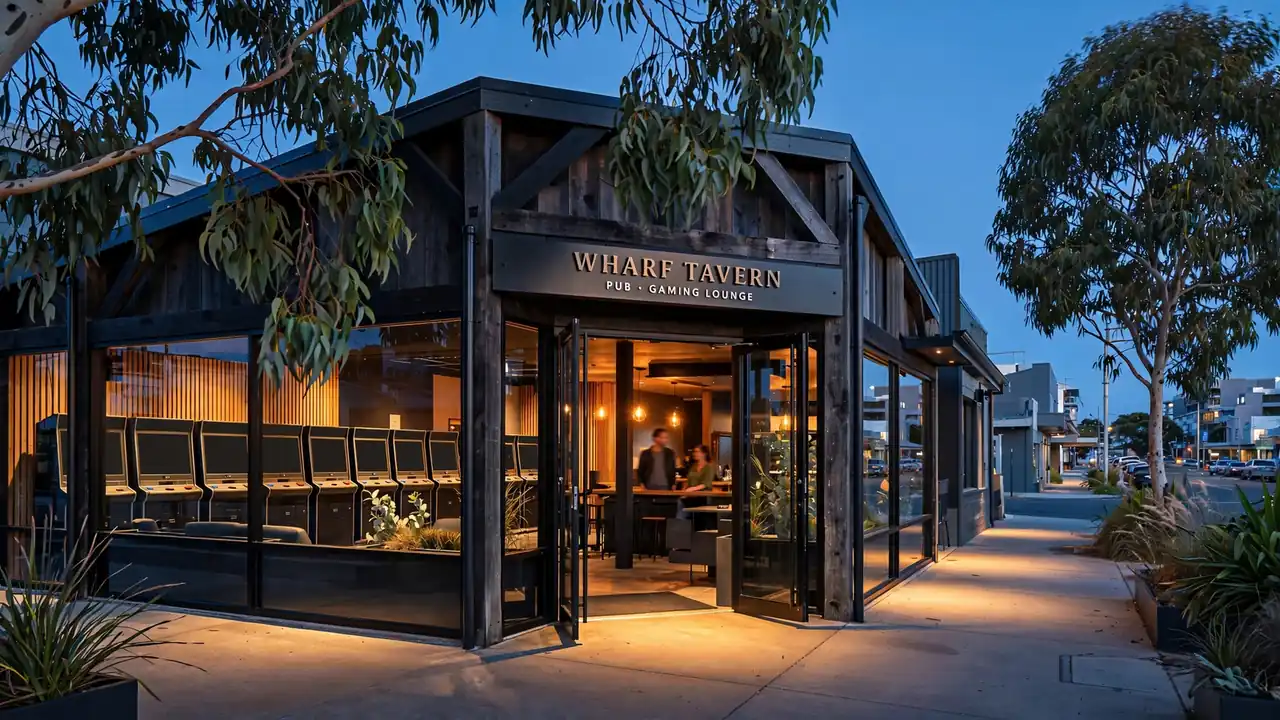
The same care applies to searches around the CBD. “Near the CBD” has no fixed boundary in a search result. A listing may use the phrase for visibility even when the relevant journey is not obvious from the label. Check the address against the intended starting point and consider the route shown, rather than assuming that a CBD tag means a short walk or a direct trip.
“Near me” is also only as precise as the location setting and the result’s underlying address. A phone may use an approximate position, and a listing may describe a broad neighbourhood. For a North Adelaide search, for instance, verify that the named venue’s address is actually in the area meant, rather than inferring it from the wording of a result.
When a result mentions Adelaide, Adelaide Airport or a nearby suburb, I look for three things: the venue’s full name, a street address, and a map pin that matches that address. I would then check the venue’s own information for any changes to its location. If those details are absent or inconsistent, the sensible conclusion is not that the venue is close by; it is that its location has not been established well enough for planning.
That is a mundane check, but it prevents a common error: treating a search label as a geographic fact. A venue can be relevant to an Adelaide search without being at the airport, in the CBD or in North Adelaide. Distance, access and the starting point all depend on the actual address. A broad result cannot settle them.
- Verify the venue’s full name
- Confirm the street address
- Match the map pin with the address
- Rely on broad area labels
- Assume “near the CBD” means a short walk
- Treat a search label as a geographic fact
Venue Rules and the Information They Require
A venue’s machine count can matter more than its name when considering responsible-gambling safeguards. A report published by regionriverina.com.au describes a requirement for venues operating more than 20 gaming machines to have a dedicated responsible gambling officer (RGO) on duty whenever those machines are running. That is an operational threshold, not a rating of a venue or its pokie offering.
The distinction is practical. A sign or policy can describe what a venue intends to do; an officer roster concerns who is present while the machines operate. In my experience, those are different kinds of assurance. The first is visible. The second depends on staffing and on the venue putting the requirement into practice.
The reported change is stated to begin on 1 July. Venues are allowed a one-month transition period to take down relevant signage and put the RGO arrangements in place. The transition period matters: a requirement being introduced is not the same as every affected venue having completed the change on its first day. The report does not establish which Adelaide venues meet the machine-count threshold or whether any particular venue has implemented the arrangements.
Signage has its own placement rules. Directions to gaming lounges should not be displayed within eyeshot of ATMs or EFTPOS terminals. Signs pointing patrons towards ATMs should not be visible from gaming machines. These restrictions concern the route a sign encourages and where it can be seen, not simply whether the wording sounds responsible. Placement is part of the safeguard.
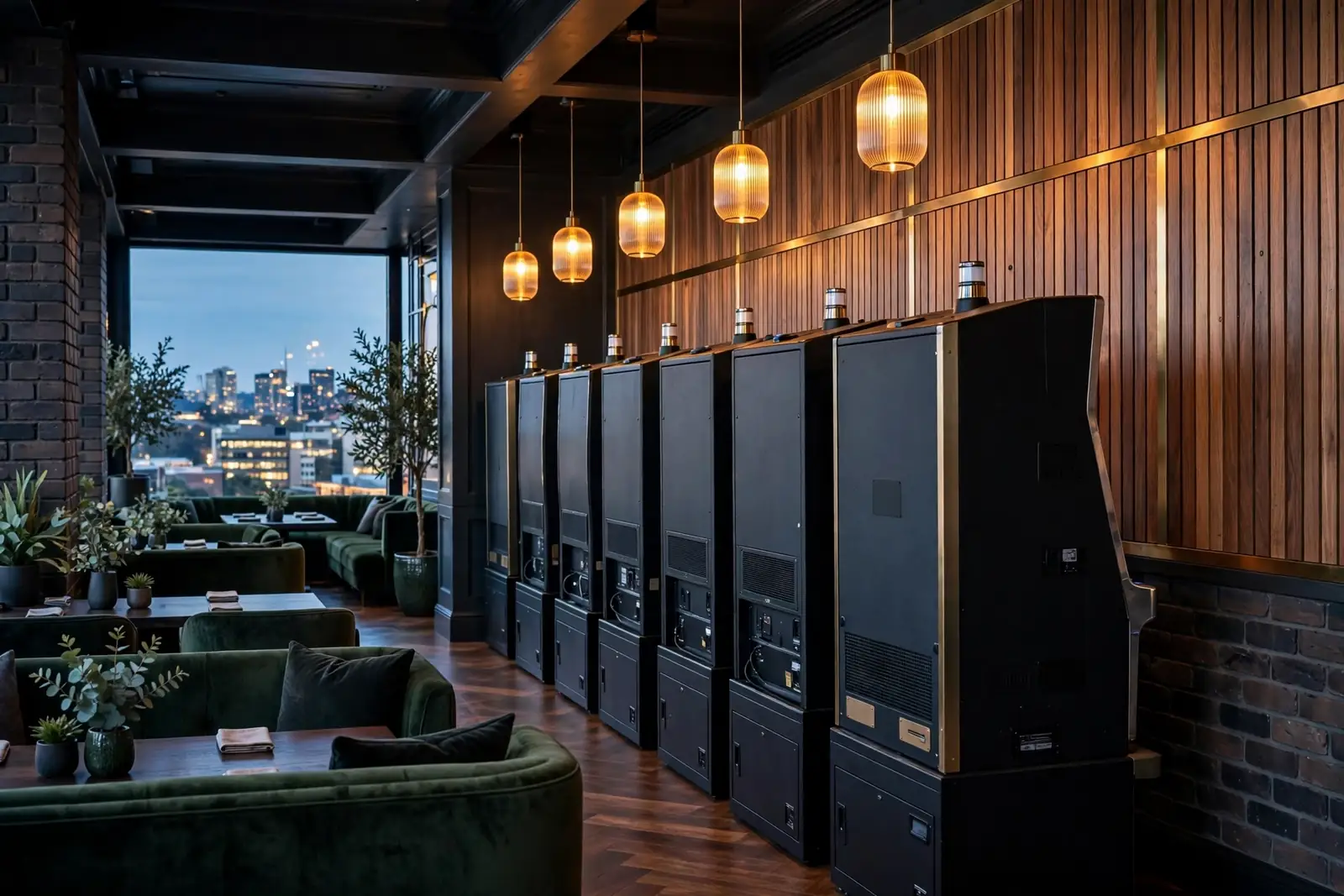
A further requirement described in the report is a gambling incident register. It is intended to record occurrences, including situations in which a patron shows behaviour suggesting they may be at risk of gambling harm or already affected by it. That makes the register more than a general complaints book: its purpose is to capture incidents relevant to harm and venue response.
A record does not, by itself, demonstrate what staff did next. Its value depends on the information being recorded and on the venue’s handling of the situation. That is the less visible side of a rule: not the existence of a form, but whether the process supports a timely response. Paperwork alone is not intervention.
When comparing Adelaide venues, the responsible question is therefore not which one can be labelled the “best” on the strength of a name or a polished description. The available rules describe obligations tied to machine numbers, operating periods, signage and incident recording. They do not certify individual venues or establish that a particular club in the CBD is covered by the threshold. A venue’s own information may explain its arrangements, but the details should be read as claims about that venue, not as proof that every requirement has been met.
The operational test is straightforward: a reported rule sets out what a covered venue is expected to arrange, while staffing, placement and records are matters of implementation. The difference is easy to miss. It matters.
Online Pokies Searches: The Australian Legal Boundary
A search that begins with Adelaide venues can shift quickly to real-money pokies on a website, sometimes framed around a bonus or a no-deposit offer. Those are different questions. A local venue search concerns a physical place; an online offer falls under the Interactive Gambling Act 2001.
Legal Status
The Interactive Gambling Act 2001 prohibits companies from providing real-money online casino games to people in Australia without a domestic licence; no such licences have been issued.
The Act prohibits companies from providing real-money online casino games, including pokies, to people in Australia without a domestic licence. No Australian licences for online casinos have been issued, so there is no Australian-licensed online casino. A website’s use of Australian references, currency or payment terms would not change that legal position.
The distinction that matters is who the law targets. The restriction is directed at operators providing the service, not at an individual player. That does not turn an offshore casino into a locally licensed business or give it Australian regulatory standing. In practice, offshore sites may still be accessible and may accept Australian customers, but accessibility and legality for the operator are not the same thing.
I have seen “available to Australians” used as if it settled the important question. It does not. It describes a site’s willingness or ability to take customers, not an Australian licence. A bonus offer changes none of that. Whether it is described as a welcome deal, free play or no-deposit bonus, the wording cannot create a domestic licence where none exists.
This distinction also explains why searches for the best pokies in Adelaide can return material about online play alongside information about local venues. The same word is being used for two different settings, with different rules. A page about an online casino should not be read as evidence that the service is approved in Australia, nor as an endorsement of it.
BetStop has a defined boundary too: it applies to Australian-licensed operators and does not bind offshore sites. Since no Australian-licensed online casino exists, BetStop should not be treated as a safeguard that controls an offshore casino account. It is important not to mistake a familiar Australian service name for oversight of every website that will accept a local customer.
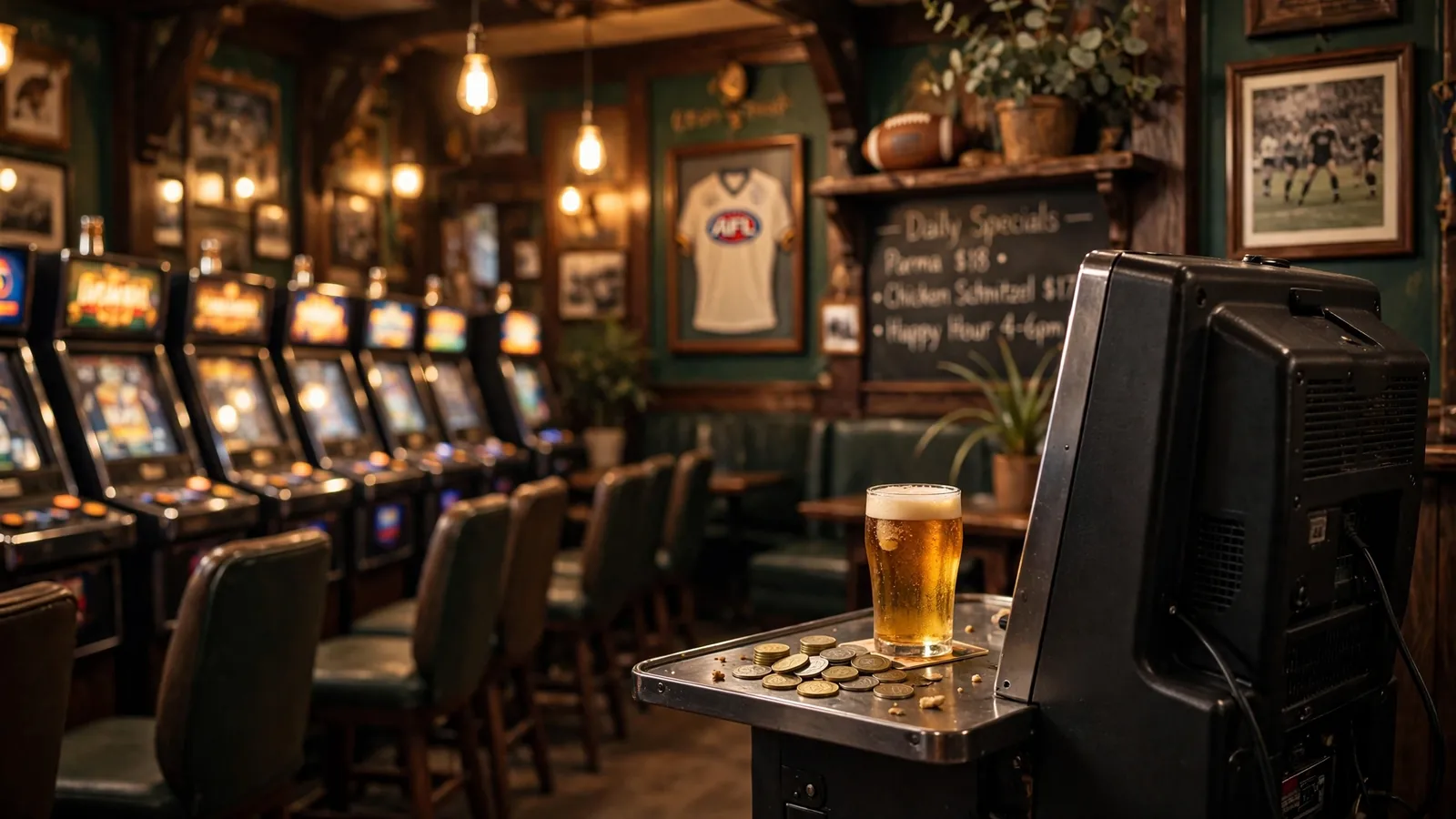
The legal line is straightforward, even when search results blur it. Australian law prohibits operators from offering real-money online casino services here without a domestic licence; none has been issued. The law does not make the individual player the target of that prohibition. Those statements can both be true, but neither makes an offshore service locally licensed. No local licence.
Mobile Access Does Not Change the Online Casino Rules
A phone changes the screen, not the legal character of the service. A pokie opened in a mobile browser and the same game opened on a desktop remain online gambling services. An app, a responsive website or a page reached through a link does not create a separate licensing category.
That distinction matters when Adelaide searches move from local venues to real-money play online. A service does not become an Adelaide venue because it loads on a phone in Adelaide, nor does a mobile interface make an offshore casino an Australian-licensed operator. The Interactive Gambling Act 2001 prohibits operators from providing real-money online casino games to people in Australia, and no Australian online casino licence has been issued.
I have seen the device treated as if it were the important safeguard: a familiar-looking app, a quick sign-in, a balance displayed in Australian dollars. Those details describe the interface and the account, not the operator’s legal status. “Mobile access” is a product feature, not regulatory approval. A polished screen proves very little.
If an offshore casino refuses to pay winnings, an Australian player has no legal recourse in Australia to compel payment.
There is a practical consequence beyond the wording of the law. If an offshore casino refuses to pay winnings, an Australian player has no legal recourse in Australia to compel payment. The phone may make the service easy to reach; it does not provide a local avenue for resolving a dispute. That is a hard difference between convenience on screen and protection in law.
BetStop has a similarly specific boundary. It applies to Australian-licensed operators and does not bind offshore sites. Because there is no Australian-licensed online casino, registration with BetStop should not be treated as a block against offshore casino websites or as a guarantee that access will be prevented. A self-exclusion tool only works within the operators and services covered by its rules.
The same logic applies to searches for online pokies near Adelaide or for a venue’s games on a mobile device. Location settings, mobile data and browser permissions do not turn an online service into an Adelaide club or casino. Nor do they verify that a named venue exists, what it offers, or whether a remote operator is authorised to provide real-money play in Australia.
For anyone comparing a physical venue with a screen-based service, the useful first distinction is the setting: a local venue operates under venue rules; an online casino is an interactive gambling service subject to the federal prohibition on operators providing it to people in Australia. The interface can blur that difference. The law does not.

I would not read “play anywhere” as a statement about legal permission or recourse. It describes reach, at most. On mobile, the same limits apply as on a computer, and a withheld offshore payout remains outside Australian legal recovery. The screen is smaller. The risk is not.
Hours, Session Limits and the Meaning of “24 Hour”
“24-hour” describes a claimed schedule; it does not, by itself, confirm that a particular Adelaide venue is operating at every hour of the day. Nor does the phrase “open now” settle the matter: that is a time-specific status, while a general opening-hours listing may not reflect a temporary change. I keep those claims separate. A venue’s hours concern when its doors and gaming area are available; they say nothing about how long an individual should stay.
That distinction matters because the wording can make access sound continuous and uncomplicated. It is not a measure of safety, availability or suitability. I have seen how operational details and promotional shorthand can sit close together, even though they answer different questions. “Open all day” is about a schedule. It is not a recommendation to play for the whole day.
Personal limits work on a different level. Deposit limits set a boundary on money put into gambling; loss limits address losses; session time limits create a boundary around duration. Self-exclusion is a separate option for restricting access. These tools do not establish a venue’s opening hours, and opening hours do not replace them. A long operating window can still contain a short personal session. Different question.
Responsible Planning
- Distinguish between a venue’s operating schedule and personal session limits
- Use deposit, loss, and time limits independently of venue hours
- Adhere to the minimum legal gambling age of 18
- Treat “24 hour” claims as schedule information, not a reason to extend play
The practical point is to treat a session limit as a decision made independently of the venue’s timetable. If the machines remain available after a planned session ends, that availability does not change the limit’s purpose. Likewise, a venue closing does not make a personal limit unnecessary. They govern different parts of the situation: one concerns access to a place, the other a person’s time or money.
The minimum legal age for gambling in Australia is 18, including for online pokies. That age rule is about eligibility, not venue schedules or the use of limit-setting tools. Being old enough to gamble does not mean that any particular venue is open, and an advertised opening period does not alter the age requirement.
So “24 hour” should be read narrowly as a statement about operating time, not as evidence of continuous access at a named Adelaide venue or a reason to extend a session. Opening claims and personal boundaries belong in separate columns. One is about the venue; the other is about the session.
Crown-Related Searches: What the Available Facts Can Establish
A Crown reference beside Adelaide can look like a venue description, but a name in a search result is not proof of a venue’s identity, location or offerings. Search wording can combine a brand, a city and a type of entertainment even when those terms have not been tied together by a reliable venue listing. I have learned to treat that combination as a lead, not a finding.
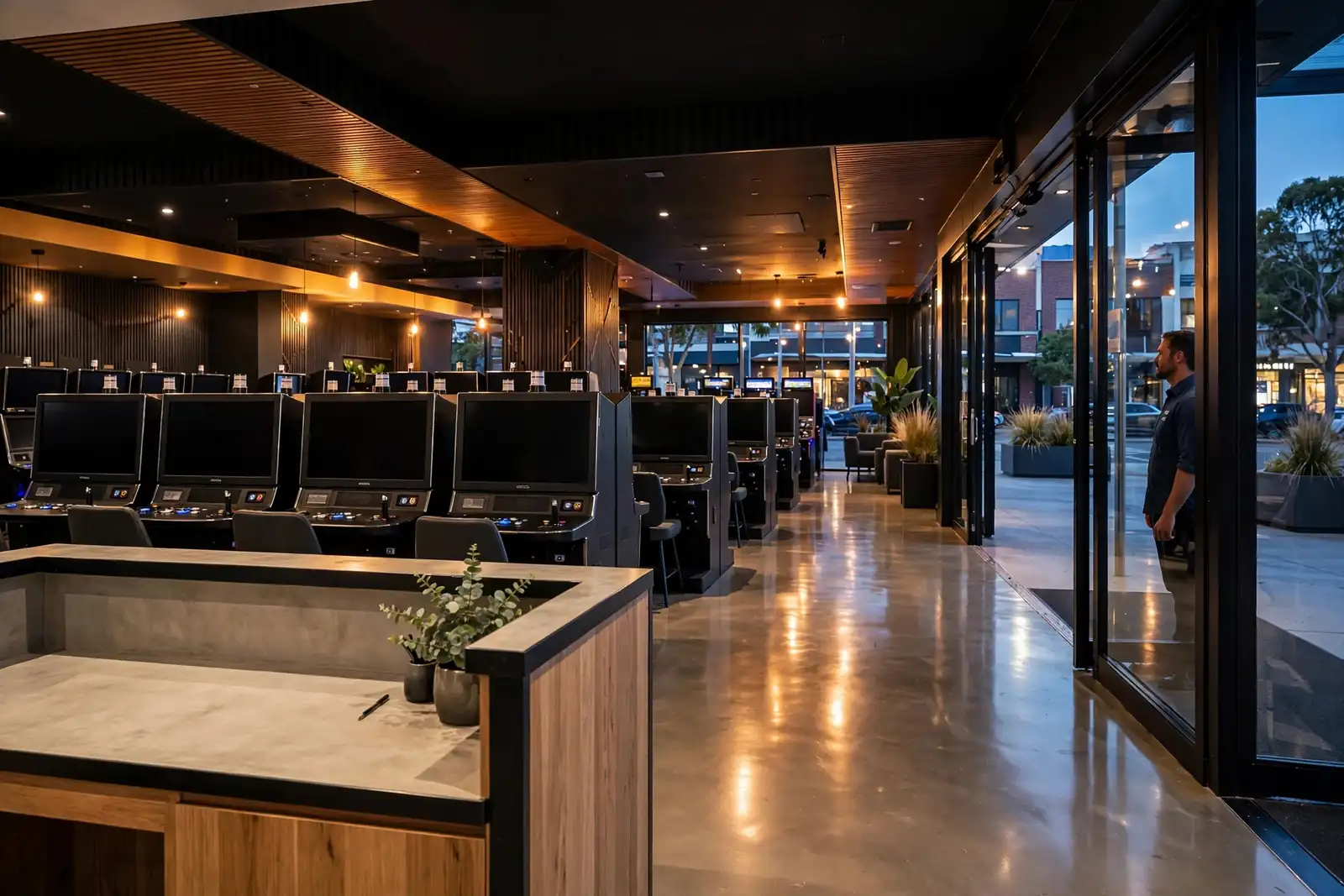
The same distinction matters when the question is about pokies. A venue’s name alone cannot establish whether it has gaming machines, what room they are in, or which games are available. Those details need to come from information specifically about the venue and kept current. A general page about a brand, an old directory entry or a snippet copied into another listing may not answer them. Labels travel further than the details behind them.
“Best pokies room” is another claim, not a measurable description by itself. It could refer to the size or layout of a room, the range of machines, access or atmosphere. Without a clear basis for comparison, the word “best” does not tell much about what a particular place offers. It is advertising language until the underlying criteria are made clear. Different question.
Cash payout wording needs the same care. A search phrase about a maximum payout does not establish a venue’s payout rules or a machine’s prize conditions. Those are separate details, and a broad result may blur them. A claim about a maximum should identify exactly what it applies to and where its terms are set out; otherwise, the phrase can sound more definite than it is. The number in a headline is not a policy.
I would separate the checks rather than treat the Crown name as an answer: establish which venue is being discussed, confirm that the listing refers to Adelaide, then look for venue-specific information about machines or payout conditions. If those details are not stated clearly, they should not be inferred from the name, from a room label, or from nearby search terms.
That is a narrow point, but an important one. A brand reference can direct attention; it cannot, on its own, verify a local venue or what happens inside it. For Adelaide, the responsible description stops at that boundary.
A brand name or a phrase like “best pokies room” is advertising language and does not verify a local venue’s specific machine offerings or payout conditions.
CBD Clubs and Gaming-Machine Reporting
A list of Adelaide clubs with pokies would imply more than a name and an address: it would suggest that each venue’s machines and operating arrangements had been checked. I cannot treat a club’s CBD location, or its appearance in a directory, as proof of what it offers or how it handles gambling harm. A search for the “best” pokies in the city centre is not a reliable measure of either.
The more useful distinction is between a venue’s gaming-machine count and the oversight attached to larger venues. The reported rules concern venues above the relevant machine threshold; they do not establish that any particular Adelaide club falls into that category. Nor does a general rule verify the current arrangements at a named venue.
A report published by regionriverina.com.au describes a requirement for venues to keep a gambling incident register. It says the register is intended to record occurrences, including situations where a patron’s behaviour indicates they may be at risk of, or affected by, gambling harm. That is an operational record, not a public ranking or a guarantee that harm will be prevented.
The distinction matters. A register can make incidents visible to venue management and support oversight of how they are handled. It does not, by itself, tell an outsider how consistently staff identify concerns, what follow-up occurs, or whether a particular club has had an incident. Those questions need venue-specific information; a broad reporting rule cannot answer them.
Self-exclusion is a separate responsible-gambling measure. It concerns restricting a person’s access to gambling, while an incident register concerns recording events and signs of harm at a venue. Treating the two as interchangeable blurs what each mechanism can do. Neither turns a club listing into evidence about a venue’s actual practices.
From behind the counter, the paperwork is often the part that looks least significant and matters most when an incident needs to be understood later. But a record is only a record. It is not proof of prevention, and it cannot support a claim that one Adelaide club is safer or better than another without evidence about that venue.
“Cashless” Searches and the Limits of Payment Claims
“Cashless” can describe several different things, and the distinction matters. A question about cashless pokies in Adelaide might concern how a venue’s machines accept or manage payments. PayID, however, is a bank-transfer identifier: it links a transfer to an email address, mobile number or ABN rather than functioning as a cashless feature on a gaming machine. Its role is on the payment network, not evidence about a venue’s equipment or payment facilities.
PayID operates through Australia’s New Payments Platform, which is available through all major banks and protects transfers with end-to-end encryption. Those details describe the transfer infrastructure. They do not confirm that an Adelaide venue accepts PayID, offers cashless play or uses any particular machine system. I have learned to separate a payment label from the service it is attached to. The label alone proves little.
The same caution applies when Adelaide and Newcastle appear together in a search for pokies. Mentioning both places does not establish that a venue operates in either city, or that its payment arrangements match those in another location. A location name is not a venue record.
Nor does PayID support establish that an online gambling service is licensed, that its games are fair, or that its return-to-player information is transparent. A transfer method answers how money may move; it does not settle the status or qualities of the recipient service. Those are separate questions.
So “cashless” is not a reliable shorthand for PayID, and PayID is not proof of cashless machines in Adelaide. In venue terms, the relevant details are the venue’s own facilities and procedures. In payment terms, PayID identifies a way to route a bank transfer. Different layers. Different claims.
Are online pokies legal for Australian players?
Yes, Australians can legally play on offshore sites that accept them. However, offering real-money online pokies to Australians without a domestic licence is illegal for operators, and no Australian online casino licences have been issued; players have no legal recourse in Australia if an offshore site withholds winnings.
What does “wagering requirement” actually mean?
It is the amount you must bet, calculated as a multiple of a bonus, before you can withdraw winnings. For example, a 40x requirement on a $500 bonus means $20,000 in bets.
Can casinos change the RTP of their games?
Yes. Some providers let casinos choose between multiple RTP settings for a game, so the same pokie can have different theoretical return percentages at different casinos.
Written by the editors at Supabet Casino.