Best Pokies in Sydney: How to Check Venue Listings
 Available in AU
Search results can point to venues, but they do not verify current pokies, machine availability or opening hours.
- How to Read Sydney Pokies Listings Without Mistaking Search Results for Venue Data
- What “Online Pokies” Means Under Australian Law
- Opening-Time Searches: What Can—and Cannot—Be Confirmed
- “Best Paying” Is Not a Verified Measure of a Sydney Pokie
- Airport and North Sydney Searches Need Venue-Level Confirmation
- Crown Sydney: No Verified Pokies Details to Compare
- What Venue Reporting Rules Say—and What They Do Not
- “24-Hour” Does Not Establish a Venue’s Current Hours
- Sydney CBD Clubs: No Verified Venue List
- “Parkes Sydney” Is Not Enough to Identify a Venue
How to Read Sydney Pokies Listings Without Mistaking Search Results for Venue Data
A listing is a lead, not proof. A map pin, directory entry or search snippet can help identify a venue to investigate, but it does not establish that the venue currently has pokies, that a particular machine is available, or that the information is up to date. Names and descriptions can also be repeated across sites, so several matching results are not necessarily several independent confirmations.
I learned to separate three things that are often bundled together: a venue’s identity, its facilities and the machines on its floor. A result that names a Sydney venue may support the first point. It may say little about the second, and nothing reliable about the third. “Pokies near Sydney” describes an area of interest; it is not a verified inventory.
The same distinction applies when a map or directory appears to show options near a landmark, a transport hub or the city centre. Proximity on a screen does not confirm what is inside a venue. Nor does a polished listing prove that its details were checked recently. A useful entry should make it possible to identify the venue and trace its information to a current, accountable source. If it offers only broad claims, treat those as description, not evidence.
I have seen how a confident label can do more work than the details beneath it. “Popular” may mean little more than that a page has been written to attract attention. “Local favourite” is not a count of machines, a measure of service or a record of returns. Advertising language is often designed to close the gap between what a reader hopes to learn and what the listing actually establishes.
A practical check begins with the venue’s own current information, then looks for consistency in its name, address and description. If a directory and the venue’s own material differ, the disagreement matters; it should not be resolved by choosing whichever version sounds more convenient. A listing may still be useful for orientation, but uncertainty should stay attached to it until the details line up.
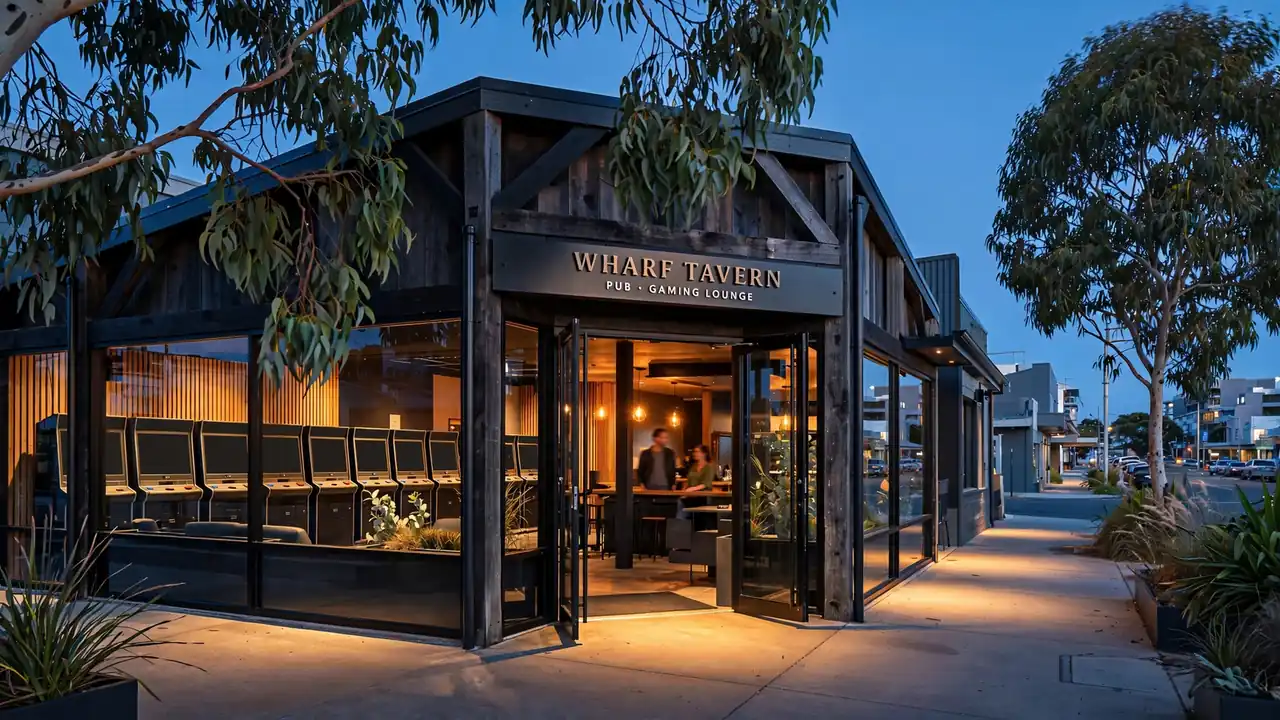
That is the difference between finding a place and knowing what to expect there. Search results can narrow a broad area. They cannot, by themselves, confirm the current contents of a gaming floor or tell anyone how a session will go. A machine’s presence is not a promise of a particular result.
The more important part of the decision is often not the listing at all, but the boundaries set before play. Deposit limits restrict how much can be put into an account or session; loss limits set a ceiling on losses; session time limits put a boundary around time spent playing. These tools address different pressures. A deposit limit controls money going in, a loss limit responds to money going out, and a time limit interrupts the tendency for a session to stretch.
Self-exclusion is a stronger step: it is an option to bar oneself from gambling access rather than merely set a smaller boundary. It is not interchangeable with a reminder or a break. The tools work best as clear restrictions, not as targets to renegotiate once play has begun. In my experience, a limit chosen in the middle of a session is a weaker safeguard than one decided beforehand.
None of these controls verifies a venue listing or makes a pokie predictable. They serve a different purpose: setting limits around participation. A local result can answer where a venue may be; it cannot answer whether a particular person should play, or what any spin will return. Keeping those questions separate prevents a directory page from being mistaken for a recommendation.
A Sydney listing can be a starting point, then. Its value lies in helping locate and identify a venue, not in supplying proof about every detail or an assurance about play. The distinction is plain. Search is not confirmation.
What “Online Pokies” Means Under Australian Law
A Sydney venue and a website can both be described as places to play pokies, but they sit on different sides of the law. A machine operated at a physical venue is not the same thing as a real-money game delivered over the internet. The distinction matters because the rules for online casino-style play are directed at the service provider, not simply at the game’s name or appearance.
Legal Risk
No Australian online casino licences have been issued, meaning there is no Australian-licensed online casino offering real-money pokies.
The Interactive Gambling Act 2001 prohibits companies from providing real-money online pokies to people in Australia unless they hold a domestic licence. No Australian online casino licences have been issued. In practical terms, there is no Australian-licensed online casino offering real-money pokies. A website may use Australian language, show Sydney imagery or display familiar game titles; none of that changes its legal status.
I learned to separate the product label from the operating arrangement. “Online” is not just a machine viewed through a screen. It means a company is delivering a gambling service remotely, and the legal question concerns that company’s conduct. A land-based venue search, even one that includes “online” or “cashless”, does not establish that a venue offers internet gambling. Nor does cashless payment at a physical machine turn it into an online casino.
Who the law targets
The Act is enforced by the Australian Communications and Media Authority (ACMA). Its focus is the operator that provides a prohibited service to people in Australia. The law does not make an individual player criminally liable merely for using an offshore site that accepts them. That distinction is often lost in broad statements that online pokies are “illegal”: the restriction on supplying the service is not the same as a criminal ban on the player.
That does not make an offshore site equivalent to a local venue, or give a player the protections available through an Australian online casino regulator. There is no such licensed casino. If an offshore operator refuses to pay winnings, an Australian player has no legal recourse in Australia to recover them. That is a material risk, not a small-print inconvenience.
ACMA also works to restrict access to illegal offshore gambling sites. It blocks sites, and Australian internet service providers are required to comply with its blocklist. A blocked website may become inaccessible through an Australian provider, but access problems are not evidence that an operator has been approved, or that a different address for the same service is safe. The enforcement mechanism and the payment dispute are separate issues.
What the wording does not prove
A page advertising “real money” play, a no-deposit offer or high betting limits is making a commercial claim about an offshore service; the wording does not create an Australian licence. Nor does a Sydney reference establish that the operator is based in Sydney or subject to local oversight. The same applies to claims about a game’s returns: a location in the page title tells nothing by itself about the game setting or the operator’s legal status.
BetStop is another point that needs careful wording. It applies to Australian-licensed operators and does not bind offshore sites. Since there is no Australian-licensed online casino, it should not be treated as a safeguard that blocks access to offshore casino websites.
From behind a counter, the useful distinction was always between what a label suggested and what the arrangement actually was. A physical pokie in a venue is one thing; a real-money game supplied online to someone in Australia is another. ACMA’s role is to enforce the operator rules and restrict access to illegal offshore services. None of that turns a search result, an offer or a familiar game name into local approval. No local casino licence.
ACMA Role
The Australian Communications and Media Authority (ACMA) enforces the Interactive Gambling Act 2001 by targeting operators and restricting access to illegal offshore sites.
Opening-Time Searches: What Can—and Cannot—Be Confirmed
An early-morning search for Sydney pokies is a request for a practical detail: whether a particular venue is open at the time in question. It is not evidence that a venue exists, has pokies, or admits patrons then. Those are separate claims, and each needs its own confirmation.
I used to treat an opening-hours line as a simple operational fact. It rarely stays simple for long. A listing can be copied across directories, left unchanged after a schedule changes, or describe the venue generally rather than the area where pokies are available. The wording may look definite while the information behind it is stale or incomplete.
“Open early” is not a time. It is a label that means different things to different people, and it cannot establish when a venue begins operating. A result that appears to match an early start should therefore be treated as a lead, not a confirmed timetable. The same applies to claims that a hotel has pokies available: the word “hotel” does not verify either the machines or their hours.

The reliable question is narrower: what does the venue itself currently say about its hours, and does that answer cover the relevant facilities? A venue’s own current notice is a better starting point than a copied directory entry. If the distinction matters, direct confirmation from the venue is the useful step. A general opening time may not answer whether the gaming area is open at that same time.
There is a difference between a published schedule and live status. A schedule describes planned hours; it does not prove that a venue is operating as usual at a particular moment. Temporary changes, special arrangements or an unexpected closure can make a previously accurate listing misleading. That is why a timestamp or a recently updated page matters more than confident wording alone.
I also separate “open late” from “open early”. They describe different ends of a schedule, and neither establishes the other. A venue listed as operating late may not continue into the morning; a venue that opens early may not have been open through the preceding night. Phrases suggesting a long operating day are not a substitute for stated hours.
- Check the venue’s own current information
- Confirm details directly with the venue
- Look for recently updated timestamps
- Rely on copied directory entries
- Treat labels like “open early” as schedules
- Assume a general opening time covers gaming areas
For the same reason, a claim that a venue stays open until a particular point in the morning needs venue-level confirmation. The phrase itself does not tell whether it refers to the whole venue, a particular service, or an older schedule. Without a current timetable that clearly covers the relevant area, a precise claim remains unconfirmed.
A useful check is to look for the venue’s own current hours, note when that information was updated, and confirm directly if the published wording is ambiguous. If different listings conflict, the conflict is a reason to pause rather than choose the most convenient answer. A search result can point in the right direction; it cannot settle the detail by appearing near the top.
This is not a ranking of places or a claim that any Sydney venue is open at a particular hour. It is a limit on what a search phrase can establish. The distinction is small on screen, but important in practice: a suggested match is not an operating schedule. Verify the venue. Verify the hours.
“Best Paying” Is Not a Verified Measure of a Sydney Pokie
Choosing a pokie site in Sydney calls for a quick check of what is known about its licensing and practical payment details. Use these notes as a starting point when deciding which options to explore further.
License: Curacao eGaming OGL/2023/174/0082 (Dama N.V.) · Min. deposit: A$15 LevelUp Casino lists a Curaçao eGaming licence held by Dama N.V. Its minimum deposit is A$15.
License: Curacao · Payout speed: crypto 30-60 minutes, fiat 1-5 days · Min. deposit: A$10 Wild Tokyo lists a Curaçao licence and a minimum deposit of A$10. Its stated payout times are 30–60 minutes for crypto and 1–5 days for fiat.
License: Curacao Gaming Control Board OGL/2023/176/0095 (Hollycorn N.V.) LuckyVibe lists a Curaçao Gaming Control Board licence held by Hollycorn N.V.
License: Curacao Gaming Control Board OGL/2023/176/0095 (Hollycorn N.V.) Rollero Casino lists a Curaçao Gaming Control Board licence held by Hollycorn N.V.
License: Curacao eGaming (Dama N.V.) JeetCity Casino lists a Curaçao eGaming licence held by Dama N.V.
License: Curacao eGaming OGL/2024/923/0383 (Antillephone N.V.) · Min. deposit: A$30 WinSpirit Casino lists a Curaçao eGaming licence held by Antillephone N.V. Its minimum deposit is A$30.
License: Curacao (operating since 2017) · Min. deposit: A$20 Uptown Pokies has operated since 2017 and lists a Curaçao licence. Its minimum deposit is A$20.
License: Curacao · Min. deposit: A$20 (POLi) Lucky Dreams lists a Curaçao licence and a A$20 minimum deposit for POLi.
License: Curacao eGaming (Roby Games Ltd) Roby Casino lists a Curaçao eGaming licence held by Roby Games Ltd.
Payout speed: crypto under 1 hour, PayID 1-3 business days · Min. deposit: A$20 (A$30 to qualify for the bonus) Ricky Casino states that crypto payouts take under an hour and PayID payouts take 1–3 business days. The minimum deposit is A$20, or A$30 to qualify for the bonus.
“Best paying” sounds like a result that can be checked against a clear table. In practice, the phrase often compresses several different claims: that a game has a particular return setting, that a venue uses that setting, and that a player is likely to see a favourable result. Those are not interchangeable. A title’s reputation does not establish which configuration is in use at a particular Sydney venue, and a past win does not show what the next spin will do.
A specialist review has reported that some game providers let casinos choose among different return-to-player settings for the same pokie. If that applies to a title, its return percentage may differ between casinos even when the game looks identical. The game name alone, then, cannot verify the setting. A comparison that does not identify the configuration and the venue behind it is missing the detail that would make the claim meaningful.

Even a confirmed return setting would not predict an individual session. Each spin is generated independently by a Random Number Generator. The previous result does not make a particular outcome due, and a run of wins or losses does not establish that the machine has changed its behaviour. That is the mechanical point advertising language tends to blur. “Hot” is a label, not evidence.
Return figures also describe a theoretical rate across play, not a promise that a person will receive that proportion back in a short visit. The gap between a long-run measure and an individual outcome is why a high-sounding percentage cannot settle which pokie will pay best on a given night. Nor does it turn a venue comparison into a reliable ranking unless the relevant settings and methodology are established.
For searches about Sydney casino pokies or machines in the CBD, the same distinction applies. A list calling particular games the best paying would need to connect each named title to verified configuration information at the relevant venue. Without that, the ranking can be little more than a game-name list dressed up as a payout comparison. I have seen how easily a tidy table gives a claim the appearance of measurement. Neat columns are not proof.
The phrase “best paying” is therefore not a dependable measure on its own. It may refer to a stated theoretical return, a promotional description, or an anecdote about someone’s win; those sources do not establish the same thing. A claim about one Sydney location cannot automatically be carried over to another, and a general claim about a game cannot confirm the setting used at any particular casino.
The practical conclusion is narrow: game identity, venue, and return configuration would all matter to a genuine comparison, while randomness still prevents a forecast of individual results. Without those details, no defensible ranking of the best-paying pokies in Sydney can be made. The phrase promises more than it proves.
Main Conclusions
- “Best paying” is often a promotional label, not a verified measure
- Game providers may offer different return settings for the same pokie
- Random Number Generators ensure each spin is independent of the last
- Theoretical return rates do not predict individual short-term sessions
Airport and North Sydney Searches Need Venue-Level Confirmation
A place name narrows a search; it does not establish what operates there. A listing that pairs Sydney Airport with pokies may reflect a nearby result, an old directory entry or a page using the location as a broad label. None of those, by itself, confirms that a particular venue is inside the airport, that it has pokies, or that the information is current.
I learned to separate the map pin from the venue record. A location result can be close enough to look relevant while still referring to a different building or precinct. Airport wording is especially easy to overread: “at the airport” and “near the airport” are not interchangeable. The distinction needs to be resolved against the venue’s own address and current information, not inferred from the heading of a third-party page.
North Sydney needs the same discipline. A result associated with the district does not identify a specific club, hotel or other venue, and the district label does not prove that pokies are available at the listed address. Before treating a name as a real option, the address, venue identity and machine availability need to line up. If one of those details is absent or inconsistent, the location term is doing more work than the evidence.
A city-centre result can create a similar blur. “Sydney city” may be used loosely in listings, while the venue itself could be described under a more precise suburb or locality. I would not treat a broad city label as a confirmed address. The practical test is whether the venue’s own information identifies the same place and clearly states what facilities it offers.
“Maximum cash payout” is another phrase that sounds more settled than it is. A location does not tell anyone the maximum payable amount, and a general result cannot establish a figure for a particular pokie or venue. That requires a specific, current statement tied to the relevant machine or venue rules. Without that, a number attached to a listing is not a reliable basis for comparison. No figure. No inference.
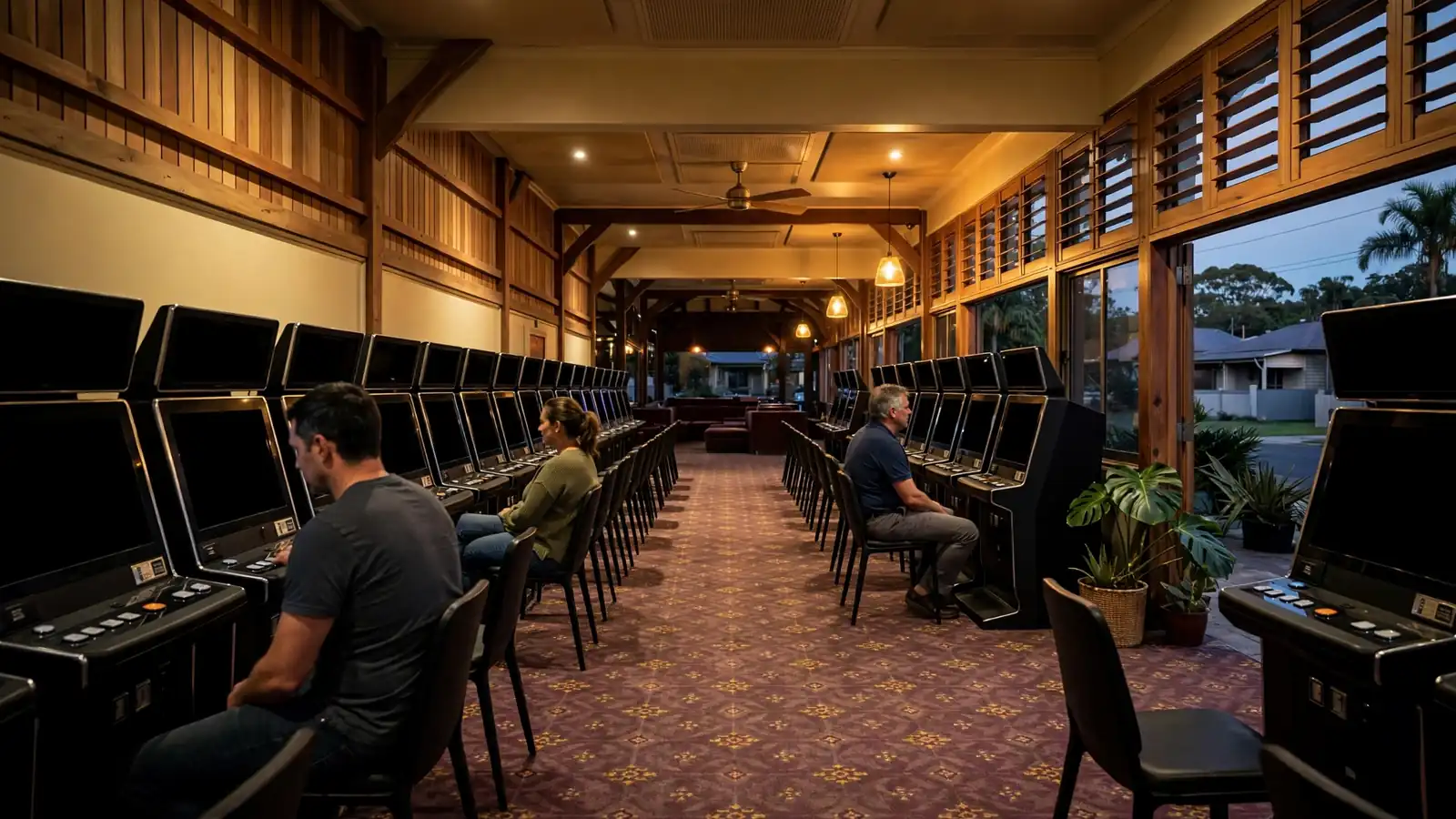
The wording of listings matters. “Pokies available” may sound definitive, but the useful details are the ones that can be checked independently: the venue’s exact identity, its address, and a direct confirmation of machine availability. A map marker, directory category or snippet is a pointer, not a venue record. In my experience, this is where polished listings can create confidence without answering the basic question.
For airport, North Sydney and central-city locations alike, the standard should be modest: confirm the named venue and its address, then confirm the facility with that venue. If the details cannot be matched, the responsible description is “unconfirmed,” not a recommendation. That keeps a location search from becoming an invented local directory.
Crown Sydney: No Verified Pokies Details to Compare
A venue name can make a search feel specific without settling the practical questions behind it. “Crown Sydney” identifies the place being asked about; it does not, by itself, establish which pokies are there, whether a particular machine is available, or what settings apply. Those are separate claims, and each needs evidence tied to the venue and the time it was checked.
I have learned to separate a polished venue description from machine-level information. A casino’s general profile may say little about its pokie room. Even a photograph or a broad reference to gaming does not establish a current machine list, a particular title, or whether a machine is operating when someone arrives. Search results can repeat descriptions long after the underlying details have changed. Repetition is not confirmation.
The same distinction matters when a page uses language such as “best pokies room”. “Best” sounds like a measured verdict, but without stated criteria and comparable information it is only an opinion dressed as a ranking. One person may mean range; another may mean atmosphere or access. None of those labels confirms which pokies are available, and none provides a sound basis for comparing returns.
For a meaningful comparison, the evidence would need to identify the machines being compared and explain the basis of the comparison. It would also need to distinguish venue-wide descriptions from details that apply to an individual game or machine. Without that, a confident-sounding claim about Crown Sydney’s pokies could be no more than a general impression. No comparison to rely on.
This is where marketing language often does its quiet work. “Popular” can describe attention, not a verified feature. “Exclusive” may refer to presentation, not a special game configuration. “Premium” can suggest quality while leaving the relevant details unstated. I would not treat those words as proof of a specific machine, its availability, or its return settings.
A careful account of Crown Sydney pokies would therefore need to say exactly what was checked, when it was checked, and what the information actually supports. A current machine list would support a claim about listed titles; it would not automatically confirm that every listed machine is available at a particular moment. A venue description would support a description of the venue, not a ranking of its pokie room.
The distinction is modest but important. A recognisable name can narrow the subject, but it cannot fill in missing operational details. Without evidence that identifies the machines and supports the comparison, there is no responsible basis for naming a “best” room or recommending a particular pokie at Crown Sydney. A search phrase is not a floor plan.

What Venue Reporting Rules Say—and What They Do Not
A venue’s reporting duties can tell more about how it handles gambling harm than a promotional description can. They still do not establish that it has the “best” pokies, or that its machines offer a particular return. Those are separate claims, and the operational rules do not settle them.
A report by regionriverina.com.au describes a requirement applying to venues with more than 20 gaming machines: from 1 July, a dedicated responsible gambling officer (RGO) must be on duty while the machines are operating. The report also describes a one-month grace period for venues to remove signage and introduce RGOs.
That is a staffing and transition requirement, not a rating. An RGO on duty does not tell a patron which pokies are available, whether a particular machine is operating, or how a venue compares with another in Sydney. I have seen how easily a compliance detail gets turned into a selling point. It is not one.
The same report says venues will be required to keep a gambling incident register. It is intended to record occurrences, including behaviour suggesting that a patron may be at risk of gambling harm or already affected by it. The point is to create a record of incidents, rather than leave responses to memory or informal handover.
Responsible Gambling Requirements
Venues with more than 20 gaming machines must have a dedicated responsible gambling officer (RGO) on duty and maintain a gambling incident register to record behaviors suggesting a patron may be at risk.
A register is not a public scorecard. Its existence does not show how often incidents occur at a particular venue, how staff respond in each case, or whether one venue is safer than another. Those conclusions would require information beyond the existence of a reporting obligation.
There is a practical distinction here. A staffing duty concerns who must be present while pokies operate; an incident register concerns what must be recorded when relevant behaviour occurs. Neither is a machine specification. Neither confirms a venue’s current operating status or provides a basis for ranking Sydney venues.
When comparing venues, compliance information is best read narrowly: as an account of operational responsibilities, not proof of a superior gambling experience. The word “responsible” can sound like a broad endorsement. In this context, it points to defined duties around an officer and incident records. Nothing more.
The transition period matters too. The report’s grace-period description means the change is not necessarily visible everywhere at the same moment. Signage and staffing arrangements may be in transition during that period; a passing observation is not enough to establish whether a venue has met its obligations.
Useful context. Not a ranking.
“24-Hour” Does Not Establish a Venue’s Current Hours
“24-hour” sounds precise, but on its own it does not establish that a Sydney venue is open now, or that its pokies are available throughout the day and night. It is a label, not a live status check. The distinction matters: a venue’s general operating hours and the hours when a particular facility is accessible are not automatically the same thing.
I have seen how a short label can do too much work. It compresses several separate details into one reassuring phrase: whether the venue is operating, whether the relevant area is open, and whether access is available at that moment. Unless those details are confirmed for the specific venue and time, the label leaves the practical question unanswered. “Open now” is no more conclusive when it simply repeats the same unverified description.
Hours can also be presented in different ways across listings. One entry may describe a venue’s general schedule; another may refer to a service or area within it. A listing that does not say which one it means cannot settle whether pokies are accessible. Nor does a round-the-clock description establish that the schedule is current. A directory can retain old information, and a search result can appear current without showing when the underlying details were last checked.
That is why a claim of continuous availability needs more than the words “24-hour”. A venue’s own current information is a better basis for checking its stated schedule, but even a published schedule is not the same as confirmation of live operating status. Where the distinction matters, confirmation from the venue is the clearest way to resolve it.
The wording should be read narrowly. It may describe an intended or advertised schedule; it does not, by itself, confirm uninterrupted access to pokies or establish that a venue is open at a particular moment. That is not a technicality. It is the difference between a broad label and a usable answer.
For searches about Sydney pokies hours, the useful detail is the specific venue, the date and time, and what the stated hours cover. Without those, a “24-hour” result should not be treated as proof of current availability. No live status implied.
Sydney CBD Clubs: No Verified Venue List
A search for clubs with pokies in Sydney’s central business district can sound like a ready-made directory. It is not. The wording identifies an area and a type of venue; it does not establish which clubs have machines, whether those machines are operating, or what facilities a particular club provides.
That distinction matters because a club’s name, location and gaming-machine availability are separate details. A current venue-level confirmation is needed before any listing can be treated as useful. Without it, a “best” label is just packaging: it offers a ranking without a stated basis for comparing the venues. I have seen that sort of wording do more work than the underlying information.
No reliable comparison. No implied recommendation.
The same care applies to self-exclusion. Self-exclusion is a responsible-gambling tool, but the term alone does not explain how a particular venue handles it. Deposit limits, loss limits and session time limits are other tools that can help set boundaries; they are not evidence that a specific club has a particular process or machine offering.
BetStop is a national self-exclusion register, but its reach has an important limit: it applies to Australian-licensed operators and does not bind offshore sites. That distinction is relevant when a search shifts from local clubs to online play. It should not be confused with confirmation about a CBD venue.
For a club listing to support a practical decision, it would need to connect each named venue with current, venue-specific information rather than rely on a broad area label. In the absence of that connection, there is no sound basis for naming a CBD club as a place to find pokies or ranking one above another. The phrase “Sydney CBD pokies” describes an interest, not verified venue data.

“Parkes Sydney” Is Not Enough to Identify a Venue
“Parkes” alongside Sydney does not, by itself, identify a particular place or pokies venue. It may be a name someone has entered imprecisely, or a reference whose intended location is unclear. Without a confirmed venue name or address, attaching the phrase to a specific club, hotel or gaming room would be guesswork.
I have seen how quickly a loose location label becomes treated as a fact. A result can repeat the wording, another page can copy it, and before long the association looks established. That chain does not prove that a venue exists at the location meant, or that it has pokies. Repetition is not confirmation.
The same distinction matters when considering pokies in Parkes, Sydney, or comparing them with options elsewhere in the city. A place name can narrow a person’s intention without resolving it. “Best” adds no evidence: it does not establish which venue is meant, what machines are available there, or how one could be compared with another.
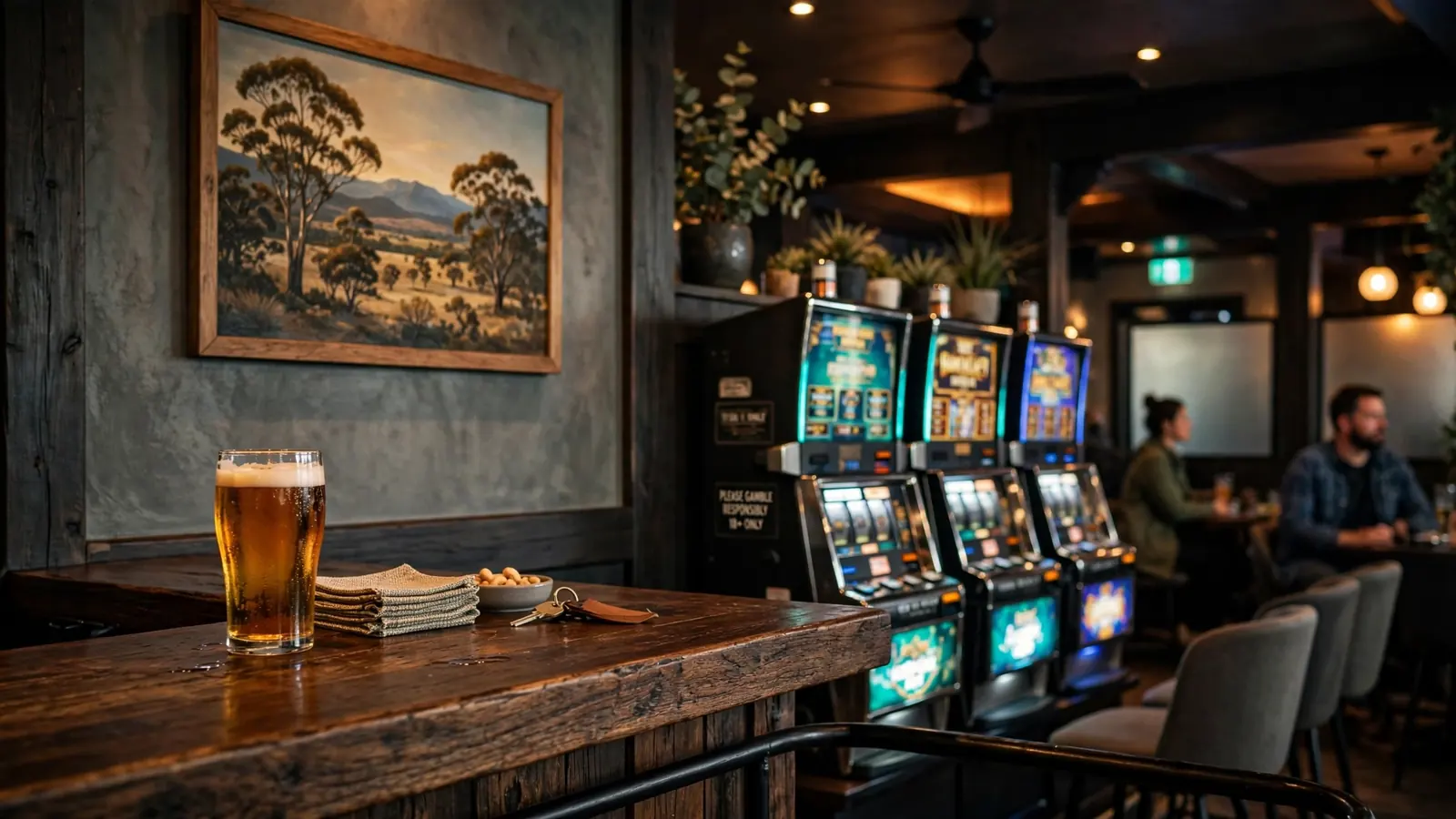
The practical check is venue-level identification. A current venue name and a physical address need to point to the same place; only then can the venue itself confirm whether it operates pokies. If those details do not line up, the location remains unresolved. No recommendation follows from the phrase alone.
This is not a claim that no relevant venue exists. It is a limit on what can responsibly be inferred from an ambiguous label. In the business, a location tag was useful for sorting enquiries, not for certifying what sat behind them. A map pin, a copied directory entry or a confident-sounding description could still be wrong.
So “Parkes Sydney” should not be read as a verified destination or a promise of particular machines. Until the intended place is identified and the venue’s own details are checked, the wording tells more about the uncertainty than the options. Keep the distinction clear.
Are online pokies legal for Australian players?
Yes, Australian players can use offshore sites that accept them, and players are not criminally liable merely for doing so. However, providing real-money online pokies to Australians without a domestic licence is illegal, no Australian online casino licences have been issued, and players have no legal recourse in Australia if an offshore casino refuses to pay.
Are online pokies rigged?
Each spin is an independent random event determined by a Random Number Generator, so previous results do not predict the next spin. The same game may also use different RTP settings at different casinos.
What is the cost-benefit calculation of casino promotions?
Check the wagering requirement and calculate the total bets needed before you can withdraw. For example, a $500 bonus with a 40x requirement means $20,000 in bets; if the requirement applies to a $500 deposit plus a $500 bonus at 35x, it means $35,000 in bets.
What’s the best strategy for playing pokies?
No strategy can predict a spin: each one is an independent random event. Set deposit, loss and time limits before playing, or use self-exclusion if you need to bar yourself from gambling.
Written by the editors at Supabet Casino.