Casinos Accepting Tether USDT in Australia: Claims
 Available in AU
Australian rules restrict operators from providing real-money online casino games, while Tether payment claims require separate verification.

- What “online” Means Under Australian Gambling Rules
- Why “Best” Cannot Be Verified From Payment Support Alone
- Online Casino Claims That the Available Evidence Cannot Confirm
- Bonus and Slot Claims: What Cannot Be Established Here
- Tether and Casino Games: No Verified Game Catalogue
- TRC20 and Australian Casino Payment Claims
- Which Casino Acceptance Claims Can Be Substantiated?
- Playing With Tether: The Unverified Steps Between Payment and Play
- Live Dealers and Tether: Two Claims to Check Separately
- Deposits, Withdrawals and the Limits of Crypto Payment Claims
What “online” Means Under Australian Gambling Rules
“Online” can sound like a description of where a website is based. Under Australia’s gambling rules, the more important point is where the customer is physically located when the service is provided. The Interactive Gambling Act 2001 makes it unlawful for operators to provide real-money online casino games to people in Australia. That prohibition applies to casino-style services such as poker, blackjack, roulette and pokies; it is not avoided simply because an operator is based overseas.
That distinction matters when a site presents itself as an offshore casino available to Australians. A foreign address or overseas licence does not change the Australian rule for providing the service to someone in Australia. The law places the restriction on the operator’s conduct. It does not turn the location of a website into a separate legal permission.
The position of an individual player is different. The Act does not expressly make a person criminally liable simply for using an offshore casino. That is not the same as saying that an offshore service is lawful to provide in Australia, or that playing carries no practical risk. The operator-facing prohibition remains. Two separate questions, two different positions.
I have seen marketing blur that distinction by describing an offshore site as “available” or “legal” for Australians. “Available” can mean only that a page loads or an account form appears; it does not establish that providing the service complies with Australian law. And the absence of an express offence for players is not a guarantee that a player will receive the protections associated with a locally regulated gambling service. Australian consumer law does not protect players who use offshore casinos.

The Australian Communications and Media Authority, commonly called ACMA, is responsible for enforcing the Interactive Gambling Act. Its role is enforcement of the operator restrictions, not confirmation that a particular offshore casino is approved for Australian residents. A site’s payment options, branding or claims about customers in Australia do not establish that it has permission to provide real-money casino games here.
This legal frame applies regardless of the payment method mentioned in a site’s advertising. Searching for a casino that takes Tether does not change the underlying question: whether the operator may provide online casino gambling to a person physically in Australia. A payment label cannot make a prohibited service lawful. It also cannot establish that the service has the safeguards, complaint routes or consumer protections that might be assumed from familiar language such as “Australian casino.”
The word “casino” is used loosely online. It may appear beside references to live tables, mobile play or pokies, but those product descriptions do not alter the legal category. Where real money is involved and the service is an online casino game provided to someone in Australia, the operator restriction is the relevant point. Calling a product a game, entertainment or a platform feature does not itself take it outside the Act.
There is also a difference between a rule’s application and what a player can infer from a website. A site may be visible, may use Australian currency in its wording, or may describe itself as serving Australian customers. None of those details proves that its operation is permitted under Australian law. Nor does the fact that the player is not explicitly criminalised amount to government endorsement. Visibility is not approval.
Legal Prohibition
Under the Interactive Gambling Act 2001, it is unlawful for operators to provide real-money online casino games to people physically located in Australia.
For a careful reading of the market, the useful starting point is therefore not whether an offshore casino describes itself as “Australian-friendly.” That phrase is promotional, not a legal status. The relevant statutory position is that operators must not provide real-money online casino games to people located in Australia, while the Act does not expressly criminalise those individuals merely for using an offshore site. Enforcement responsibility rests with ACMA.
The distinction is narrow but important: operator prohibition does not automatically translate into a player offence, and the absence of a player offence does not create a lawful local casino market. Offshore use also sits outside Australian consumer-law protection. Those points should not be collapsed into a single claim that online casino play is either simply “legal” or entirely without consequence. The legal position is more specific. Operators are restricted; players are not expressly criminalised by the Act for offshore use; and consumer protection does not follow them offshore.
Why “Best” Cannot Be Verified From Payment Support Alone
For Australian players considering casinos in connection with Tether (USDT), licensing and clearly stated payment details are useful starting points. The notes below stick to the information available for each operator.
License: Curacao eGaming OGL/2023/174/0082 (Dama N.V.) · Min. deposit: A$15 LevelUp Casino lists a Curaçao eGaming licence held by Dama N.V. Its minimum deposit is A$15.
License: Curacao · Payout speed: crypto 30-60 minutes, fiat 1-5 days · Min. deposit: A$10 Wild Tokyo lists a Curaçao licence and a minimum deposit of A$10. Its stated payout times are 30–60 minutes for crypto and 1–5 days for fiat.
License: Curacao Gaming Control Board OGL/2023/176/0095 (Hollycorn N.V.) LuckyVibe lists a Curaçao Gaming Control Board licence, OGL/2023/176/0095, held by Hollycorn N.V.
License: Curacao Gaming Control Board OGL/2023/176/0095 (Hollycorn N.V.) Rollero Casino lists a Curaçao Gaming Control Board licence, OGL/2023/176/0095, held by Hollycorn N.V.
License: Curacao eGaming (Dama N.V.) JeetCity Casino lists a Curaçao eGaming licence held by Dama N.V.
License: Curacao eGaming OGL/2024/923/0383 (Antillephone N.V.) · Min. deposit: A$30 WinSpirit Casino lists a Curaçao eGaming licence, OGL/2024/923/0383, held by Antillephone N.V. Its minimum deposit is A$30.
License: Curacao (operating since 2017) · Min. deposit: A$20 Uptown Pokies is listed as operating since 2017 under a Curaçao licence. Its minimum deposit is A$20.
License: Curacao · Min. deposit: A$20 (POLi) Lucky Dreams lists a Curaçao licence and a minimum deposit of A$20 via POLi.
License: Curacao eGaming (Roby Games Ltd) Roby Casino lists a Curaçao eGaming licence held by Roby Games Ltd.
Payout speed: crypto under 1 hour, PayID 1-3 business days · Min. deposit: A$20 (A$30 to qualify for the bonus) Ricky Casino lists crypto payouts in under an hour and PayID payouts in 1–3 business days. Its minimum deposit is A$20, or A$30 to qualify for the bonus.
A casino listing a payment method answers a narrow question: whether that method is presented as available for a particular transaction. It does not establish that the service is suitable, dependable or lawful for someone in Australia. I treat “best” as a comparative judgement, not a synonym for “accepts Tether”. The distinction matters because payment support is only one claim about an operator, and it cannot carry the weight of a recommendation by itself.
A meaningful ranking would need a consistent basis for comparison. That means knowing what is being assessed, whether the same standards apply to each service, and whether the underlying information is current. A payment logo or a line in a cashier may describe an advertised option; it cannot, by itself, settle broader questions about an operator’s conduct or the terms governing an account. A neat list can look authoritative while concealing that gap. A ranking needs more than a label.
For an Australian audience, suitability also cannot be separated from the legal position. The Interactive Gambling Act 2001 makes it illegal for operators to provide real-money online casino games to people in Australia. The fact that an offshore service appears accessible, or describes itself as accepting a particular payment method, does not change that rule. Australian consumer law does not protect players who use offshore casinos. Those are not minor footnotes to a “best” label; they change what that label could responsibly mean in this market.

I would not use payment convenience as a proxy for trust. Nor would I treat a familiar-looking cashier as proof that the overall service has been assessed. A payment claim and a suitability claim are different kinds of statements. One concerns a method shown for a transaction; the other implies a wider judgement about the operator and the conditions under which it operates. Blurring them is how promotional language starts doing the work of evidence.
There is also a difference between a site’s stated process and the experience of completing it. Online casinos commonly ask customers to pass a Know Your Customer check before they carry out financial transactions. That requirement is relevant because a payment option is not necessarily the only condition in the transaction path. It does not, however, establish how a particular operator handles checks, what documents it asks for, or how a specific account will be treated. Those details cannot be inferred from the payment method alone.
The word “best” often compresses several judgements into one short adjective. In a responsible comparison, each judgement would need its own support: what is being compared, what standard is used, and whether the information is sufficiently current to justify the result. Without that structure, “best Tether casino” is not a finding. It is a claim that sounds like a finding.
The same caution applies when the claim is narrowed to Australia. Adding “Australia” to a payment-based description does not make an offshore casino compliant with Australian law or bring its customers within Australian consumer protections. A payment route is not a legal status. I have seen how easily a cashier feature becomes the headline because it is simple to display; the qualifications that matter to the larger decision are harder to fit into a badge. That does not make the badge a comparison.
Attention Payment support for Tether does not establish that a service is suitable, dependable, or lawful for users in Australia.
A ranked list can also imply that every entry has been assessed on equal terms. If the only common point is a stated payment option, the list says little about the qualities that “best” ordinarily suggests. It may still appear precise, especially when operators are placed in order, but ordering is not proof. The appearance of measurement is not measurement.
So the useful distinction is plain: payment support can be one piece of information, while a recommendation is a much broader conclusion. For Australians, legality and the absence of consumer-law protection for offshore casino use are central to that conclusion. A Tether label cannot resolve them, and it cannot turn a payment claim into a dependable ranking. “Best” needs evidence beyond the cashier. Otherwise, it is just advertising language.
Online Casino Claims That the Available Evidence Cannot Confirm
A statement that an online casino accepts Tether is narrower than it can sound. It may describe a payment option shown somewhere on a site, but it does not by itself establish that the service is available to people in Australia, that the option works for them, or that the operator’s other claims are accurate. I treat those as separate questions, not as details supplied by a payment logo.

That distinction matters because the Australian legal position is not a licensing choice for operators. Under the Interactive Gambling Act 2001, providing real-money online casino games to people physically in Australia is illegal. The Australian Communications and Media Authority enforces the Act. A foreign-facing website or a claim about a cryptocurrency payment does not change that position. Australian consumer law does not protect players who use offshore casinos.
A broad description such as “Tether casino” can conceal several different claims: that a site accepts USDT, that Australian customers can use it, or that the site offers a particular service after payment. Each needs evidence specific to the point being asserted. A page that mentions cryptocurrency is not enough to establish all of them. Neither is a search listing, an old review, or a payment symbol whose current status is unclear.
I have seen how payment language works in commercial copy: a short label can make a complicated arrangement look settled. “Accepted” sounds definite, but without context it leaves practical questions open. Is the option currently listed in the cashier? Does the statement apply to Australian customers? Is it an operator’s own description or a third-party summary? Those distinctions are material, not fine print.

The same caution applies to claims about an online casino being the right place to use Tether. A confident adjective does not verify the underlying service. Nor does a mention of Tether prove that an operator is authorised to provide real-money casino games in Australia. The law addresses the operator’s provision of the service; payment language cannot be used to imply an exception.
This is not a claim that every online statement is false. It is a limit on what can responsibly be treated as established. Without current, operator-specific evidence, a general claim about a casino accepting Tether should not be presented as a confirmed Australian option. Naming sites or repeating promotional descriptions would turn uncertainty into an endorsement, and would risk advertising a service prohibited for this market.
The safest reading is a narrow one: a Tether reference is only a statement about payment, if it is current and accurate. It does not settle the operator’s legal position, the service’s availability in Australia, or the reliability of broader claims attached to it. Those are separate matters.
No inference from a badge.

Bonus and Slot Claims: What Cannot Be Established Here
A bonus label is not a payment method. “Welcome” describes when a promotion is presented; “deposit” suggests a condition attached to funding an account; “no deposit” suggests a different entry condition. None of those words, by themselves, establishes what a promotion contains, who could qualify, or whether a claim is genuine. I have seen marketing language do more work than the terms beneath it. The label attracts attention; the conditions determine the substance.
That distinction matters especially when Tether is placed beside promotional language. A reference to a crypto payment does not establish that a promotion is available, that it applies to a particular payment method, or that any stated benefit can be withdrawn. Those are separate propositions. Treating them as one claim is how a headline can sound definite while leaving the material conditions unresolved.
There is also a more basic Australian constraint. The Interactive Gambling Act 2001 prohibits operators from providing real-money online casino-style games, including slots, to people physically located in Australia. The Australian Communications and Media Authority enforces the Act. Offshore availability does not make such a service lawful to provide to Australian residents, and Australian consumer law does not protect people who use offshore casinos. The law does not explicitly criminalise the player for using an offshore site, but that does not turn the service into a locally protected or endorsed product.
That changes how promotional claims should be read. A page aimed at Australians may use familiar bonus language, but the wording is not proof that the underlying service may lawfully be supplied in Australia. Nor does a headline settle what happens to funds, whether terms apply, or whether a payment route is accepted. A polished offer is still advertising. It is not a substitute for enforceable consumer protections.
I treat “free” as a particularly loaded word. In ordinary marketing, it can refer to the absence of one initial payment while leaving other conditions in place. Without clear, lawful terms, the word says little about the user’s obligations or the practical value of the offer. The same caution applies to claims that join a bonus to a particular type of game or payment. Each link would need to be established independently; one does not follow automatically from another.

Searches combining Tether, bonuses and online slots therefore point to several distinct claims, not one established package. They do not establish an available promotion or a product suitable for Australian residents. I would not treat an attention-grabbing label as evidence of either. The legal boundary remains decisive. No promotion changes it.
Tether and Casino Games: No Verified Game Catalogue
A payment label and a game catalogue answer different questions. A cashier might display a cryptocurrency as a funding option, but that does not establish which games are offered, whether any particular game can be played after a deposit, or whether payment support applies to every part of a service. I keep those claims separate. They are not interchangeable.
The phrase “play casino games with Tether” can sound like one simple arrangement: use USDT, then choose from a particular set of games. In practice, that description combines several separate conditions. The operator would need to accept the token, make a game catalogue accessible to the relevant customer, and allow the chosen payment method to be used in connection with that account. Confirmation of one point would not, by itself, confirm the others.

That distinction matters especially when a site uses broad wording such as “crypto games” or “Tether casino.” Those labels can describe a payment method, a site category, or a promotional description; they do not identify a particular playable product. I would not treat a search result, a token symbol in a cashier, or a general statement about cryptocurrency as proof of game-level compatibility. The detail has to be specific to the operator and the service being described.
There is also a separate Australian legal boundary. Under the Interactive Gambling Act 2001, it is illegal for operators to provide real-money online casino games to people physically located in Australia. That includes casino-style services such as poker, table games and pokies. The law does not explicitly make the player’s use of an offshore site a criminal offence, but Australian consumer law does not protect players who use offshore casinos. Payment compatibility does not change either point.
A further distinction is between being able to view a game and being able to play it for money. A catalogue page, a demonstration mode, and real-money access are not the same thing. Nor does the appearance of a game title on a site establish that the game is available to an Australian resident or usable with Tether. Each is a separate claim, and none should be inferred from a payment badge.

From the industry side, this is where attractive wording can outrun the underlying terms. “Compatible” sounds complete; in reality, it may refer only to a narrow part of a transaction or service. A payment method does not certify a game, and a game listing does not certify a payment route. The wording needs to be read at that level of precision.
So there is no sound basis for treating “Tether casino games” as a confirmed catalogue or a promise that a particular game can be played using USDT. The responsible description is narrower: payment acceptance and game availability are distinct matters, and Australian law restricts operators from providing real-money online casino games to people in Australia. Two separate questions.
TRC20 and Australian Casino Payment Claims
A reference to TRC20 is a network claim, not proof that a casino accepts Tether from someone in Australia. The distinction matters. A payment label can describe a route or token format, while acceptance is a separate statement about what an operator actually permits. I would not treat the words “USDT TRC20” in a headline or payment graphic as confirmation of a working deposit option.

The general fact that some cryptocurrencies, including Bitcoin and Ethereum, can provide fast transactions with limited or no fees does not establish the same conditions for Tether. It says nothing about a particular network, a casino cashier, or whether a payment would be accepted. Extending that general point to a TRC20 deposit would turn a broad observation about other cryptocurrencies into an unsupported promise.
There are several claims bundled into a phrase such as “Australian casino with TRC20.” It may suggest that the operator serves people in Australia, that it accepts Tether, and that it supports a specific network for that token. None follows automatically from the others. A site could mention cryptocurrency without naming Tether; it could name Tether without specifying a network; or a payment page could display a network label without establishing that the service is lawful for Australian customers.
That last distinction is not cosmetic. Under the Interactive Gambling Act 2001, operators cannot provide real-money online casino games to people physically located in Australia. The law treats casino-style games as prohibited interactive gambling services, and the Australian Communications and Media Authority is responsible for enforcement. The law does not explicitly criminalise players for using offshore sites, but Australian consumer law does not protect people who use offshore casinos. A crypto payment label does not change that position.

In my experience, payment wording is often read as if it settles the entire transaction. It does not. “Supported” can be a narrow technical statement, and it does not by itself establish that a particular customer can use the service or that the operator may offer casino gambling in Australia. Nor does the label establish fees, processing times or other conditions. Those details cannot be inferred from the network name.
The careful reading is limited: TRC20 and Australian access are separate matters, and neither can be confirmed merely by seeing the other mentioned. A general statement about cryptocurrency payments cannot verify a real-money Tether casino for Australians. No shortcut here.
Which Casino Acceptance Claims Can Be Substantiated?
“Accepts Tether” sounds like a simple feature label. In practice, I treat it as a claim about a particular operator, a particular service and a particular point in time. A general statement that crypto is used for online payments does not establish that a casino accepts USDT, or that an Australian customer can access that option.

The wording also needs a clear scope. A casino may be described as accepting a currency without the claim specifying whether that means it appears in the cashier, can be used for a particular transaction, or is available to customers in Australia. Those are not interchangeable assertions. A label alone does not resolve them.
I have learned to read payment claims as operational statements, not endorsements. “With USDT” may look definitive in a headline, while the qualification that matters sits elsewhere: who the service is offered to and under what conditions. If those details are not attached to the claim, it tells little about what an Australian-facing customer would actually encounter. Neat label. Loose edges.
There is a more basic constraint in Australia. The Interactive Gambling Act 2001 bars operators from providing real-money online casino games to people in the country. That includes casino-style offerings such as poker, blackjack, roulette and pokies. The Australian Communications and Media Authority enforces the Act. The law addresses the operator’s provision of the service; it does not explicitly make an individual player’s use of an offshore site a criminal offence. That distinction does not turn an offshore casino into a locally authorised service.
Australian consumer law does not protect players who use offshore casinos, regardless of the payment method used.
Nor does it supply consumer protection. Australian consumer law does not protect players who use offshore casinos. A payment claim therefore cannot be treated as evidence that an operator is lawful to serve Australian residents, or that a customer has local remedies if a dispute arises.
I would not put a casino name beside USDT without a current, specific basis for that exact claim and its Australian scope. A list of names can make the statement look settled even when the underlying conditions are unclear. Leaving names out is more accurate than converting a broad label into a recommendation.
The narrow conclusion is that “accepts Tether” must be substantiated for the named operator and the relevant customer market; the phrase by itself proves neither. In Australia, even a confirmed payment feature would not alter the legal restriction on operators providing real-money online casino games to people physically in the country. Payment support and lawful availability are separate questions.
Playing With Tether: The Unverified Steps Between Payment and Play
A cryptocurrency payment and access to a casino game are separate parts of a service. I have seen how easily promotional wording collapses them into one claim: a site displays a coin symbol, so the reader assumes the whole route from transfer to play is available. That inference does not hold. A payment option, even where confirmed, would establish only something about payment—not which products are offered, whether an account can use them, or whether the service may lawfully be provided in Australia.
The general point that cryptocurrencies such as Bitcoin and Ethereum can support instant deposits and withdrawals with limited or no fees cannot establish the same terms for Tether. Nor does it show that any particular Australian-facing casino accepts USDT. Speed and cost depend on the specific asset, payment arrangement and operator terms; they cannot be carried over from one cryptocurrency to another as a blanket promise.

There is another gap between a payment being credited and a game being accessible. Account conditions, identity checks and the operator’s own restrictions can affect what happens after a transaction. A claim that a service requires no identity checks is not proof that the account can be used without them, or that a payment method removes other checks. Payment language is not an account rule.
The legal position in Australia is more decisive than the marketing language. The Interactive Gambling Act 2001 prohibits operators from providing real-money online casino games to people physically in Australia. Australian consumer law does not protect players who use offshore casinos. That distinction matters: the payment route does not make a prohibited service lawful, and it does not create local consumer protections.
I would treat “play with Tether” as an incomplete description, not a verified end-to-end arrangement. It can blur at least three separate matters: whether USDT is accepted, whether an account is permitted to transact, and whether a particular game service is available. Evidence for one does not answer the others. A cashier label cannot stand in for the terms governing an account or the status of the service.
The same restraint applies to claims about playing without KYC. That phrase describes a marketing claim, not reliable proof of what checks apply at registration, payment or later account review. The conditions may differ, and a payment method does not settle them.
I do not treat a smooth payment flow as evidence of a playable or lawful product. Different questions.
Live Dealers and Tether: Two Claims to Check Separately
A live-dealer table and a Tether payment option are separate features. One describes how a game is presented; the other describes a payment method. Seeing one mentioned does not establish the other, and a combined label such as “live crypto casino” can blur that distinction.
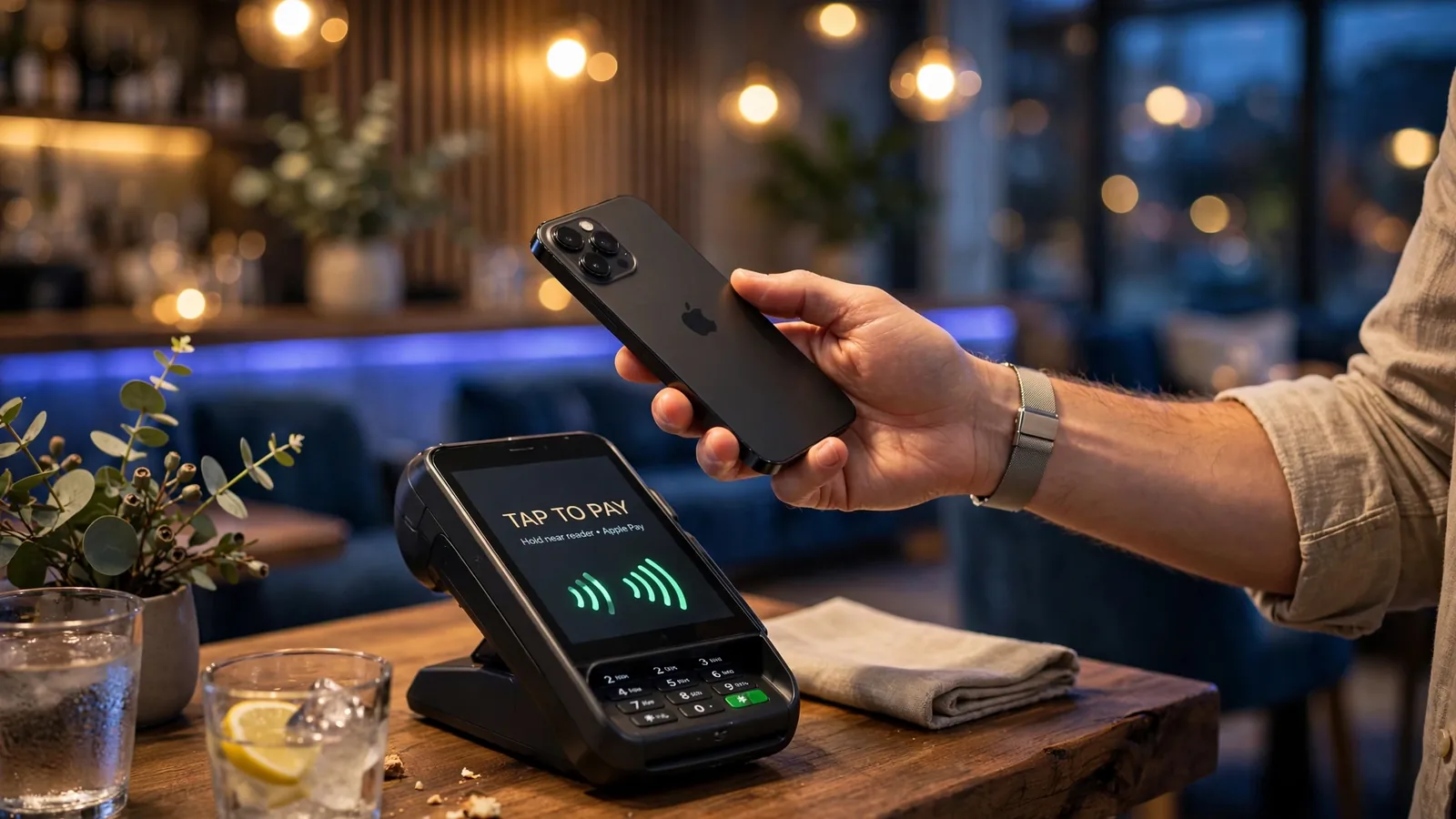
In operational terms, a live-dealer claim concerns whether a site offers streamed table games with a dealer. A USDT claim concerns whether its cashier supports Tether. Even if both appear in the same promotional description, the wording alone does not show that Tether can be used for those games, or that the live tables are available to Australian residents.
I have seen how broad labels can do the work of several specific claims at once. “Crypto-friendly” may sound like confirmation of a particular coin, while “live casino” may sound like a complete catalogue. Neither phrase, on its own, settles the details that matter: which payment methods are supported, which products are available, and whether those offerings apply to the stated market. Separate checks. Clear terms.
There is also a legal distinction in Australia. The Interactive Gambling Act 2001 makes it illegal for operators to provide real-money online casino games, including table games, to people physically located in the country. The Australian Communications and Media Authority enforces the Act. That rule is about the operator’s service; it does not make a player’s use of an offshore site a criminal offence. Australian consumer law does not protect players using offshore casinos.
So the phrase “live dealer casino that accepts Tether” should not be treated as one verified fact. It combines a claim about game format with a claim about payment support, then may imply availability in a market where operators are prohibited from providing real-money online casino games. Each part requires its own evidence, and promotional wording is not a substitute for the applicable terms or the law.

Deposits, Withdrawals and the Limits of Crypto Payment Claims
A cryptocurrency can move quickly without making a casino deposit or withdrawal quick. Those are separate parts of the process. A transfer may be handled by a network, while the operator must still recognise the payment, credit an account or review a withdrawal. The speed of one step does not establish the timing of the others.
The general payment claim is limited: some cryptocurrencies, including Bitcoin and Ethereum, can offer fast transactions with limited or no fees. That does not establish the same terms for Tether (USDT), or confirm that a particular casino accepts it. It says nothing about an operator’s processing time, charges, exchange rate or withdrawal conditions.
I have seen how “instant” works as a sales word: it can describe one stage while leaving the rest outside the claim. A deposit might be described as fast without explaining when funds become available for use. A withdrawal claim may leave out operator review or other conditions. Those details matter more than a broad promise.
For any payment method, the cashier and the operator’s current terms are where site-specific conditions should be stated. They may distinguish deposits from withdrawals, set separate rules for each, or explain what happens when a payment cannot be matched to an account. A general statement about cryptocurrency cannot fill those gaps. No inference about USDT is safe from a claim that applies to other cryptocurrencies.
There is also a legal limit to the context: the Interactive Gambling Act 2001 prohibits operators from providing real-money online casino games to people in Australia. Australian consumer law does not protect players who use offshore casinos. Payment speed does not change either point.
“Fast” is not a complete payment term. It needs to identify the payment, the transaction stage and the conditions that apply. Without those specifics, a claim about quick crypto transfers cannot establish a fast USDT casino deposit or withdrawal. A network characteristic is not a casino payment guarantee.
What are the deposit and withdrawal limits at the best Amex casinos?
Each casino sets its own American Express deposit and withdrawal limits, so they can vary between sites. Check the limits shown by the casino before making a transaction.
Which online casinos accept American Express for deposits?
Jackpot City Casino, Spin Palace, Ruby Fortune, Ignition Casino, Joe Fortune and PlayAmo are listed as supporting American Express deposits.
Are there any limits on how much I can deposit or withdraw using American Express?
Yes. Limits are set by each casino and can vary; check the casino’s stated limits before depositing or withdrawing.
Can you use an American Express gift card at an online casino?
Yes, at casinos that accept American Express, but gift cards can be used for deposits only.
What should I do if my American Express deposit is declined?
Check with American Express or your bank, as they may block gambling payments to a particular website. Australian banks can also block gambling-related Amex transactions.
What are the fees involved with American Express payments?
Amex deposits are typically free, but a casino may charge a 1.5% surcharge, and a 3% currency conversion fee may apply. Withdrawal fees may also apply, depending on the casino.
Are there any fees for depositing with American Express?
Amex deposits typically have no fee, but a casino may apply a 1.5% surcharge or a 3% currency conversion fee.
Created by the ”Supabet Casino” editorial team.