Casinos That Accept POLi in Australia: What’s Verified
 Available in AU
A casino aimed at Australians, accessible from Australia, or operating under Australian law are not necessarily the same thing.

- POLi and Australian Online Pokies: What the Available Evidence Can Establish
- POLi Deposits: Availability and the Limits of Verified Information
- Casino-Site Comparisons: Why No Verified POLi Ranking Is Possible
- Instant POLi Withdrawals and Real-Money Claims
- The Australian Legal Context for Searches About POLi Casinos
- POLi as a Casino Payment Method: What Can Be Confirmed
- Australian Payment Preferences and the POLi Evidence Gap
- Casino Withdrawal Searches: What Is Not Verified About POLi
- Paying with POLi: Acceptance Cannot Be Assumed
- POLi Casino Bonus Claims and What Can Be Substantiated
POLi and Australian Online Pokies: What the Available Evidence Can Establish
The phrase “Australian online pokies that accept POLi” bundles together two claims: that an online casino is available to people in Australia, and that POLi is an accepted payment option there. The wording itself establishes neither. It describes what someone is trying to find, not a confirmed service or a verified payment arrangement.
I have learned to separate those claims before treating a payment label as meaningful. A name in a search result, a logo beside other payment symbols, or a sentence on a promotional page can make acceptance look settled. It is not settled until the relevant operator’s current terms and cashier agree. Even then, a payment option displayed in one context does not establish that it is available to every customer or for every transaction.
That distinction matters particularly with broad phrases such as “Australian casino” or “Australian pokies”. They can refer to a site aimed at Australians, a site that can be reached from Australia, or a business operating under Australian law. Those are not interchangeable descriptions. Nor does an Australian-facing page, Australian currency display, or local payment reference establish that an operator is authorised to offer online casino games to people in the country.
For Australian players considering POLi, this shortlist offers a starting point for checking casino details alongside payment information. Confirm directly with each casino whether POLi is currently available before depositing.
License: Curacao eGaming OGL/2023/174/0082 (Dama N.V.) · Min. deposit: A$15 LevelUp Casino lists a Curacao eGaming licence held by Dama N.V. Its stated minimum deposit is A$15.
License: Curacao · Payout speed: crypto 30-60 minutes, fiat 1-5 days · Min. deposit: A$10 Wild Tokyo lists a Curacao licence and a A$10 minimum deposit. Its stated payout times are 30–60 minutes for crypto and 1–5 days for fiat.
License: Curacao Gaming Control Board OGL/2023/176/0095 (Hollycorn N.V.) LuckyVibe lists a Curacao Gaming Control Board licence, OGL/2023/176/0095, held by Hollycorn N.V.
License: Curacao Gaming Control Board OGL/2023/176/0095 (Hollycorn N.V.) Rollero Casino lists a Curacao Gaming Control Board licence, OGL/2023/176/0095, held by Hollycorn N.V.
License: Curacao eGaming (Dama N.V.) JeetCity Casino lists a Curacao eGaming licence held by Dama N.V.
License: Curacao eGaming OGL/2024/923/0383 (Antillephone N.V.) · Min. deposit: A$30 WinSpirit Casino lists a Curacao eGaming licence, OGL/2024/923/0383, held by Antillephone N.V. Its stated minimum deposit is A$30.
License: Curacao (operating since 2017) · Min. deposit: A$20 Uptown Pokies is listed as operating since 2017 under a Curacao licence. Its stated minimum deposit is A$20.
License: Curacao · Min. deposit: A$20 (POLi) Lucky Dreams lists a Curacao licence and a A$20 minimum deposit for POLi.
License: Curacao eGaming (Roby Games Ltd) Roby Casino lists a Curacao eGaming licence held by Roby Games Ltd.
Payout speed: crypto under 1 hour, PayID 1-3 business days · Min. deposit: A$20 (A$30 to qualify for the bonus) Ricky Casino lists crypto payouts in under an hour and PayID payouts in 1–3 business days. Its minimum deposit is A$20, or A$30 to qualify for the bonus.
The legal setting is not a technicality around the edges of a payment question. Under the Interactive Gambling Act 2001, operators cannot provide real-money online casino games to people physically located in Australia. The Australian Communications and Media Authority enforces the Act. So a page that presents itself as a local online pokies service should not be treated as evidence that the service is lawful or available merely because it uses familiar local wording.
There is also a consumer-protection consequence that is easy to lose behind payment language: Australian consumer law does not protect players using offshore casinos. A payment label cannot repair that gap. Neither does the presence of a cashier, a support page, or an Australian-facing interface turn an offshore service into a locally protected one.
“Accepts POLi” is an especially compact claim. In practice, the word “accepts” can be made to carry more than one meaning: a method may be named somewhere on a site, appear as an option for certain accounts, or be available only under conditions that are not visible in a headline. A clear claim would need to identify the operator and show that the method is genuinely offered to the relevant customer. Without that, the statement remains an assertion rather than evidence.
I would not infer a POLi option from general payment habits in Australia, either. People may be comfortable using cards, mobile wallets, or services linked to banks, but that says nothing about which methods a particular gambling operator supports. Nationwide familiarity with digital payments and an individual site’s cashier are different things. One does not prove the other.

The same caution applies to mobile wording. Calling something a “mobile casino” says how a page or service is presented, not which payment methods it supports. A phone-friendly layout cannot confirm a POLi option, and the word “Australian” in an app description or page title cannot establish that a real-money casino service may lawfully be provided to someone in Australia.
From the counter side, payment wording often looks more definite than the arrangement behind it. A badge is a claim of association; a cashier entry is a claim of current availability; neither, by itself, explains the terms that govern a transaction. That is why I treat a payment statement as something to verify in context, not as a feature that can be safely inferred from a site’s branding. A polished label is still only a label.
For the same reason, “best” is not a meaningful conclusion here. A ranking would require evidence about the operators being compared and a defensible basis for assessing them. A payment term in a page title does not establish acceptance, suitability, or legal status. Calling an unverified option the best would turn a search phrase into an endorsement. That would be a leap, not an assessment.
What can be stated carefully is narrower. People looking for POLi alongside Australian online pokies are expressing an interest in a payment method and a type of gambling service. That interest does not demonstrate that any particular casino accepts POLi, that such a service is lawfully offered in Australia, or that a person using an offshore site has Australian consumer-law protection. Those are separate questions, and none should be answered by repeating a headline.
Legal Warning
Under the Interactive Gambling Act 2001, operators cannot provide real-money online casino games to people physically located in Australia.
The distinction may sound strict. It is deliberate. Payment language can make a service seem established before the underlying facts have been checked. A name is not proof.
POLi Deposits: Availability and the Limits of Verified Information
A deposit claim has to describe a specific transaction, not just name a payment method. In the cashier, a method must be offered for the relevant account and location, and its terms must explain what happens when a payment is attempted. The phrase “POLi deposit” alone establishes none of that. It does not confirm that a casino accepts POLi, that the option is available to Australians, or that a payment will be processed.
That distinction is easy to lose in payment copy. A method can be familiar in a country without being supported by a particular merchant. A page can mention POLi without showing it as an active cashier option. Even a visible option would not, by itself, set out the conditions attached to a transaction. Those are separate claims.
I have seen payment descriptions collapse these steps into one reassuring line: “deposit with POLi.” The wording sounds complete; the transaction details are not. Until acceptance and conditions are established for the service in question, it is not possible to turn that phrase into a reliable account of how a deposit works.
What a deposit claim would need to establish
A useful description of POLi deposits would identify whether POLi is available at the cashier for Australian users, what the deposit flow entails, and what rules apply to the payment. It would also distinguish a deposit option from other uses of the same payment service. A method’s name does not tell anyone whether it is available for deposits, withdrawals, or both.

The same care applies to statements about timing, fees, eligibility, and transaction limits. Each is a distinct term. A generic claim about POLi cannot establish any of them, and a condition from another payment method cannot be transferred to POLi. Payment systems may look similar in a list, but their arrangements are not interchangeable.
Nor does the word “instant” fill in the detail. It can refer to payment authorisation, the update of an account balance, or something else entirely. Without a defined process and a specific condition, it should not be treated as a description of a POLi casino deposit.
This is not a technicality. A payment description shapes expectations about whether funds can be sent and what the transaction will involve. Advertising language often compresses a chain of decisions—availability, authorisation, processing, and account handling—into a single label. The label is not the chain.
Why an amount in a phrase proves nothing
A stated amount, including a small figure such as ten dollars, does not establish a minimum deposit. It may appear in a heading or a promotional description without being an applicable cashier term. An amount becomes meaningful only when it is tied to a confirmed payment option and its stated conditions.
The reverse is also true: a minimum cannot be inferred from the fact that someone is looking for a low-value deposit. Search wording reflects an interest, not a transaction rule. It does not show that an operator accepts POLi at that amount, or at any amount.
- Verify the method in the actual cashier
- Check current terms for the specific account
- Identify if the option is for deposits, withdrawals, or both
- Rely on payment logos or promotional labels
- Infer terms from other payment methods
- Assume a stated amount is a confirmed minimum deposit
In payment operations, the cashier is where method availability and transaction conditions are presented together. But the general existence of a cashier does not show that POLi appears in it. A description that omits that distinction leaves the central question unanswered while sounding as though it has settled it.
I would read “available” narrowly. It should mean that the method is actually presented for the relevant user and transaction, not merely that a site has a page mentioning POLi or that POLi exists as a payment service. A broader reading creates false certainty.
Keep the terms attached to the method
A deposit involves more than a name and an amount. It depends on whether the method is offered, whether the payment is accepted, and what conditions govern the transaction. Those details cannot be supplied by analogy with bank-linked services, cards, or digital wallets. Nor can a description of one operator’s cashier establish another operator’s terms.
For the same reason, a claim about a “best” POLi deposit or a standard POLi amount would need a defensible basis for comparing actual, current terms. Without that, rankings and neat summaries risk presenting an assumption as a feature. In this area, precision means resisting the urge to fill in a blank with a familiar-looking number or procedure.

Australian consumer law does not protect players using offshore casinos. That matters when payment language is read as reassurance: a polished description does not create consumer protections that do not apply. It also does not establish that a particular deposit route is available or suitable.
The careful conclusion is limited but useful: POLi-related deposit wording is not, on its own, proof of acceptance, a minimum amount, or a defined process. Those are separate claims, and each needs its own terms. No shortcut.
Casino-Site Comparisons: Why No Verified POLi Ranking Is Possible
A ranking of casino sites by POLi acceptance needs more than a list of names beside a payment logo. It needs a consistent basis for comparison: confirmation that each named site accepts POLi for the relevant transaction, that the information applies to Australian customers, and that the same checks have been made across the whole group. Without that, an ordered list suggests a level of certainty the comparison has not earned.
I have seen how rankings acquire authority simply through presentation. Numbered positions imply that the sites have been tested against shared criteria; labels such as “best” suggest that one option has been shown to outperform another. But a polished table cannot make an unverified payment claim reliable. Formatting is not evidence.
POLi acceptance is a specific claim about a particular payment method at a particular service. It cannot be inferred from the fact that a casino offers other bank-linked services, or from the general familiarity of those services in Australia. Nor does a casino’s name appearing in a broad list of gambling sites establish that POLi is among its payment options. Those are different claims.
This distinction matters when a comparison mixes unlike evidence. One entry might be based on an operator’s current cashier, another on an old review, and a third on an assumption drawn from a general payment description. Putting them in the same table makes them look equivalent. They are not. A ranking that does not show how each claim was checked is hard to interpret, even before questions about order arise.
The word “best” adds another problem. Best by what measure? If the comparison is specifically about POLi, payment acceptance has to be established first. Other qualities—such as site design, game selection, or general reputation—cannot compensate for an unconfirmed payment option. A strong score in an unrelated category does not turn a site into a verified POLi choice.
There is also a time element. Payment arrangements can change, and a statement that was once accurate may not describe a site’s current cashier. A comparison therefore needs dated, site-specific confirmation and a clear method for keeping entries current. Without those controls, a ranking can preserve yesterday’s claim while presenting it as today’s fact. The number beside a name does not reveal that problem.
The same caution applies to lists framed around POLi pokies or casino games. A payment method and a game category are separate parts of a service. Naming games or describing a casino as a POLi option would combine claims that each require their own support. A general label cannot verify the connection.

From an editorial standpoint, the defensible choice is not to fill a ranking with names that merely sound plausible. It is to distinguish a comparison that has been checked from one that has only been assembled. Where the underlying acceptance claim is not established for every entry, there is no sound basis for ordering sites or calling one the leading POLi casino website. No ranking is the more accurate result.
That may look less complete than a “top” list. It is more useful than a list whose positions create confidence without showing what they rest on. In payment comparisons, a blank place is not an endorsement withheld from a deserving operator; it is a signal that the comparison has not crossed the threshold needed to make one.
The same standard should apply to claims about instant POLi withdrawals, but speed is a separate question from which the ranking itself should not draw conclusions. A site could not be placed higher merely because its general payment descriptions sound faster, and an attractive headline would not establish that POLi is available for payouts. Those claims need their own evidence and should not be smuggled into a site comparison as though acceptance, speed and overall quality were interchangeable.

A useful comparison would state its scope plainly: what payment function is being assessed, which customer market the claim concerns, when it was checked, and what criteria determine the order. If those elements cannot be shown consistently, a ranked result is not a comparison in any meaningful sense. It is an assertion dressed as a result.
No shortcut.
Instant POLi Withdrawals and Real-Money Claims
“Instant withdrawal” sounds like a single payment feature. In practice, it can describe several separate stages: a casino approving a payout, a payment service handling it, and the funds appearing in an account. Those stages are not interchangeable. A fast approval does not establish that money has reached the recipient, and a payment method used to fund an account does not automatically serve as a withdrawal route.
That distinction matters when POLi is linked with claims about instant payouts. The wording can suggest that a player deposits through POLi and later receives winnings through the same channel, almost immediately. Neither part follows from the phrase itself. Payment availability, payout eligibility and processing speed are separate conditions, and each depends on what the operator and payment provider actually support. A familiar brand name is not a payout promise.
Online casinos typically require customers to complete a Know Your Customer (KYC) assessment before financial transactions can be processed.
I have seen promotional language compress those mechanics into one neat label. “Instant” often describes the most favourable part of a process, not every step from requesting a withdrawal to receiving cleared funds. Approval may involve account checks; payment handling may follow its own timetable. Online casinos typically require customers to complete a Know Your Customer assessment before financial transactions, so a payout claim cannot be understood in isolation from verification. The word does not explain the whole route.
Real-money wording adds another layer. It can imply that a POLi-enabled casino is available for Australian residents and that winnings can be withdrawn, but those implications need independent support. A search phrase or a payment logo cannot establish either. Nor does the presence of a deposit option prove that withdrawals use that same option. The cashier’s actual terms would need to specify the route, relevant conditions and how the operator defines processing time. Without those details, “instant POLi withdrawal” remains a claim, not a description of a confirmed transaction.
“New” and “no deposit” language can make the promise sound more immediate: a new site, real-money play, perhaps a bonus that requires no initial payment. But those words do not resolve the underlying questions. A promotional label does not show that POLi is accepted, that any resulting balance is withdrawable, or that a payout would be immediate. Bonus conditions and payment processing are separate matters; one cannot be used as evidence for the other.
I would also separate a transfer speed from the practical availability of a service. Even where a payment mechanism can move money quickly in some contexts, that does not establish that a casino uses it for withdrawals. Other methods illustrate the point: cryptocurrencies such as Bitcoin and Ethereum can offer instant deposits and withdrawals with limited or no fees, while bank transfers may take longer and carry higher fees. Those characteristics belong to those methods; they cannot be transferred to POLi by association.
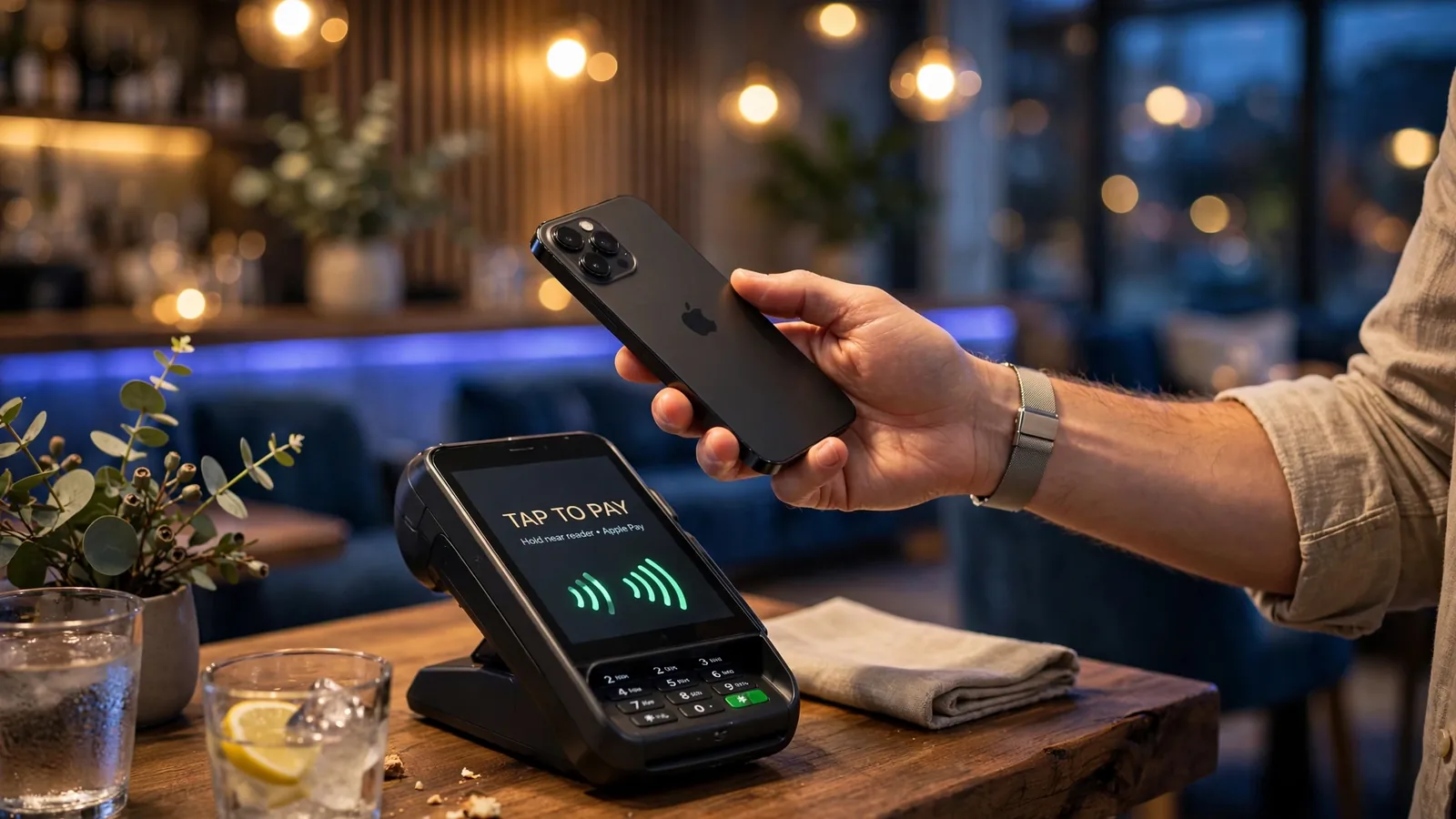
The useful reading of an instant-payout claim is therefore narrow. It says what the advertising chooses to suggest, not necessarily what the full transaction entails. A meaningful payout description would identify the supported withdrawal method and distinguish operator approval from payment delivery. It would also clarify whether verification or account conditions affect release of funds. No shortcut around those mechanics exists.
For Australian readers, “real money” should not be mistaken for reassurance about legality or consumer protection. Offshore casino activity is not made safe or lawful by a payment label or a fast-payout promise. The practical and legal setting is more complicated than the wording on a banner. Speed is only one claim.
The Australian Legal Context for Searches About POLi Casinos
The phrase “casinos that accept POLi in Australia” can make a payment question sound like an ordinary choice between operators. It is not. The legal position comes first: the Interactive Gambling Act 2001 makes it unlawful for operators to provide real-money online casino games to people in Australia. The restriction covers casino-style games such as poker, blackjack, roulette and pokies. A payment option does not change the nature of the service.
The law places the prohibition on providers, not explicitly on individual players who use offshore sites. That distinction matters, but it is not an endorsement or a declaration that offshore gambling is safe. It means the Act does not expressly make a player’s use of an offshore casino a criminal offence. The regulatory focus is on operators supplying prohibited services to people physically in Australia.
Attention: Australian consumer law does not protect players using offshore casinos, leaving a gap in local remedies for disputes.
The Australian Communications and Media Authority, known as ACMA, administers enforcement of the Act. Enforcement is not merely a question of whether an operator displays Australian-facing terms or lists a payment method. The law concerns the provision of the gambling service itself. Offshore availability does not make an online casino lawful to offer to Australian residents, and access to such services may be restricted as part of enforcement.
This is where promotional language can blur the picture. “Available to Australians” may describe a website’s technical reach, not permission under Australian law. “Licensed” can also be incomplete when a licence is issued overseas: it does not override the Australian prohibition or provide an Australian casino licence. In practice, that distinction is easy to miss when a site’s cashier and marketing are presented as if they settle the legal question. They do not.
There is a separate consequence for anyone considering consumer rights. Australian consumer law does not protect players using offshore casinos. If a dispute arises over an account, a payment, a withdrawal or a site’s terms, the usual expectation of Australian consumer protections cannot simply be carried across to an offshore operator. That leaves a material gap between a site being reachable and a player having effective local remedies. A polished interface is not protection.
I have seen how payment branding can dominate a decision: the method is familiar, so the service feels familiar too. Legally, those are different things. POLi acceptance, if claimed by a site, would not establish that the casino is lawful to offer in Australia, nor would it bring the operator under Australian consumer protections. Payment convenience cannot cure the underlying issue.
The practical reading is restrained: Australian law prohibits operators from supplying real-money online casino games to people in the country; ACMA enforces that framework; and players are not expressly criminalised by the Act merely for using an offshore site. But the absence of an explicit player offence does not make the arrangement protected or risk-free. Reachable is not the same as lawful, and familiar is not the same as covered.

POLi as a Casino Payment Method: What Can Be Confirmed
A payment method and a casino game are separate parts of a transaction. A game may appear in a site’s catalogue without telling anyone how the account can be funded. Conversely, a payment option shown in a cashier does not establish that every game on that site is available through it. The wording that joins POLi to casino games can blur these distinctions. It does not establish a working payment arrangement.
I have learned to treat the cashier as the point where payment claims become specific. A site’s general page may mention methods in broad terms, while the actual options depend on the account and the operator’s current settings. To establish POLi acceptance, there would need to be a clear, current indication from the operator that POLi is available for the relevant transaction. A game title, promotional label or generic payment-method list cannot substitute for that.
The same distinction applies to claims about a casino’s “POLi games”. That phrase can sound as though POLi is attached to particular games, but payment processing and game access are different functions. The game provider and the cashier may be described in the same marketing material; that does not make them one system. No connection should be inferred from the wording alone.

I would also separate a payment option from a promise about how it works. Naming a method does not, by itself, establish that it is enabled for a particular account, that it applies to every game, or that its terms are the same across operators. Those details belong to the operator’s own current payment information. Without that specificity, a broad label says little. Marketing language is not a transaction record.
For Australian users, that distinction sits within the wider legal position: online casino-style games for real money are prohibited services when offered to people in Australia under the Interactive Gambling Act 2001. A payment label does not change the nature of the service or make it lawful. Nor does a method’s presence in a general list establish that an Australian customer can use it.
So “POLi casino payment” is best understood as a description of a claim to be checked, not proof of acceptance. The method, the account, the transaction and the game are separate questions. Keep them separate.

Australian Payment Preferences and the POLi Evidence Gap
Australian payment habits provide useful context, but they do not establish which methods a particular online service accepts. Contactless credit and debit cards are accepted almost everywhere in the country. Mobile wallets, including Google Pay and Apple Pay, are similarly widespread. People also move between cards, mobile wallets and services connected with banks, such as PayPal.
That flexibility can make a payment option seem familiar across different settings. It is not a reliable guide to what appears in an individual cashier. General acceptance across Australian shops and services says nothing, by itself, about whether an online casino offers a particular method. Familiarity and availability are separate questions.
I have seen how payment wording can blur that distinction. A method may be well known to consumers, while its availability depends on the individual merchant and the transaction being made. A broad statement about Australian preferences cannot fill in those details. It would be misleading to turn national habits into a claim about POLi at casinos.
The same caution applies to lists framed as covering every Australian casino that uses POLi. A list needs current, operator-specific confirmation; a pattern in everyday payments cannot supply it. Nor does the prevalence of cards, wallets or bank-linked services prove that POLi is accepted alongside them. Different methods are not interchangeable simply because consumers are comfortable switching between payment types.
For POLi, the distinction is straightforward: Australian consumers’ familiarity with varied payment options is one matter; confirmed casino acceptance is another. The first is supported by the broader payment context. It does not answer the second. Treating those as separate questions is less dramatic than a sweeping claim, but it is more accurate. Broad habits, narrow evidence.
Casino Withdrawal Searches: What Is Not Verified About POLi
A POLi withdrawal is a different claim from a POLi deposit. A payment method shown when money is sent to an account does not, by itself, establish that the same route can return funds. Cashier options can be directional: the available ways to pay in and the permitted ways to receive a withdrawal may not match.

That means a claim that a casino pays winnings to POLi cannot be inferred from the payment method’s name appearing in connection with deposits, nor from general statements about online payments. The distinction matters. “POLi supported” is broad wording; it does not explain which transaction types the operator actually allows.
Withdrawal terms are set at the transaction level. An operator may specify an approved destination, require account checks, or apply conditions before funds are released. Those mechanics cannot be transferred from one payment service to another. Nor can timings associated with cards, bank transfers, digital wallets or cryptocurrency be used to describe a POLi payout. Different rails, different rules.
I have seen payment labels treated as if they covered the whole cashier. In practice, a label can describe only one side of the flow, while withdrawal controls sit elsewhere in the terms. That is why “withdrawal available” needs a clearly defined route and conditions behind it, not just a familiar brand name beside a deposit option.
The same caution applies to phrases such as “fast payout” or “instant withdrawal”. Without a POLi-specific route and stated processing conditions, those words do not establish how or when money would reach an account. They are promotional shorthand, not transaction detail.

Australian consumer law does not protect players using offshore casinos. That exposure is separate from payment mechanics, but it changes the stakes of relying on vague payout language. A deposit route and a withdrawal route are not interchangeable. Keep that distinction clear.
Paying with POLi: Acceptance Cannot Be Assumed
A payment method’s name in a casino-related description does not, by itself, establish that a payment can be made through it. The distinction is practical: a method may be discussed in general, while acceptance at a particular operator remains a separate claim. I have seen that distinction blurred in promotional wording. “Available” can sound definitive, even when the wording does not identify where or under what conditions the method works.
A broad claim that a casino accepts it would need to be tied to that operator’s own current payment terms; the name of a method alone cannot carry that weight.
This matters because payment language can collapse several different things into one. A reference to POLi is not necessarily confirmation that it is available for a transaction, and general familiarity with bank-linked payment services does not establish casino acceptance. Those are separate propositions. Keep them separate.

The same care applies to phrases such as “POLi casino payment method” or “play with POLi”. They can imply that a service is available for real-money casino activity in Australia. The legal position is not a minor footnote: the Interactive Gambling Act 2001 prohibits operators from providing real-money online casino games to people in Australia. Australian consumer law does not protect players who use offshore casinos.
In my experience, the clearest reading is often the least dramatic one: a payment claim needs operator-specific support before it can be treated as fact. Without that, saying that a casino can be paid through POLi would turn an unconfirmed possibility into a concrete assurance. No shortcut.
POLi Casino Bonus Claims and What Can Be Substantiated
A bonus described as “POLi-related” can mean different things: an offer for using a payment method, a general sign-up promotion, or a claim that a promotion is available at a casino associated with POLi. The label alone does not establish which meaning applies. Promotional wording can bundle a payment reference with an offer without explaining whether the payment method is actually part of the eligibility conditions.
That distinction matters because a bonus is governed by its own terms. Eligibility, qualifying actions, permitted payment methods and withdrawal conditions are separate questions. A headline may foreground a payment option while the detailed rules define the offer more narrowly. In my experience, the headline does the selling; the terms do the sorting.
Nor should a general casino bonus be recast as a POLi-specific reward simply because both appear together in promotional copy. That would turn association into evidence.
Promotions also change. A claim that an offer exists at one point does not establish that it remains available, applies to Australian customers, or covers a particular payment method. Those details require current, offer-specific terms rather than a broad label.
The careful reading is therefore narrow: a “POLi bonus” is a promotional claim, not proof of a payment-linked benefit. Until the actual conditions explicitly connect the offer to POLi, the two should be treated as separate subjects. No implied reward.
What are the deposit and withdrawal limits at the best Amex casinos?
Limits are set by each casino and can vary. Check the casino’s cashier or payment terms for the limits that apply to your account.
Which online casinos accept American Express for deposits?
Jackpot City Casino, Spin Palace, Ruby Fortune, Ignition Casino, Joe Fortune, and PlayAmo are listed as supporting Amex deposits for Australian players. Availability can vary, so confirm Amex is offered in the casino’s cashier.
Are there any limits on how much I can deposit or withdraw using American Express?
Yes. Each casino sets its own Amex deposit and withdrawal limits, and they can vary. Check the limits shown in that casino’s cashier or payment terms.
Can you use an American Express gift card at an online casino?
Yes, at casinos that accept American Express, but gift cards can be used for deposits only.
What are the fees involved with American Express payments?
Amex deposits are typically free, but a casino may charge a 1.5% surcharge, and currency conversion can incur a 3% fee. Withdrawal fees may also apply, depending on the casino.
Are there any fees for depositing with American Express?
Amex deposits typically have no fee, but a casino may apply a 1.5% surcharge. A 3% currency conversion fee may also apply.
Published by the Supabet Casino team.