Casinos That Accept Google Pay in Australia
 Available in AU
Australia’s everyday use of mobile wallets does not confirm casino checkout support, deposit availability or withdrawal access.
What Australia’s Mobile-Wallet Habits Do—and Don’t—Tell Us
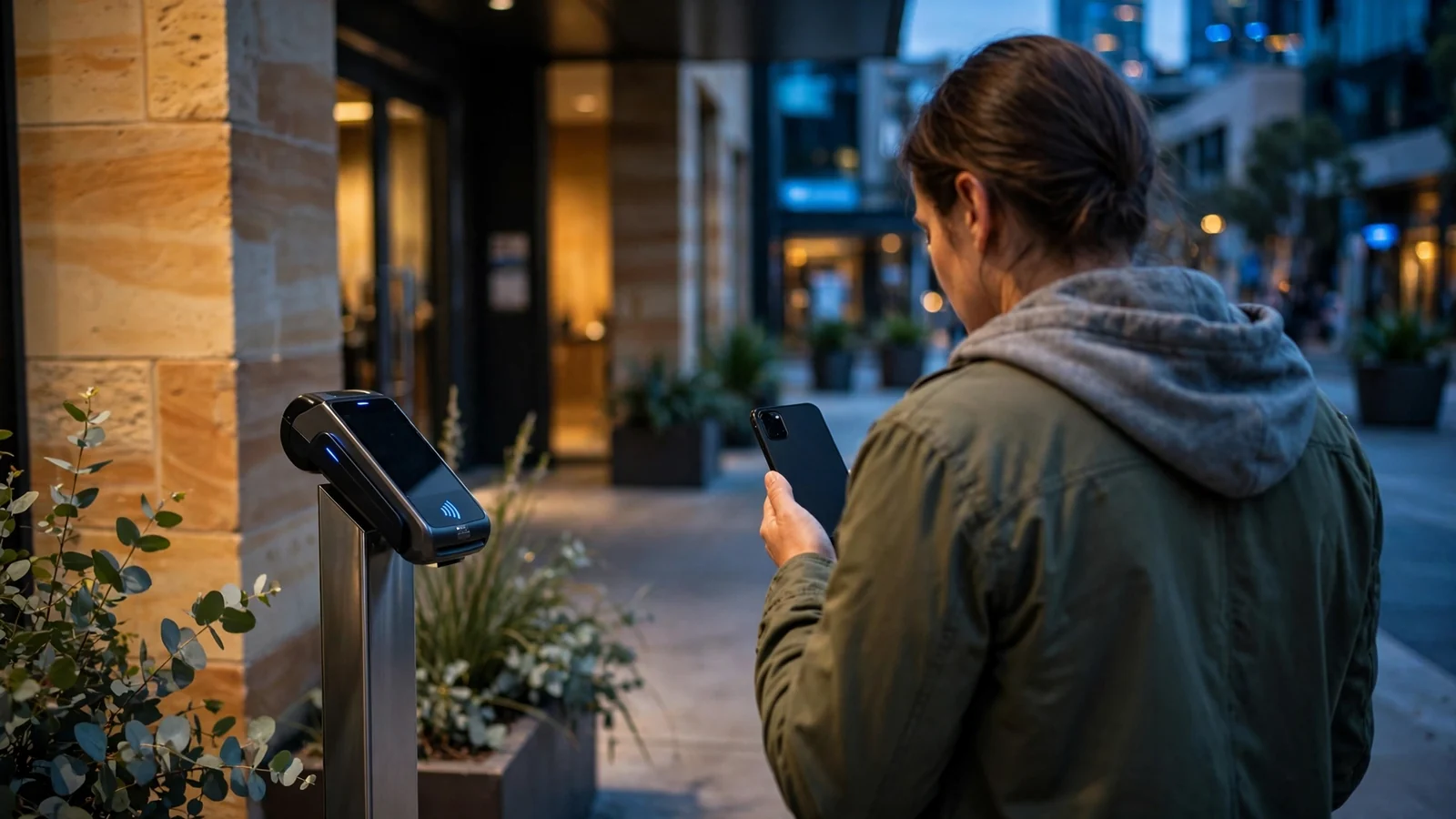
Contactless payment is an ordinary part of daily life in Australia. Credit and debit cards are accepted almost everywhere, and mobile wallets such as Google Pay and Apple Pay are also widely accepted. Many consumers move between a physical card, a phone wallet and a bank-linked service such as PayPal without treating each change as a major decision.
That familiarity can make a casino-payment claim sound plausible. If a phone wallet works at shops, cafés and other businesses, it may seem natural to expect the same option wherever an online payment is offered. I have seen that assumption at work in payment discussions: people treat a familiar way of paying as if it were a universal feature of every checkout. It is not. A wallet’s reach in everyday commerce does not establish that an online gambling operator accepts it.
The important distinction is between a payment service being common in Australia and a particular merchant choosing, or being able, to use it. Acceptance depends on the merchant’s arrangements and the payment route available at that checkout. A phone may hold a card that works in person, while an online merchant’s payment options are different. The familiar logo is not proof of a working route.
That distinction matters especially for searches about an Australian online casino accepting Google Pay. The phrase can combine two separate ideas: mobile wallets are widespread in Australia, and a specific gambling service may or may not offer one. The first is a statement about consumer payment habits. It cannot answer the second. Neither the popularity of Google Pay nor the fact that Australians are comfortable switching between payment types identifies a particular casino as accepting it.

Learn how familiar Australian card and mobile-wallet habits compare with Litecoin, and why offshore access,…

Learn what an Osko payment claim can confirm, why it does not establish casino legality…




There is also a legal distinction that broad payment language can obscure. Under the Interactive Gambling Act 2001, it is illegal for operators to provide real-money online casino games, including poker, slots and table games, to people physically located in Australia. The Australian Communications and Media Authority is responsible for enforcing that law. A general description of how Australians pay in everyday settings should not be read as an invitation to use an offshore casino or as confirmation that such a service is lawful to provide locally.
This is where a phrase such as “Australian casino” can do too much work. It may describe the audience a website is trying to reach, rather than a locally authorised service. The law’s focus is on the operator providing prohibited interactive gambling services to people in Australia. Australian consumer law does not protect players who use offshore casinos. Those are material limits, not small-print qualifications to a payment feature.

From the payments side, I learned not to infer a merchant’s capabilities from what the customer carries in a wallet. Acceptance is not simply a property of the phone. It depends on the merchant’s payment setup and the options presented for that transaction. A familiar wallet in everyday life can be absent from a particular online checkout; conversely, seeing a payment brand mentioned somewhere does not establish that it is currently available to Australian users. The details are specific to the service and can change.
That is why broad statements about Australian habits have a narrow use. They explain why a mobile-wallet option might be familiar or desirable. They do not establish operator support, legal availability, or a reliable way to use that wallet for online gambling. Conflating those questions turns a general observation into a merchant claim it cannot support.
The same caution applies to wording such as “mobile casino.” It can refer loosely to a website viewed on a phone, a wallet used on a phone, or an operator’s marketing language. These are not interchangeable. A mobile-friendly page says something about its display or design; it does not establish which payment methods are available. A phone wallet’s presence in Australian retail says something about daily payment habits; it does not settle whether a gambling service accepts it.
Legal Warning
Under the Interactive Gambling Act 2001, it is illegal for operators to provide real-money online casino games to people physically located in Australia.
I have found that payment language often sounds more definite than the underlying arrangement. “Accepted” can be read as a stable promise, when the actual question is whether a particular method appears and works for a particular merchant, customer and transaction. The broad Australian pattern supplies none of those operator-specific details. Familiarity is not verification.
So the useful conclusion is restrained: Australians commonly use contactless cards and mobile wallets, and they are comfortable moving among cards, wallets and bank-linked services. That context helps explain why Google Pay attracts interest. It does not show that an Australian online casino accepts Google Pay, and it does not change the legal position on real-money online casino services offered to people in Australia. Separate questions. Different evidence.
The distinction may feel unsatisfying, especially when a payment logo appears to promise a simple answer. But the everyday use of a wallet and the availability of that wallet at a particular merchant are separate facts. The first describes a national habit; the second requires merchant-specific confirmation. Even that would not make an otherwise prohibited service lawful to provide in Australia.
In practical terms, widespread wallet use should be treated as background, not proof. It explains why people expect mobile payments to be familiar. It does not justify naming an operator, implying a payment route is available, or presenting an offshore casino as a local service. No inference from popularity.

Google Pay at the Deposit Stage: What Can Be Verified
A payment method has to be confirmed at the point where a transaction is actually offered. A phone supporting Google Pay is not the same thing as a casino cashier accepting it. Nor does a familiar wallet icon, appearing elsewhere on a site, establish that it is available for a deposit. In payment work, I learned to separate what a device can do from what a merchant has enabled. They are different decisions.
That distinction matters because “Google Pay deposit” can sound like a settled feature, when the practical question is narrower: does the cashier present Google Pay for that transaction, and can the payment be completed under the applicable conditions? A general claim about mobile wallets cannot answer that. It does not establish what a particular cashier displays, whether a payment will be authorised, or what rules apply to the account.
The word “deposit” can also conceal several separate checks. A payment option may be displayed, but an account may still need identity verification before financial activity is allowed. Online casinos commonly require customers to pass a Know Your Customer assessment before they can carry out financial transactions. That assessment is a separate part of the process from choosing a payment method. The availability of a wallet does not remove it.
I have seen payment pages treated as if they were simple menus: select a logo, enter an amount, press a button. That description leaves out the conditions attached to the account and the transaction. A cashier is an interface, not a promise that every displayed route will work for every person. The operational distinction is plain. A method being named is not the same as a completed payment.
- Separate what a device can do from what a merchant has enabled
- Verify identity through Know Your Customer assessments
- Check the actual options presented in the cashier
- Treat a familiar wallet icon as proof of availability
- Assume a displayed logo guarantees a completed payment
- Confuse the cashier interface with a stable promise
What a cashier can—and cannot—establish
For a deposit claim to be meaningful, the relevant evidence would need to connect Google Pay specifically to the cashier’s deposit options, rather than to mobile payments in general. Even then, a displayed option would only describe what that cashier presents; it would not settle every question about eligibility, verification, authorisation, or the legal position of the service. Those are distinct matters, and merging them into one “accepted” label produces a cleaner advertisement than an accurate account.
This is why I would not treat a search for a casino deposit through Google Pay as proof of a usable route. Search wording expresses a desired combination: a casino, a deposit, and a particular wallet. It does not itself show that an operator offers that combination. The same applies to claims that a certain deposit amount can be made. An amount typed into a search does not establish a cashier minimum, a permitted transaction size, or a successful payment.
There is a further point specific to Australia. The Interactive Gambling Act 2001 prohibits operators from providing real-money online casino games to people located in Australia. The prohibition covers casino-style services, including poker and table games as well as other online casino games. The Australian Communications and Media Authority is responsible for enforcing that law. A payment description cannot change the nature of the underlying service.

That legal setting also changes how payment language should be read. A polished cashier page can make a transaction look routine, but interface design is not a legal endorsement. Australian consumer law does not protect players who use offshore casinos. That is not a technical footnote about wallet compatibility; it is a material limit on the protections attached to the activity. Neat screen. Different exposure.
The payment choice is not the whole transaction
In ordinary payment processing, a customer may see a method, select it, and then face checks before a transaction is completed. That broad sequence does not establish a Google Pay procedure for an online casino in Australia. Nor does it establish that a particular site accepts Google Pay deposits. It only illustrates why a method name, where it appears, should not be confused with evidence of a completed payment path.
The same caution applies to wording such as “instant,” “easy,” or “one-tap.” Those labels describe an impression, not the conditions attached to an individual account. They can blur separate questions: whether the cashier offers the method, whether the account has completed required checks, and whether the underlying service may lawfully be provided to someone in Australia. The label does not answer those questions.
Terms like “instant,” “easy,” or “one-tap” describe an impression of the user journey, not the specific legal or technical conditions attached to an account.
I also avoid treating a payment brand as a substitute for the cashier’s actual terms. The platform’s displayed options and transaction rules are what would matter in a lawful setting. But in Australia, real-money online casino services are prohibited for operators to provide to people physically located here. Describing a route as available, convenient, or suitable would risk turning a general payment concept into promotion of a prohibited service. I will not do that.
A request for a “best” deposit option has the same problem at the deposit stage: it assumes that a verifiable, lawful choice is available to compare. A wallet can be familiar and widely used in everyday transactions without that fact establishing its acceptance by an online casino cashier. Familiarity is not an acceptance record. A payment logo is not a transaction receipt.
The careful reading is therefore limited but useful. Google Pay as a consumer payment service and Google Pay as a specific casino deposit option are not interchangeable claims. A cashier would have to make the latter explicit, while account checks and transaction conditions would remain separate. In Australia, the legal prohibition on providing real-money online casino games is decisive context, not something that a payment method can bypass.
I learned to distrust the gap between a clean payment label and the transaction behind it. The screen may present a method; the account may face verification; the payment may have its own conditions; and the service itself may sit outside the legal protections Australian consumers expect. Those are not minor details to be collapsed into a single word like “accepted.” A precise description keeps them apart.
Why a ‘Best’ Google Pay Casino List Cannot Be Verified
Google Pay availability can vary by casino and by the payment options shown to Australian players. Use these details as a starting point, and check the cashier directly to confirm whether Google Pay is currently supported.
License: Curacao eGaming OGL/2023/174/0082 (Dama N.V.) · Min. deposit: A$15 LevelUp Casino lists a minimum deposit of A$15 and a Curaçao eGaming licence, OGL/2023/174/0082, under Dama N.V. The provided details do not confirm Google Pay availability.
License: Curacao · Payout speed: crypto 30-60 minutes, fiat 1-5 days · Min. deposit: A$10 Wild Tokyo lists a minimum deposit of A$10 and payout times of 30–60 minutes for crypto and 1–5 days for fiat. It is described as Curaçao-licensed; Google Pay availability is not specified.
License: Curacao Gaming Control Board OGL/2023/176/0095 (Hollycorn N.V.) LuckyVibe is listed with a Curaçao Gaming Control Board licence, OGL/2023/176/0095, under Hollycorn N.V. The provided details do not specify its payment methods.
License: Curacao Gaming Control Board OGL/2023/176/0095 (Hollycorn N.V.) Rollero Casino is listed with a Curaçao Gaming Control Board licence, OGL/2023/176/0095, under Hollycorn N.V. No payment-method details, including Google Pay support, were provided.
License: Curacao eGaming (Dama N.V.) JeetCity Casino is listed as holding a Curaçao eGaming licence under Dama N.V. The available details do not establish whether Google Pay is accepted.
License: Curacao eGaming OGL/2024/923/0383 (Antillephone N.V.) · Min. deposit: A$30 WinSpirit Casino lists a minimum deposit of A$30 and a Curaçao eGaming licence, OGL/2024/923/0383, under Antillephone N.V. Google Pay support is not specified in the provided details.
License: Curacao (operating since 2017) · Min. deposit: A$20 Uptown Pokies is described as operating since 2017 and holding a Curaçao licence, with a minimum deposit of A$20. The provided information does not confirm Google Pay availability.
License: Curacao · Min. deposit: A$20 (POLi) Lucky Dreams lists a minimum deposit of A$20 for POLi and is described as Curaçao-licensed. The details provided do not say whether Google Pay is available.
License: Curacao eGaming (Roby Games Ltd) Roby Casino is listed as holding a Curaçao eGaming licence under Roby Games Ltd. No deposit or payment-method details were provided.
Payout speed: crypto under 1 hour, PayID 1-3 business days · Min. deposit: A$20 (A$30 to qualify for the bonus) Ricky Casino lists a minimum deposit of A$20, or A$30 to qualify for the bonus. Its stated payout times are under one hour for crypto and 1–3 business days for PayID; Google Pay availability is not specified.
A ranking of casinos that accept Google Pay would need to establish more than the popularity of the wallet. It would need to show that a particular operator is available to people in Australia, that Google Pay is actually offered in that operator’s cashier, and that the claim applies to the transaction being discussed. A label such as “best” adds another layer: it implies that the listed options have been compared on a consistent basis. Without those distinctions, a polished table can look precise while answering a different question.
Google Pay and other mobile wallets are accepted almost everywhere in Australia. That describes the wider payments environment, not the payment menu of an online casino. Acceptance in shops, apps, or services linked to a bank does not establish that a gambling operator has enabled the same wallet. The link between the consumer’s phone and a card or bank account is not enough on its own. The cashier has to offer the method, and the payment has to be available under the relevant account and location conditions.
That is the difference between a familiar payment brand and a confirmed casino payment route. In my experience, the wording on a payment page is where the distinction matters: “Google Pay accepted” should mean the option can be selected in the cashier, not merely that the service is common in Australia or compatible with a card a person holds. A ranking that blurs those meanings can send a clear signal without establishing the thing it appears to promise.
Attention: A ranking based on general mobile-wallet popularity in Australia does not establish that a specific gambling operator supports Google Pay in its cashier.
The word “best” also conceals a choice of criteria. One list might rank payment convenience; another might prefer game selection, customer support, or withdrawal terms. Those are separate assessments, and none proves that Google Pay is supported. A casino could score well on general features and still not offer the wallet. Conversely, a cashier option by itself would not establish that an operator is suitable, lawful, or protective of Australian customers. Labels are not evidence. They are packaging.
That is not a matter of being cautious with a ranking position. It is a matter of not turning a general fact about Australian payment habits into an operator-specific claim. Naming businesses in a list would imply that the payment route had been checked and that those businesses could be recommended for this market. Neither implication follows from widespread wallet use.
The Australian legal setting is also central, not a footnote to a payment comparison. Under the Interactive Gambling Act 2001, operators must not provide real-money online casino games to people physically located in Australia. The prohibition covers casino-style services such as poker, table games, and pokies. The Australian Communications and Media Authority is responsible for enforcement. A payment method does not change the legal character of the service: an operator’s cashier cannot make the provision of prohibited online casino gambling lawful.

There is a further practical distinction between the legal position of operators and the position of consumers. The law does not impose player liability for using an offshore site, but Australian consumer law does not protect players who use offshore casinos. That leaves a gap between the familiar language of a “best site” comparison and the protections a reader might assume come with a domestic service. A list can make operators appear like ordinary local choices, even when that is not the legal or consumer-protection context.
This is why payment claims should not be used as a shortcut to trust. A wallet logo, a short “payments accepted” line, or a broad claim about Australian availability does not answer who is providing the gambling service, whether it is legally offered to people in Australia, or what recourse exists if a dispute arises. The method of transferring funds is only one part of the arrangement. It cannot stand in for those other questions.
The same care applies to wording around deposits. “Accepts Google Pay” could mean a method is displayed somewhere, that it is available only in some circumstances, or that it is accepted for a different service altogether. A reader-facing ranking ought to distinguish those meanings rather than compress them into a badge. If it cannot make the distinction, the badge is doing more work than the underlying claim.
Legal and Payment Reality
- Widespread wallet use is a national habit, not proof of operator support
- Interface design is not a legal endorsement of a service
- Australian consumer law does not protect players using offshore casinos
- A payment logo cannot bypass the legal prohibition on providing casino games in Australia
Nor does a list become reliable simply by repeating a casino name across several pages. Repetition can create the appearance of confirmation, while leaving the original question unanswered: whether the cashier presents Google Pay for the relevant customer and transaction. I have seen how easily a payment label migrates from a general comparison into a specific recommendation. Once it does, readers may treat it as a checked feature rather than a borrowed phrase. That is a poor basis for a money decision.
A useful comparison would have to separate legal availability, payment availability, and the quality of the service. Those categories cannot be collapsed into one score. Even a technically accurate statement about a cashier would not justify advertising a real-money online casino to an Australian audience. The legal restriction is not cured by adding a warning or describing a site as offshore. The distinction is material.
So the phrase “best Google Pay casino in Australia” promises more than a payment label can deliver. It suggests a verified set of operators, a defensible ranking, and a lawful consumer choice. Australian mobile-wallet habits establish none of those things about casino operators. The responsible answer is not a thin list with a disclaimer beneath it. It is to keep the payment fact separate from claims about particular casinos and from the broader legal reality.
A ranking without that separation is not a useful comparison. It is an endorsement-shaped shortcut.
Google Pay Withdrawals: The Evidence Gap
“Instant withdrawal” sounds like a single event. In practice, the phrase can blur together separate stages: a platform authorising a payout, a payment service processing it, and funds appearing in an account. A claim about one stage does not establish that the whole journey is instant. Nor does the presence of Google Pay in a payment menu, on its own, establish that it can receive casino winnings.
That distinction matters because a wallet used to pay is not automatically a wallet used to collect. A deposit and a withdrawal move money in opposite directions, and the available payment choices need not be identical. I have seen payment language do too much work: “supports Google Pay” can sound like an answer to every payment question, when it may refer only to one transaction type. The wording matters.
Australian consumers are comfortable moving between cards, mobile wallets and bank-linked services such as PayPal. That flexibility describes everyday payment habits, not a rule about how an online gambling service handles payouts. Familiarity with tapping a phone to pay does not tell us whether winnings can be sent back through that wallet, how a payout would be processed, or how quickly it would arrive. Different question. Different evidence.
A search for an instant Google Pay withdrawal therefore contains several claims folded together: that a particular service accepts Google Pay, that it supports withdrawals through it, and that the money arrives immediately. Each claim would need to stand on its own. A general statement about mobile-wallet use cannot establish any of them. And an “instant” label is not a substitute for a clear account of what the term covers.
The difference between deposits and withdrawals
A wallet used to pay is not automatically a wallet used to collect; deposit and withdrawal options are separate and may not be identical. A mention of Google Pay may apply to only one transaction type.
The language can also obscure the difference between a payment method and a destination. Google Pay is a wallet service; that label does not, by itself, describe every part of the route a payment takes or establish that a payout can be directed to it. A service might mention a wallet in connection with one side of a transaction without making a promise about the other. When the wording does not distinguish deposits from withdrawals, the broad reading is not justified.
There is a further issue in Australia: real-money online casino services are prohibited for operators serving people in the country. The Interactive Gambling Act 2001 covers casino-style games such as poker, blackjack, roulette and slots when they are provided to people physically in Australia. Enforcement sits with the Australian Communications and Media Authority. That legal setting is not a footnote to payment wording. It changes the context in which claims about offshore casino payouts should be read.
Australian consumer law does not protect players who use offshore casinos. That is a material limitation, not routine fine print. Payment convenience, a familiar wallet logo or a claim of rapid processing does not change the legal position or provide that protection. I would not treat a payment label as a substitute for a clear understanding of the risks attached to an offshore service.

Nor should “no deposit” language be taken to settle the withdrawal question. A promotional phrase may describe how a balance is made available, but it does not itself establish that the balance can be withdrawn, which method could receive it, or whether any payout would be immediate. Those are separate conditions. Without clear terms, the appealing shorthand does not answer them.
The word “instant” deserves the same care. It can refer to an approval step, a payment instruction, or the point when money is usable at the destination. Those meanings are not interchangeable. A fast decision to release funds is not proof of immediate receipt; an immediate receipt claim, in turn, needs to say what transaction it covers. I have found that the small words around a speed claim often matter more than the headline.
A careful reading separates four things: whether Google Pay is mentioned at all; whether the mention applies to deposits or withdrawals; what the stated timing actually measures; and what terms govern access to funds. If a description answers only the first point, the other three remain unanswered. That is not a technicality. It is the difference between a wallet being named and a payout route being described.
The central distinction is simple: everyday comfort with mobile wallets does not establish casino withdrawal support, and a deposit-related payment claim does not establish a withdrawal method or arrival time. “Instant” is a precise-sounding word, but without a defined stage it can leave the most important part unclear. And for Australians, the legal and consumer-protection context must remain in view. No payment label alters it.
Final Conclusion
Everyday comfort with mobile wallets does not establish casino withdrawal support, nor does it alter the legal prohibition of real-money online casinos in Australia.
Casino Games and Slot Searches: Keep the Payment Claim Separate
A payment method and a game catalogue answer different questions. Google Pay describes a way to move money; it does not identify what an online service provides, establish that a particular game is available, or show that the method is connected to any game. Treating those as one claim is a category error.
I have seen this distinction blurred in payment copy. A page can place a wallet name beside casino-game language without demonstrating that the operator accepts the wallet or offers the games being implied. The wording may create an association, but association is not evidence. A reference to Google Pay does not verify a game, and a game description does not verify a payment route.
The same applies to mobile access. A service being described as mobile does not establish that Google Pay is accepted, or that any particular game can be accessed through it. The device, the payment option and the content are separate parts of the service. Each claim needs its own support.
There is also a legal boundary that matters more than the presentation. Under the Interactive Gambling Act 2001, operators are prohibited from providing online casino games to people in Australia. The Australian Communications and Media Authority enforces the Act. This applies to the underlying service, not just the words used to describe a payment method. Repackaging a prohibited service as a mobile experience or pairing it with a familiar wallet does not change that position.
The Act does not explicitly criminalise a player for using an offshore site, but that is not a consumer safeguard. Australian consumer law does not protect players who use offshore casinos. A lack of player criminal liability should not be read as approval, local oversight or recourse if a dispute arises. Those are different issues.

In industry terms, “seamless” often describes a designed journey rather than a verified outcome. A payment logo beside game-related copy can make the journey look complete before the separate conditions have been established. I would not treat that layout as proof of either payment acceptance or a particular catalogue. Presentation is not confirmation.
That distinction is especially important when a page connects a wallet with a specific type of game. The connection can be read as a promise that the method funds access to that content. Without a direct, current statement from the operator and a lawful basis for the service, it proves neither. No game names or catalogue claims should be inferred from the payment wording.
A useful way to read such material is to separate its statements: what payment method is being named, what service is being described, and whether the service may lawfully be offered to people in Australia. If those points are folded into one promotional sentence, the sentence can sound more certain than its parts justify. Strip away the implication. What remains may be only a wallet reference.
This is not a minor wording issue. Payments can create a sense of legitimacy because familiar brands are recognisable and widely used in ordinary commerce. But a familiar payment brand does not confer approval on the service receiving funds, and it does not supply the protections that Australian law withholds from offshore casino use.
The practical conclusion is narrow: Google Pay cannot be treated as evidence of a game offering, and game-related wording cannot be treated as proof of Google Pay acceptance. More importantly, neither should obscure the Australian prohibition on operators providing online casino games to people in the country. A wallet label does not alter the legal status of the service.
What are the deposit and withdrawal limits at the best Amex casinos?
Limits are set by each casino and can vary. Check the casino’s cashier for the limits that apply to Amex deposits and withdrawals.
Can you use an American Express gift card at an online casino?
Yes, at casinos that accept American Express, but gift cards can be used for deposits only.
Can I withdraw winnings directly to my American Express card?
Some casinos do not allow withdrawals to American Express, and you generally need to have deposited with Amex first. Where supported, withdrawals can take up to five days to clear and may incur a fee.
Can I use Amex to withdraw winnings from an Australian online casino?
Some Australian-facing casinos allow Amex withdrawals, but not all do; you must have previously deposited with Amex. A withdrawal can take up to five days to clear and may incur a fee.
What should I do if my American Express deposit is declined?
Amex or your bank may block gambling transactions, including payments to a particular website. Check with your card issuer whether the transaction was blocked.
Does American Express work for online casinos?
Yes, some online casinos accept Amex deposits, while others do not. Confirm that Amex is offered in the casino cashier; acceptance does not mean the service is lawful to provide in Australia.
Published by the Supabet Casino team.