Live Casino Online in Australia: Rules and Checks
 Available in AU
This guide explains Australia’s legal boundary and how to assess live games, bonus terms, payments and safer-play options without unsupported claims.

- The Australian Market Has a Legal Boundary
- What Casino Software Can—and Cannot—Tell You
- Live Poker Providers: The Limits of What Can Be Verified
- Live Casino Games Without an Unsupported Catalogue
- Live Roulette: What This Page Can Establish
- Live Dealers and the Limits of the Available Evidence
- Bonuses: Read the Turnover Before the Headline
- Playing Online: Age, Limits and Self-Exclusion
- Mobile Access, Deposits and the Withdrawal Checkpoint
- AU, UK and the Difference Between Search Terms and Market Rules
The Australian Market Has a Legal Boundary
The phrase “live casino in Australia” can describe two very different things: a casino licensed to operate under Australian law, or an offshore website that accepts people located in Australia. They may look similar on a screen, but they do not sit on the same legal footing. That distinction matters more than a polished lobby, a familiar game format or a claim to be the “best” live casino online in Australia in 2026.
The Interactive Gambling Act 2001 draws the boundary around the operator. It prohibits companies from providing real-money online casino services to people in Australia without a domestic licence. The rule covers online pokies and other casino-style games, including live offerings. No domestic licences for online casinos have been issued. There is therefore no Australian-licensed online casino to choose from, whether the site describes itself as live, online or both.
That absence is easy to blur in commercial language. An offshore company may display a licence from another country, describe itself as serving Australian players, or make its service available from an Australian internet connection. None of those details turns the company into an Australian-licensed casino. A foreign licence is not a domestic one, and accessibility is not the same as approval under Australian law.
Choosing a live casino in Australia means weighing the details that are actually available before deciding where to play. This list provides a concise reference to each operator’s stated licensing, deposit, or payout information.
License: Curacao eGaming OGL/2023/174/0082 (Dama N.V.) · Min. deposit: A$15 LevelUp Casino lists a minimum deposit of A$15. Its stated licence is Curacao eGaming OGL/2023/174/0082, held by Dama N.V.
License: Curacao · Payout speed: crypto 30-60 minutes, fiat 1-5 days · Min. deposit: A$10 Wild Tokyo lists a minimum deposit of A$10 and a Curacao licence. Its stated payout times are 30–60 minutes for crypto and 1–5 days for fiat.
License: Curacao Gaming Control Board OGL/2023/176/0095 (Hollycorn N.V.) LuckyVibe’s stated licence is Curacao Gaming Control Board OGL/2023/176/0095, held by Hollycorn N.V.
License: Curacao Gaming Control Board OGL/2023/176/0095 (Hollycorn N.V.) Rollero Casino’s stated licence is Curacao Gaming Control Board OGL/2023/176/0095, held by Hollycorn N.V.
License: Curacao eGaming (Dama N.V.) JeetCity Casino lists a Curacao eGaming licence held by Dama N.V.
License: Curacao eGaming OGL/2024/923/0383 (Antillephone N.V.) · Min. deposit: A$30 WinSpirit Casino lists a minimum deposit of A$30. Its stated licence is Curacao eGaming OGL/2024/923/0383, held by Antillephone N.V.
License: Curacao (operating since 2017) · Min. deposit: A$20 Uptown Pokies lists a minimum deposit of A$20 and states that it has operated since 2017. Its stated licence is Curacao.
License: Curacao · Min. deposit: A$20 (POLi) Lucky Dreams lists a minimum deposit of A$20 via POLi and a Curacao licence.
License: Curacao eGaming (Roby Games Ltd) Roby Casino lists a Curacao eGaming licence held by Roby Games Ltd.
Payout speed: crypto under 1 hour, PayID 1-3 business days · Min. deposit: A$20 (A$30 to qualify for the bonus) Ricky Casino lists a minimum deposit of A$20, or A$30 to qualify for the bonus. Its stated payout times are under an hour for crypto and 1–3 business days for PayID.
The law’s focus is the business providing the service, not the person placing a bet. Australians are not made criminally liable merely for playing on an offshore site that accepts them, and they may legally play there. That point should not be mistaken for a finding that the operator is authorised to provide casino games in Australia. The legal position separates the player from the company: one may access a site, while the company remains outside the domestic licensing system.
In practice, this is where the neat categories used in casino advertising stop being useful. “Australian casino” can mean a site aimed at Australian customers, with local currency or familiar payment language. It does not establish that the site is licensed in Australia. Likewise, “live casino” describes a style of online product; it does not change the law governing who may offer real-money casino services to people in the country.
I have seen how easily a headline can make these distinctions disappear. “Licensed” sounds complete until the jurisdiction is left out. “Available in Australia” sounds like a regulatory status, when it may only mean that a website accepts registrations or deposits from Australian users. Those phrases describe different things. A licence elsewhere does not supply the domestic licence that does not exist.
The practical risk is more direct than the wording on a homepage. If an offshore casino refuses to pay winnings, an Australian player has no legal recourse in Australia against that operator. There is no domestic casino-licensing framework behind the transaction that can be relied on to resolve the dispute. A site’s terms may set out its own process for complaints, but that is not the same as having an Australian legal remedy if the operator does not honour a withdrawal.

This changes what a comparison can honestly establish. A site may have a broad catalogue, a live-dealer section or an Australian-facing welcome page; none of those features answers the central question of legal status. Nor does a ranking make an offshore service safer or domestically authorised. A “best live casino” label is a marketing judgement, not a substitute for the legal boundary. On this market, the boundary comes first.
There is also a difference between saying that Australians can play offshore and recommending that they do so. The first describes the position of individual players under the law. The second would be an endorsement of services that lack Australian authorisation, despite the operator-facing prohibition.
For anyone assessing the phrase “live casino Australia,” the useful distinction is not between one table format and another. It is between an Australian-licensed operator—which does not exist—and an offshore operator that accepts Australian customers without a domestic casino licence. A website’s willingness to take Australian customers does not close that gap. And if a payment or winnings dispute follows, the lack of Australian legal recourse is not a small-print inconvenience. It is the central practical exposure.
Legal Recourse
If an offshore casino refuses to pay winnings, Australian players have no legal recourse in Australia against that operator.
What Casino Software Can—and Cannot—Tell You
A software name can identify who made a game, but it does not, by itself, explain how a particular site operates. That distinction matters in live casino searches, where a provider label can sound like evidence of a whole service. It is not. A supplier’s name alone does not establish a site’s settings, its handling of play, or the terms attached to an account.
I have seen how quickly a product label gets stretched into a promise. “Powered by” can sound like an independent endorsement; in practice, it identifies a relationship, not a verdict. The same caution applies to phrases such as “best live casino software” or “best live casino site”. A software provider and an operating site are different things, and ranking one does not automatically rank the other.
What RTP settings mean for pokies
A specialist review has reported that some game providers let casinos choose among different RTP settings for a particular pokie. In that situation, the game’s name alone does not tell the whole story: the return percentage associated with it could differ between casinos. The useful detail is the setting actually applied, not a broad claim about the provider or the game family.
RTP is a long-run return measure, not a promise about an individual session. Nor does a stated RTP reveal every part of a site’s operation. It says something specific about a game setting; it does not certify the operator, explain account conditions, or establish the quality of a live casino service. Those are separate questions.

That distinction should stay narrow. The reported choice of settings concerns pokies. It cannot be carried across to live casino software as proof that live tables have selectable RTP configurations, or that two sites use the same arrangements. A fact about one category of game is not a technical description of another.
RNG and what it describes
For pokies, the outcome of each spin is generated separately by a Random Number Generator (RNG). In other words, a previous result does not determine the next spin. A run of wins or losses does not change the next spin’s random outcome.
That statement describes the mechanism for pokie spins. It should not be used as shorthand for how a live casino product works. The terms “RNG” and “live” point to different kinds of claims: one concerns random outcomes in a game, while the other is often used to describe a casino format. Treating the first as proof of the second muddles the technical question.
Software descriptions also have limits as evidence. A provider’s name may be relevant to identifying a product, but it does not show which settings a site has selected, what version it uses, or how the site handles its own procedures. Those details require their own evidence. A brand badge cannot supply them.
Reading claims about live products
The phrase “live casino solution” can refer broadly to technology or services associated with a live casino offering. Without concrete information about a particular product and site, however, the phrase does not establish what is included or how it works. The same goes for a claim that a site uses a particular live casino software provider: it identifies an asserted connection, not a complete assessment.
Software vs Operator
A software provider and an operating site are different entities; ranking a provider does not automatically rank the site using its software.
Nor does “free” settle the technical question. A free-play label, if used, would not by itself demonstrate that a product’s settings or operation match those of a real-money service. The label describes a mode or offer; it is not proof of equivalent conditions. The distinction matters because a product name and a play mode are both easy to turn into broader claims than they support.
A site’s presentation can also make unlike things appear interchangeable: a game supplier, a platform, and the operator may all be named in the same sales language. I separate those roles before drawing conclusions. The supplier may be responsible for a game; the platform may provide technical infrastructure; the operator controls its own service. A single label does not answer every question about all three.
Geography adds another layer to broad descriptions. A reference to Singapore, for instance, is not a technical specification. It does not establish that software is available in Australia, or that a site’s local rules and conditions are the same across markets. Location words need to be read as claims about a market, not as evidence about the underlying product.
The practical rule is modest: treat software names and feature labels as starting points for understanding a claim, not as a substitute for evidence about the site. For pokies, the RTP-setting point and the RNG mechanism each have a defined scope. Neither should be repackaged as proof about live casino software or about the way a particular site operates.
Labels are not audits.
Live Poker Providers: The Limits of What Can Be Verified
A live-poker page can use “provider” to mean several different things. It may refer to the company that supplies a game, the platform that connects games to an operator’s website, or a technical service linking separate systems. Those roles can overlap, but the label alone does not show which one is involved.

I have learned to treat supplier language as a description to unpack, not a quality mark. A provider’s name beside a poker product would not, on its own, establish who operates the service, what the integration does, or whether the product is available in a particular market. Nor does a polished platform page tell us how its underlying systems are configured. The commercial relationship matters; so does the precise product being described.
An API is an interface that lets software systems exchange information. In a casino context, talk of an API integration may describe a connection between a platform and a game or service. That is a technical category, not a guarantee of any particular feature. The word does not establish that a connection supports live poker, handles every part of a game session, or provides a specific experience on a phone. Those claims require product-level documentation and a clear link between the named supplier and the relevant offering.
That distinction is easy to lose in a short review. “Integrated” can sound like a complete assessment, when it may only indicate that systems are connected. “Seamless” is even less useful without a defined test: it could refer to a login hand-off, a display, or something else entirely. In my experience, broad adjectives often do more work than the technical explanation beneath them. Marketing shorthand.
Live poker also should not be inferred from a general live-casino label. That label may describe a broad category rather than a particular poker product. A claim about a live table, format, or provider needs to identify what is actually being described; otherwise, the category name cannot carry the detail.
API
An interface that lets software systems exchange information, often used to connect a platform with a game or service.
Reviews have similar limits. A reviewer may report that a site has a particular supplier or that a game opened during a test. That is not the same as independently verifying the supplier relationship, the API’s capabilities, or how the service behaves across devices. A review is most informative when it separates what was observed from what was stated by an operator or supplier. Login access is also a narrow test: reaching an account screen does not establish the technical qualities of a poker product behind it.
For a platform description to be meaningful, the language should distinguish the operator, the platform, the game supplier and any integration service. It should say which product is being discussed and avoid turning a technical connection into a claim about reliability, fairness or performance. Without those distinctions, provider and API terminology can create an impression of certainty while leaving the practical question unanswered.
The useful conclusion is modest: provider, integration and platform are not interchangeable terms. A name or technical label cannot, by itself, verify a live-poker product.
Live Casino Games Without an Unsupported Catalogue
“Live casino” is an umbrella label, not a precise description of one game or a guarantee of what a particular service provides. It can refer broadly to online casino-style games presented as live experiences, while related labels may point to narrower categories. The wording alone does not establish which games are offered, how they work, or whether they are available to people in Australia.
That distinction matters because a category page can make a collection sound more definite than it is. “Live casino games” may appear to cover table games, game-show formats and other casino-style products. But a label is not a catalogue. It does not confirm a title, rules, table format or operating arrangement. Treating the phrase as proof of those details is a mistake.
The same applies to “live casino game shows”. The phrase describes a type of category, not a verified product or a promise that any particular format can be accessed. Nor does calling something an online live casino game establish that it is a game of chance, a game of skill, or a lawful service in a particular jurisdiction. Those questions depend on what the service actually offers and where it is provided.

In Australia, the legal boundary is especially important. The Interactive Gambling Act 2001 prohibits operators from providing online casino-style games—including poker and table games—to people physically located in the country. That includes services described as live casino games. The rule concerns operators; it does not turn a search phrase or category label into permission to offer the service here.
“Play live casino games online” can sound like a simple activity description. In practice, it leaves out the central issue: the nature and location of the service. A site’s use of Australian currency, a payment option or Australian-facing language would not change the legal status of a prohibited service. A polished category page is not a regulatory status.
There is also a difference between a live casino game and a live casino slot game as those labels are used commercially. The latter combines terms that may refer to distinct product categories. The wording itself does not prove that a pokie is streamed, dealer-led, or otherwise different from a standard online game. Nor does it verify a particular game’s mechanics. The label may be broad or promotional; the underlying product matters.
This is where “free” needs care as well. A free-play label does not, by itself, explain whether the experience involves real-money gambling, what conditions apply, or whether a service is available in Australia. The word is not a substitute for understanding the actual arrangement.
I have seen category language do a lot of work with very little detail. It can suggest breadth, immediacy and variety without explaining the product behind the heading. That is useful for navigation, but weak evidence. A category name describes how a service is presented. It does not establish what is offered or whether it can lawfully be supplied in Australia.
Labels are not permission.

Live Roulette: What This Page Can Establish
Live roulette is a distinct category within online casino searches, but its label alone says little about what a particular site provides. It does not establish which tables are available, which roulette variants are offered, or whether two sites can be compared on equivalent terms. I have seen attractive labels do more work than the details behind them. A name is not a specification.
For a meaningful comparison, the underlying offer would need to be clear: the actual table or variant, its rules, and the conditions attached to play. Without those particulars, a claim that one live roulette option is “best” has no useful basis. It may sound like a verdict, but it is not evidence of a better table, a wider choice or more favourable terms.
That distinction matters when several sites use similar language. “Live” describes a category, not a guarantee about the experience or the product behind the label. Nor does a polished presentation establish that a site has a particular roulette table. The same caution applies to broad claims about choice: an extensive-sounding description does not tell the reader what can actually be selected.
I would not turn this into a list of live roulette sites or rank them as though their tables had been checked side by side. A catalogue without confirmed entries is theatre.
The phrase “best live casino sites” also needs care in this context. A site-wide label cannot stand in for roulette-specific information. Even if a platform discusses live games or bonuses, that does not show which roulette options it carries or what rules apply to them. Bonuses are a separate set of conditions, not a measure of roulette quality. The headline and the table are different things.
There is a practical difference between recognising the category and endorsing a particular offer. Search language can point toward live roulette, but it cannot establish the details that would support a recommendation. A reliable comparison needs named products and terms that can be checked, rather than assumptions drawn from a broad site description.
That keeps the distinction clear: the words may describe what someone is seeking, but they do not prove what any particular operator supplies. No catalogue. No ranking.
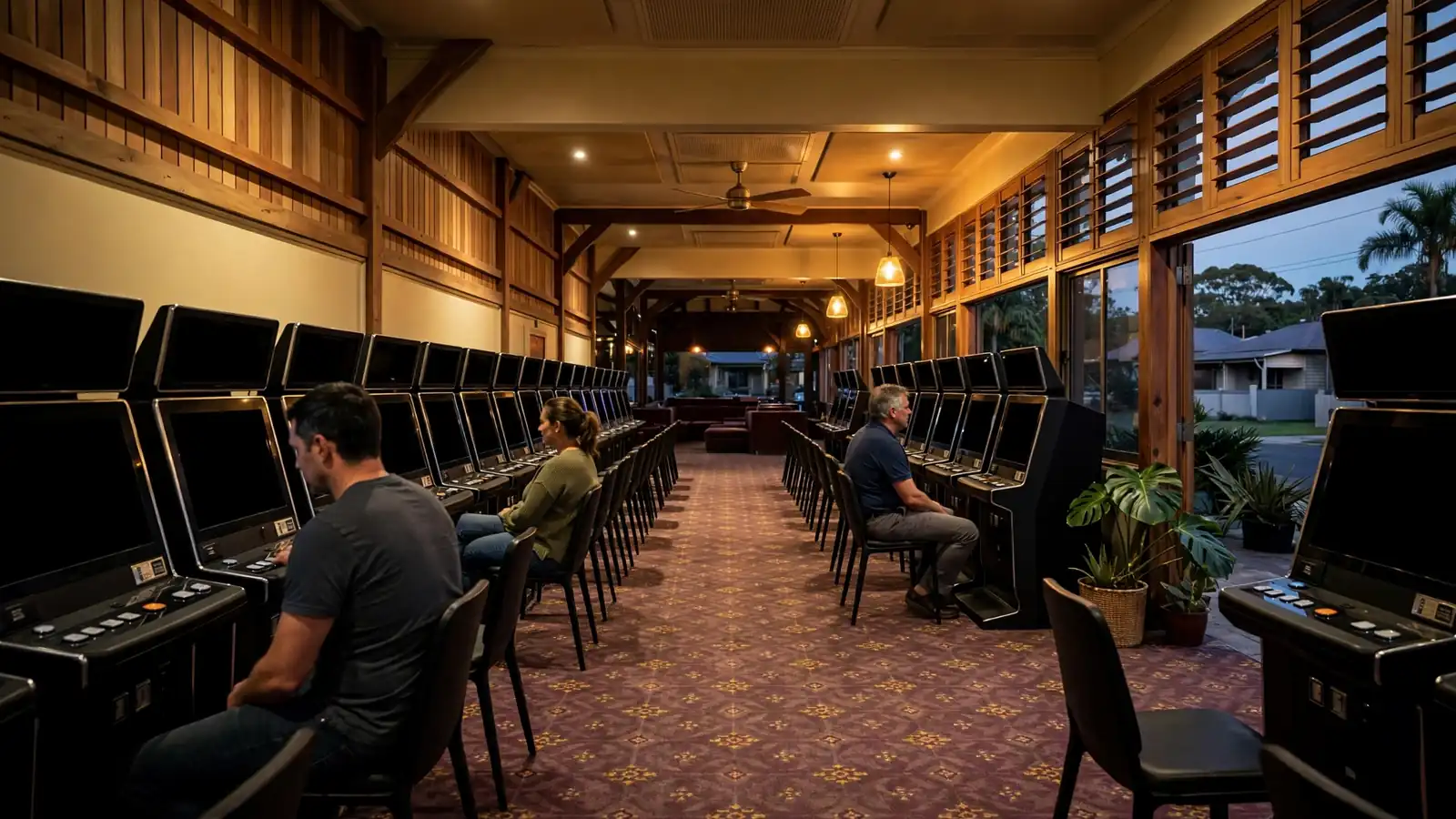
Live Dealers and the Limits of the Available Evidence
A live-dealer label describes the kind of experience being sought: a game presented as involving a human dealer rather than only a digital interface. It does not, by itself, establish who operates the table, where it is run, what rules apply or whether the service is available to people in Australia. Those are separate questions, and the label answers none of them.
That distinction matters because “live” is often used as a trust signal. In my experience, a label can make a product sound more transparent without telling anyone anything about the operator behind it. A dealer-led format is not evidence that a game has been independently checked, that its outcomes are fair, or that a site will honour a withdrawal. Those claims need their own support.
Names such as live-dealer blackjack or dragon tiger identify game categories people may be looking for. They should not be read as confirmation that a particular table, version or rule set is available. The same applies to claims about dealers, studios, presentation or table formats: none can be inferred from the category name alone. A polished description is still a description.
There is also a legal distinction that cannot be blurred by the word “live”. Under the Interactive Gambling Act 2001, providing online casino-style games, including blackjack and other table games, to people physically in Australia is prohibited for operators. There is no Australian-licensed online casino. A live presentation does not create an exception to that boundary, and an offshore site accepting Australian customers does not gain domestic authorisation by describing its games as dealer-led.
The law is directed at operators, not individual players. That does not make an offshore service equivalent to a locally regulated product: if such a site refuses to pay, Australian players have no legal recourse in Australia. The practical issue is not whether a dealer appears on screen. It is who is offering the service and what protection exists when something goes wrong.

I would treat “real money” as a material qualifier, not a decorative phrase. It changes the question from what a format looks like to whether money is being wagered through a service prohibited to operators in Australia. A live dealer does not alter that analysis.
For a genuine comparison, claims would need to be tied to a specific operator and product, with evidence for the details being asserted. Without that, the responsible description stays narrow: dealer-led is a format category, not a finding about a site, its people or its practices. No implied endorsement.
Bonuses: Read the Turnover Before the Headline
A bonus headline is not the amount that can be withdrawn. The condition beneath it sets how much qualifying betting must take place before bonus-linked winnings become eligible for cash-out. In my experience, that distinction is where a generous-sounding offer changes character: the headline describes what is credited, while the turnover clause describes the work attached to it.
A specialist review uses a $500 bonus with a 40x wagering requirement to illustrate the calculation: the required turnover is $20,000 before winnings can be withdrawn. That is not a forecast of what any particular offer will contain; it is an example of how the multiplier operates. A separate calculation in the same type of review shows why the basis matters. If the requirement applies to the deposit and bonus together, a $500 deposit plus a $500 bonus at 35x means $35,000 in bets.
Bonus Turnover Calculation
Determine the wagering requirement, such as a 40x multiplier.
Multiply the bonus amount (e.g., $500) by the multiplier (40x) to find the required turnover.
In this example, the required turnover is $20,000 before winnings can be withdrawn.
The figure alone is not enough. The terms need to say whether the multiplier applies to the bonus, the deposit, or both, and which betting activity counts toward turnover. If that wording is unclear, the headline cannot settle the question. Specialist commentary treats 35x or less as a more manageable benchmark and describes requirements above 40x as punishing; those are evaluative thresholds, not universal rules or a guarantee that an offer is suitable.
“Free spins” can also sound like a simple gift while carrying a separate withdrawal condition. A specialist review notes that winnings from free spins may be subject to a cash-out cap. In practice, that means a displayed win and the amount ultimately eligible for withdrawal may not be the same. The cap, any turnover condition, and the point at which the restriction applies all need to be read together.
For any Australian-facing live-casino promotion, the arithmetic does not answer whether the underlying service or its advertising is lawful. Nor does a bonus label establish how a site handles a dispute. The useful comparison is between the full condition and the headline: what amount is counted, how much turnover is required, and whether a cap limits the result. Fine print matters. Clearly.
Playing Online: Age, Limits and Self-Exclusion
In Australia, the legal minimum age for gambling is 18, including for online pokies. That age threshold is a basic eligibility rule, not evidence that an online casino is authorised to serve Australian residents. The distinction matters: the law addresses the operator’s provision of the service, while the age rule sets who may gamble.

Responsible-gambling controls work by putting friction around play. Deposit limits restrict how much money can be added; loss limits set a boundary on losses; session time limits interrupt extended play; and self-exclusion is intended to prevent access for a chosen period or longer. In my experience, the practical value is in setting a boundary before a session begins, rather than relying on a decision made after losses or fatigue have changed the calculation.
These controls are not interchangeable. A deposit cap does not limit losses already incurred, and a time reminder is not the same as blocking an account. The terms also matter: a control may apply to one account or operator rather than every place where someone can gamble. Read the scope, duration and process for changing or removing it. A tool is only as broad as the system that enforces it.
BetStop is Australia’s national self-exclusion register, but it applies to Australian-licensed operators and does not bind offshore gambling sites. There is no Australian-licensed online casino. So BetStop should not be treated as a universal block on access to offshore casino services, and registering cannot make an offshore operator honour an exclusion. That is the limitation.
The same caution applies to account-level limits offered by an offshore site. They may help manage activity within that account, but they are not a guarantee that the operator will enforce them as expected or that another site will recognise them. “Responsible play” can sound comprehensive; the actual protection depends on who is bound by the rule and what systems it covers.
Searches may refer to live casinos in Malaysia, Canada or India, or to playing live casino games online from Australia. A country name does not settle which rules apply. The relevant boundary is where the person is located and whether the service is permitted to offer real-money casino gambling there. Age and personal limits remain important, but neither turns a prohibited service into an authorised one.

Mobile Access, Deposits and the Withdrawal Checkpoint
A mobile casino offer can refer to two different things: a website opened in a phone browser, or a separate app installed on the device. Those are not interchangeable. A download link does not, by itself, establish who operates the service, what the software does, or whether the service may legally be provided in Australia. The Interactive Gambling Act 2001 prohibits operators from providing online casino-style games to people in Australia.
An app’s presence on a phone is not evidence of approval or protection. The same caution applies to technical language such as “API”: it describes a way software systems can communicate, not a guarantee about the operator, the games, or the handling of an account. In practical terms, any claimed app or download needs to be checked as a specific product, rather than inferred from a general mobile-access claim.
PayID is not a separate wallet. It is an alias layer on Australia’s New Payments Platform, allowing a transfer to be addressed through an email address, mobile number or ABN. For a real-money gambling transfer, PayID must first be linked to a bank account. That connection does not establish that a site is licensed, that its games are fair, or that its published return information is transparent.
Payment access can also fail at the bank end. A specialist review reports that some Australian banks, including members of the Big Four, occasionally block PayID transfers to gambling merchants they recognise. That is a reported possibility, not a dependable rule about every bank or transaction. A declined transfer does not tell the customer whether the cause is the payment alias, the merchant classification or the bank’s controls.
The withdrawal checkpoint is verification. A specialist review describes operators requesting identity and address evidence before a first withdrawal; the documents may include identification and proof of address, and sometimes a selfie holding the identification. The operator’s requirements should be read before money is deposited, because a withdrawal request can trigger checks that were not completed at registration. Keep documents accurate and consistent with account details. No shortcut.

Mobile convenience changes the screen, not the underlying risks. A browser page, downloadable app, payment route and withdrawal process are separate parts of the arrangement; none substitutes for checking the terms governing the account.
AU, UK and the Difference Between Search Terms and Market Rules
A page describing a live casino in the UK does not establish that the service is lawful or available in Australia. The location named in a description is not a switch that changes the rules for someone physically in Australia. Under the Interactive Gambling Act 2001, operators cannot provide real-money online casino games to people in Australia.
I have seen how easily a familiar label can blur that distinction. “International” may sound like a neutral description; in practice, it says nothing about whether an operator may serve Australian customers or whether a blocked site will remain accessible. UK-facing material belongs to a different market context. It is not evidence of Australian authorisation.
The Australian Communications and Media Authority (ACMA) enforces the Interactive Gambling Act 2001. Its role includes blocking access to illegal offshore gambling sites. Internet service providers must comply with ACMA’s blocklist, so access to an offshore service can be restricted even when the site itself continues to operate elsewhere.
That enforcement matters more than a site’s branding, language or intended audience. A service presented for UK customers does not become an Australian service because its pages can be read here; equally, a search result or promotional description cannot override the Australian rules. Access may also change as blocking measures are applied.
The practical distinction is straightforward: UK material describes another market, while Australian law governs the provision of online casino games to people in Australia. ACMA’s blocking powers are part of that boundary, not a certification of sites that remain reachable. Location in the wording is not permission.
What is the legal age for online gambling in Australia?
You must be at least 18 years old to gamble online in Australia.
Are online pokies legal for Australian players?
Yes, Australians may play on offshore sites that accept them, but no online casino holds an Australian licence. Offering real-money online pokies to Australians without a domestic licence is illegal for the operator.
Do PayID deposits qualify for bonuses?
Yes, PayID is treated like any other qualifying deposit method at sites offering bonuses. Check the bonus terms to confirm the deposit qualifies.
What’s the best strategy for playing pokies?
There is no strategy that can predict or control a pokie spin: each spin is an independent random event determined by a Random Number Generator. You can use deposit, loss and session-time limits to manage your play.
Can casinos change the RTP of their games?
Yes, some game providers let casinos choose among different RTP settings for a pokie. Check the RTP setting applied to the game at that casino.
Published by the Supabet Casino team.