Solana Casino Comparison in Australia: Fees & Risks
 Available in AU
See how AUD becomes SOL, what a casino comparison can verify, and how withdrawal checks, wagering terms and token value affect the process.

- How SOL Moves from an Australian Exchange to a Casino
- What a Casino Comparison Can—and Cannot—Verify
- The Australian Legal Position on Offshore Solana Casinos
- Solana Slots and the Wagering Fine Print
- NFT Casinos, SOL and Other Deposit Assets
- Dice Play and What Solana Adds to a Casino Transaction
- Casino Games, Contribution Rates and Bonus Playthrough
- SOL as a Gambling Asset: Tax and Value Risks
- Bonus Terms That Can Turn a Casino Offer Negative
How SOL Moves from an Australian Exchange to a Casino
The route from Australian dollars to SOL is a sequence of separate transactions, not a single casino payment. Most Solana casinos do not take AUD by bank transfer or card. The route described by operators instead starts with an Australian exchange: AUD is deposited there, converted to SOL, and transferred to a wallet address supplied by the offshore casino. Each hand-off has its own checks, processing time and potential cost.
Swyftx, CoinSpot and Coinbase AU support AUD deposits by PayID or bank transfer. The exchange may require identity and other checks before allowing deposits, trading or withdrawals. On-ramp and off-ramp services that convert between SOL and AUD are subject to KYC/AML requirements, so the exchange account is not simply a pass-through. The casino may also request identity documents, including when a withdrawal is being reviewed. Larger withdrawals or bonus-related cashouts can trigger KYC checks; an account balance is not the same thing as cleared, withdrawable funds.
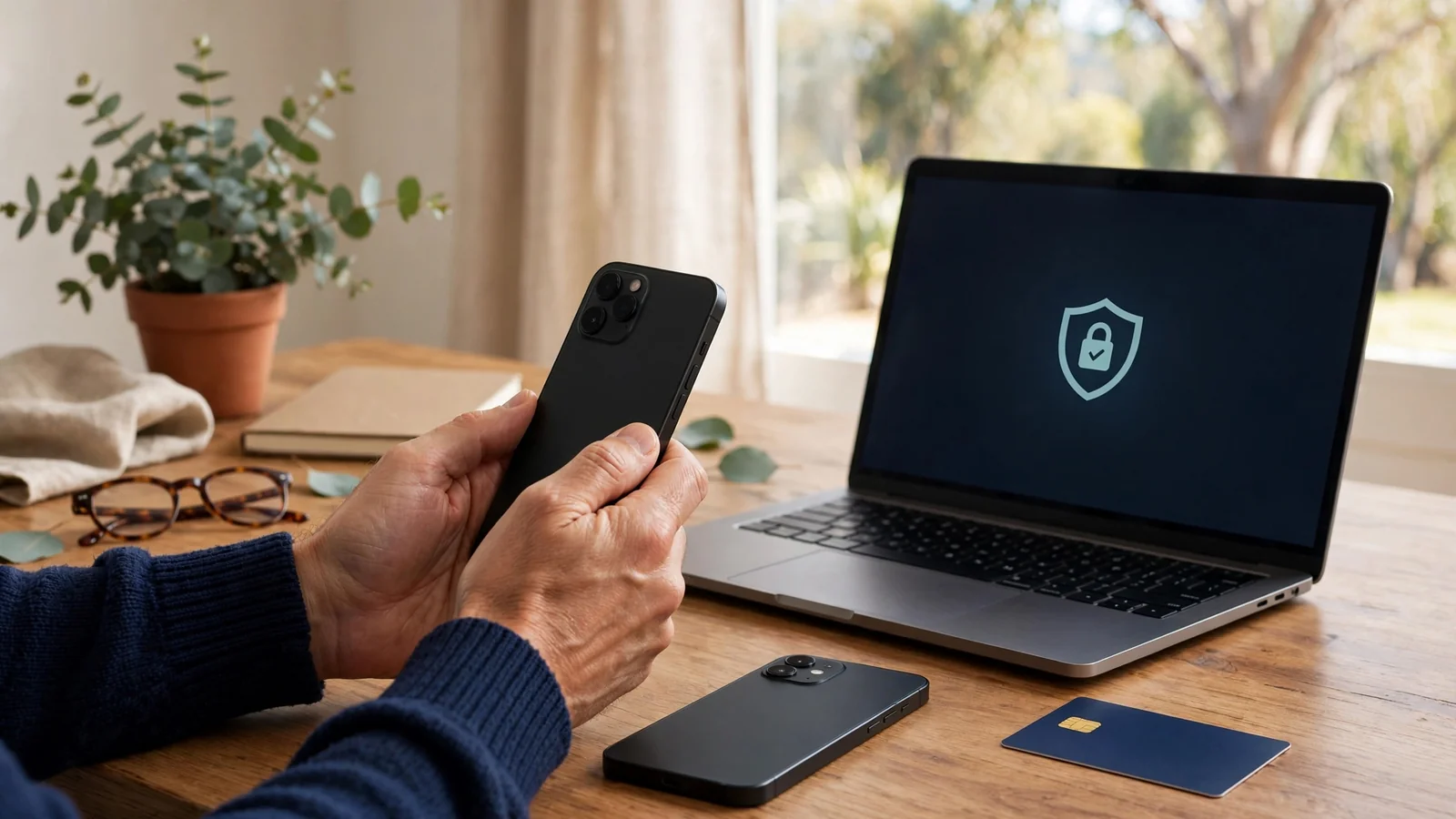
After AUD reaches the exchange, SOL is purchased and sent from the exchange to the casino’s deposit address. The casino may show a minimum deposit, and the amount displayed in SOL can move in AUD value as the token price changes. A specialist review reports minimums from 0.01 to 0.1 SOL, equivalent to AUD$2.80–$28 at April 2026 prices. That range is not a promise that a particular account will accept a deposit at either end; the displayed requirement and the wallet’s available balance need to match.
Address handling is the point where a small mistake can become permanent. SOL transfers are irreversible: if funds are sent to the wrong address, they cannot be recalled through a bank or card dispute. The wallet address should be copied from the casino’s deposit screen and checked before sending. The network and asset must also match the deposit instructions. A transfer marked complete by an exchange only confirms that it has left that service; it does not establish that the casino has credited it.
That distinction matters because the exchange, Solana network and casino each control a different part of the journey. A delay can arise before the exchange releases the transfer, while it is moving across the network, or after the casino receives it but before its account balance is updated. The visible status is useful, but it does not make the process reversible.

The return journey starts with a withdrawal request inside the casino account. If approved, the casino sends SOL to the wallet address specified for the payout. From there, SOL can be transferred to an exchange that supports deposits and sold for AUD; the exchange’s withdrawal process then moves the proceeds to a bank account. That final conversion and bank transfer are not part of the casino payout itself. They have their own service rules and KYC/AML checks.
Network settlement and casino processing are often treated as if they were one clock. They are not. A specialist review describes native SOL withdrawals as taking 30–60 seconds on competent platforms, but casino-side approval can take longer. The same type of review gives a range of 5–15 minutes for automated operator processing and as long as 72 hours where withdrawal requests are handled manually. These are reported timings, not a guaranteed service level. A pending status can reflect an operator review rather than a problem with Solana.
Costs also sit at different stages. An exchange may apply its own trading or withdrawal charges, while a casino can impose a separate payout fee. A specialist review reports casino withdrawal fees of 0.1% to 1% of the amount for some platforms. The figure shown at confirmation matters more than an advertised claim of “free” withdrawals: “free” may refer to the network transfer while leaving an operator fee untouched. The amount ultimately received can also differ in AUD terms if SOL’s price moves between the deposit and withdrawal.
AUD to SOL Deposit
Deposit AUD into an Australian exchange using PayID or bank transfer and complete KYC/AML checks.
Purchase SOL using the deposited AUD within the exchange platform.
Copy the deposit address from the casino and transfer the purchased SOL from the exchange to that address.
Wait for the Solana network to settle the transaction and for the casino to update the account balance.
Before any deposit, the cash-out terms should be read, including the permitted withdrawal method, fees and conditions that can delay approval. Waiting until winnings are on the account is a poor time to discover that a condition applies. There is no Australian consumer recourse against an offshore operator that withholds funds or closes; offshore casinos are prohibited from providing online casino games to Australian residents under the Interactive Gambling Act 2001. The fact that an individual player is not directly penalised does not make using such a service legally safe. A VPN does not solve that problem and may lead to account seizure and loss of funds.
The practical ledger is therefore longer than “buy SOL, send it, withdraw.” AUD enters an exchange, SOL leaves an exchange-controlled wallet, the casino records a credit, the operator approves a cashout, and an exchange converts the returned token back into AUD. Every stage has a different counterparty. The network is only one of them.
What a Casino Comparison Can—and Cannot—Verify
Choosing a Solana casino in Australia means checking the available facts that matter to your own payment preferences. Use these concise notes as a starting point when reviewing the options.
License: Curacao eGaming OGL/2023/174/0082 (Dama N.V.) · Min. deposit: A$15 LevelUp Casino lists a Curacao eGaming licence held by Dama N.V. Its minimum deposit is A$15.
License: Curacao · Payout speed: crypto 30-60 minutes, fiat 1-5 days · Min. deposit: A$10 Wild Tokyo lists a Curacao licence and accepts a minimum deposit of A$10. Its stated payout times are 30–60 minutes for crypto and 1–5 days for fiat.
License: Curacao Gaming Control Board OGL/2023/176/0095 (Hollycorn N.V.) LuckyVibe lists a Curacao Gaming Control Board licence held by Hollycorn N.V.
License: Curacao Gaming Control Board OGL/2023/176/0095 (Hollycorn N.V.) Rollero Casino lists a Curacao Gaming Control Board licence held by Hollycorn N.V.
License: Curacao eGaming (Dama N.V.) JeetCity Casino lists a Curacao eGaming licence held by Dama N.V.
License: Curacao eGaming OGL/2024/923/0383 (Antillephone N.V.) · Min. deposit: A$30 WinSpirit Casino lists a Curacao eGaming licence from Antillephone N.V. Its minimum deposit is A$30.
License: Curacao (operating since 2017) · Min. deposit: A$20 Uptown Pokies lists a Curacao licence and has been operating since 2017. Its minimum deposit is A$20.
License: Curacao · Min. deposit: A$20 (POLi) Lucky Dreams lists a Curacao licence and a A$20 minimum deposit via POLi.
License: Curacao eGaming (Roby Games Ltd) Roby Casino lists a Curacao eGaming licence held by Roby Games Ltd.
Payout speed: crypto under 1 hour, PayID 1-3 business days · Min. deposit: A$20 (A$30 to qualify for the bonus) Ricky Casino lists crypto payouts in under an hour and PayID payouts in 1–3 business days. The minimum deposit is A$20, or A$30 to qualify for the bonus.
A comparison is only as useful as the evidence behind each claim. A polished page can repeat an operator’s promises; a meaningful assessment separates what can be checked from what remains the operator’s own description. That distinction matters particularly for Australians: offshore operators are prohibited under the Interactive Gambling Act 2001 from providing online casino games to people in Australia. A comparison cannot turn an offshore service into a lawful or protected option.
Licensing claims are not the same as Australian authorisation
A comparison can identify the regulator an offshore operator says has issued its licence, then check the claim against that regulator’s public records. The name, licence status and scope should match. A logo in a website footer is not equivalent to a current record, and a licence for one kind of gambling service does not establish authorisation for every product the operator offers.
That check answers a narrow question: whether a foreign regulator appears to have issued the stated permission. It does not establish that the operator is authorised to provide casino games to Australian residents. Under Australian law, offshore operators are prohibited from doing so. A foreign licence should not be presented as Australian approval or as proof that using the service is legally safe.
The comparison should also make clear what it has actually checked. “Licensed” without naming the issuing authority and explaining the scope is a label, not useful evidence. Nor does a licence settle whether a player can recover funds if an offshore operator withholds them or closes. That is a separate question about consumer protection and recourse.
RTP needs a traceable basis
Return to player, or RTP, is a theoretical measure associated with a game, not a promise about an individual session. A comparison should connect any RTP figure to the specific game and version, and distinguish a published theoretical setting from a result a player can expect in the short term. A figure copied from general promotional material, without identifying what it applies to, cannot support a reliable comparison.
The figure also says nothing by itself about the operator’s overall fairness or withdrawal conduct. Those are different checks. Treating RTP as a complete verdict confuses a game statistic with the performance of the casino that offers it.
Provably fair tools need to be explainable
A provably fair label is meaningful only if the process can be examined. The comparison should explain what information the tool exposes, how a result can be checked and what role the operator has in the process. Merely displaying the phrase “provably fair” does not show that a player can independently verify a game outcome.
A provably fair tool allows a player to independently verify a game outcome, but it does not guarantee that all games on a site use this method or that the operator will resolve disputes fairly.
Even a verifiable outcome mechanism has limits. It addresses the integrity of specified game results; it does not prove that every game on a site uses the same method, that account balances will be paid, or that the operator will resolve a dispute fairly. Useful comparisons keep those claims separate.
Withdrawal rules are part of the evidence
A payout-speed claim should not be treated as a network guarantee. Withdrawal time depends on the casino’s own processing as well as network congestion. A comparison should therefore distinguish the operator’s review and approval stage from the time taken for a transaction to move across the network. A fast network cannot make an operator release a pending withdrawal.
The published withdrawal policy also needs scrutiny. It should be clear whether identity checks can apply before a withdrawal is approved, what documents may be requested and whether bonus conditions affect cash-out eligibility. Larger withdrawals or bonus cashouts may trigger KYC checks requiring identity documents. A comparison that mentions payout speed but omits these conditions leaves out a material part of the process.
No comparison can promise that an account will not be restricted or that a withdrawal will be approved. Offshore operators offer limited consumer protection, and Australian authorities may not provide recourse if funds are withheld or a platform closes. Using a VPN can also result in account seizure and loss of funds; it is not a way to make an offshore service safe.

A bonus headline is not its cash value
The word “generous” describes presentation, not what can ultimately be withdrawn. The effective value of a bonus depends on its wagering requirement, which games count and at what contribution rate, any time limit, and any maximum cashout cap. Each condition can change the practical value of the offer. A headline amount alone cannot show whether the bonus is worth pursuing.
Comparisons should set out the complete terms and explain which conditions control cash-out eligibility. A bonus may be credited to an account while remaining unavailable for withdrawal until its rules are met. If the terms are difficult to locate or leave a key condition unclear, that uncertainty should not be replaced with an optimistic estimate.
Affiliate or promotional links should be identified as such. Commercial relationships do not automatically invalidate a comparison, but readers need to know when a link may generate revenue. The same standard applies to every claim: show what was checked, distinguish operator statements from independently verifiable details, and do not turn an unresolved point into a recommendation.
A comparison can organise evidence. It cannot remove the legal restriction, guarantee a fair dispute outcome, or convert promotional language into a reliable measure of value. Before any deposit, the cash-out terms deserve the same attention as the headline offer.
The Australian Legal Position on Offshore Solana Casinos
The legal distinction is between owning SOL and the service it is used to access. Australians may buy, hold and transfer SOL, but the Interactive Gambling Act 2001 bars offshore operators from providing real-money online casino games to people in Australia. The rule covers casino-style services such as slots and table games; accepting SOL rather than Australian dollars does not change the nature of the service.
Legal Restriction
Offshore casinos are prohibited from providing online casino games to Australian residents under the Interactive Gambling Act 2001.
That distinction matters because the Act is directed at operators, not individual players. An Australian resident is not directly penalised under the Act simply for using an offshore casino. But that does not make the activity legally safe, or turn an offshore site into a locally authorised service. Absence of a prosecution against a player is not approval. The operator’s position remains the central legal issue.
There is also no dedicated Australian licensing framework for crypto-gambling operators in place as of mid-2026, according to a specialist industry review. A licence issued overseas does not replace Australian authorisation or override the domestic prohibition. In practical terms, a foreign licence may describe the operator’s status in another jurisdiction, but it does not provide an Australian resident with the protections of a local casino regime.
ACMA is responsible for enforcing the Interactive Gambling Act. One tool is blocking access to unlicensed offshore gambling websites. Its public Gambling Prohibition Register identifies sites that have been found to breach the rules; a specialist review reported that the register contained more than 200 entries in 2026. The register is a regulatory record, not a promise that every unlisted service is lawful or that a listed site is the only risk. Websites can also change domains or become inaccessible after enforcement action.
The practical limit of that enforcement is important. Blocking a website can restrict access, but it does not give a player a route to recover funds from an offshore operator. If an account is frozen or winnings are withheld, Australian law provides no legal protection for the player in that dispute. Offshore operators also sit outside the ordinary local consumer protections available for Australian-regulated services, and there may be no effective recourse through Australian authorities if the platform closes.
A site’s terms, customer support or offshore licence cannot remove that gap. Nor does using a VPN make the service lawful. A VPN may breach the operator’s terms and can lead to an account being seized and funds lost; it does not change the user’s location for the purpose of the Australian prohibition or create a remedy if a dispute follows.

I have seen how the commercial language can blur these boundaries. “Licensed” may sound like a complete answer, when it can refer only to a licence abroad. “Available in Australia” may mean only that a page loads, not that the operator is permitted to offer casino games here. Access is not authorisation.
The legal position is therefore asymmetric: the Act places the prohibition on the offshore provider, while the player is not directly penalised merely for participating. Yet the player can still carry the financial risk of dealing with a service that is prohibited from serving Australians and offers no Australian legal protection if things go wrong. Those are separate points. Neither cancels the other.
Solana Slots and the Wagering Fine Print
A slot’s contribution rate determines how much each qualifying bet reduces a bonus wagering target. It does not tell the player how much the bonus is worth in cash, how likely a balance is to survive play, or whether a withdrawal will be approved. Those are separate questions, often compressed into a single promotional label.
- Read cash-out conditions before depositing
- Check the game contribution table for bonus wagering
- Verify if a game is excluded from promotions
- Assume a headline bonus amount is immediately withdrawable
- Confuse a 100% contribution rate with a guaranteed profit
- Wait until after a win to discover withdrawal restrictions
Slots are commonly credited at 100% of eligible stakes toward wagering requirements. In practical terms, a qualifying stake of one unit counts as one unit of progress. Blackjack and roulette, by contrast, may count at only 10–20%. That difference can make slots the quicker route through a target, but “quick” is a statement about counted turnover, not about profit or the time required to complete play.
The operator’s rules control what qualifies. A game may be excluded, a particular stake may not count, or a contribution rate may apply only while the bonus is active. The advertised rate is useful only when read alongside those conditions. A player can place many bets and still make less progress than expected if the game or wager falls outside the terms.
There is a second distinction that gets blurred in casino copy: contribution is not conversion. A slot can count every eligible stake toward the target while still producing losses through its ordinary game mechanics. A full contribution rate does not mean the bonus is returned as cash, nor does it guarantee that any balance will remain when the requirement is complete. The rate measures progress, not value.
That is why I read the cash-out conditions before considering a bonus, rather than after a win. The important question is not simply whether slots count fully, but what happens to the resulting balance once the target is met. Winnings generated from bonus funds must be wagered with real money before withdrawal. A displayed balance can therefore be conditional rather than immediately withdrawable.

Promotional wording can make a bonus sound like extra money. In practice, the wagering rule determines how much play is required, while game contribution determines how quickly eligible play is credited. Neither alone establishes the amount that can ultimately be cashed out. The full terms may also impose conditions on which bets qualify or on what happens to funds when the offer is accepted.
For Australian residents, this mechanics discussion does not make offshore play legally safe. The Interactive Gambling Act 2001 prohibits offshore operators from providing online casino games to people in Australia. The law targets operators rather than directly penalising individual players, but that does not create Australian consumer protection: there is no local recourse if an offshore casino withholds funds or closes an account. Using a VPN may also lead to account seizure and loss of funds.
Larger withdrawals or bonus cashouts may trigger KYC checks requiring identity documents. A slot’s contribution rate says nothing about that review or its outcome. Counted progress is not cash-out approval.
NFT Casinos, SOL and Other Deposit Assets
The phrase “NFT casino” can suggest that an NFT is a ticket, a balance, a wager or a piece of casino equipment. Those are different roles, and the label alone does not establish which one is involved. A non-fungible token is not interchangeable with SOL simply because both exist on a blockchain. An NFT represents a distinct token; SOL is a transferable asset that can be used for a payment where a platform accepts it.

That distinction matters when a casino format is described as being built around NFTs. The description does not, by itself, explain whether a token is used to access a site, represents an item, affects a game, or has any role in depositing and withdrawing funds. Nor does an NFT label establish that a casino service is available to Australian residents or that an NFT can be exchanged for a casino balance. The mechanics would need to be stated by the operator, and the terms would need to explain what happens to the token and any associated funds.
In my assessment, the first useful question is not whether a casino advertises NFTs, but what the token actually does. If the token is only associated with a membership or collectible, it should not be treated as a deposit asset. If a platform says an NFT affects access or play, that claim needs clear terms: what is transferred, what is retained, and whether the claimed benefit can be used or withdrawn. An image, marketplace listing or promotional label cannot settle those points.
NFT claims and the payment layer
The payment layer is more concrete. A specialist review describes some Solana casinos as supporting deposits and play with USDC on Solana as well as SOL. That is a distinct use of digital assets, not evidence that NFTs function as casino credits. USDC on Solana is a fungible token used as an asset; an NFT is individually distinct. A platform’s support for one does not imply support for the other.

Even the USDC detail needs to be read narrowly. It describes some platforms, not a universal feature of casinos associated with Solana. Asset support is specific to the operator and the relevant network. A token bearing the same name on a different network is not automatically the same deposit route. The receiving platform must support the asset and network combination shown in its own instructions; otherwise, sending funds can lead to a loss rather than a playable balance.
I separate three claims that promotional copy can blur: a casino has a connection to NFTs; a casino accepts a particular token; and a casino credits that token for wagering. Each is a separate operational statement. The first does not confirm either of the others. A Solana casino may accept SOL without accepting USDC, and support for USDC does not mean it accepts NFTs as payment.
That distinction also helps avoid treating a wallet as proof of compatibility. A wallet can hold several kinds of tokens, but the casino’s deposit interface determines what it will recognise. An asset appearing in a wallet does not mean the platform can credit it, and a token transfer does not necessarily create a casino balance. The payment instructions and the account ledger have to match.
What the label leaves unsaid
NFT language can make a product sound more integrated than its actual payment arrangements. “Utility” is an advertising word; what matters is the specific right or function attached to the token and whether the operator’s terms make it usable. The token may have no bearing on deposits at all. A casino comparison should therefore keep NFT claims separate from the ordinary question of which digital assets are accepted for play.
Attention: Using a VPN to access offshore services may breach operator terms and can lead to account seizure and loss of funds.
There is also a basic ownership distinction. Holding an NFT in a wallet does not mean the operator holds it, guarantees its value or will accept it for a withdrawal. Any transfer may be irreversible, and sending an NFT or SOL to the wrong address can mean permanent loss. The same caution applies when a site provides an address or network selection: a transaction can settle on-chain while still failing to appear as the intended casino credit.
KYC checks can also arise when withdrawing, particularly for larger withdrawals or bonus cashouts. An NFT does not remove that possibility or make an account anonymous in a way that guarantees a payout. Offshore operators are prohibited under the Interactive Gambling Act 2001 from providing online casino games to people in Australia. Using one is not legally safe merely because individual players are not directly penalised under the Act. Australian residents have limited consumer protection and no Australian-authority recourse if funds are withheld or a platform closes.
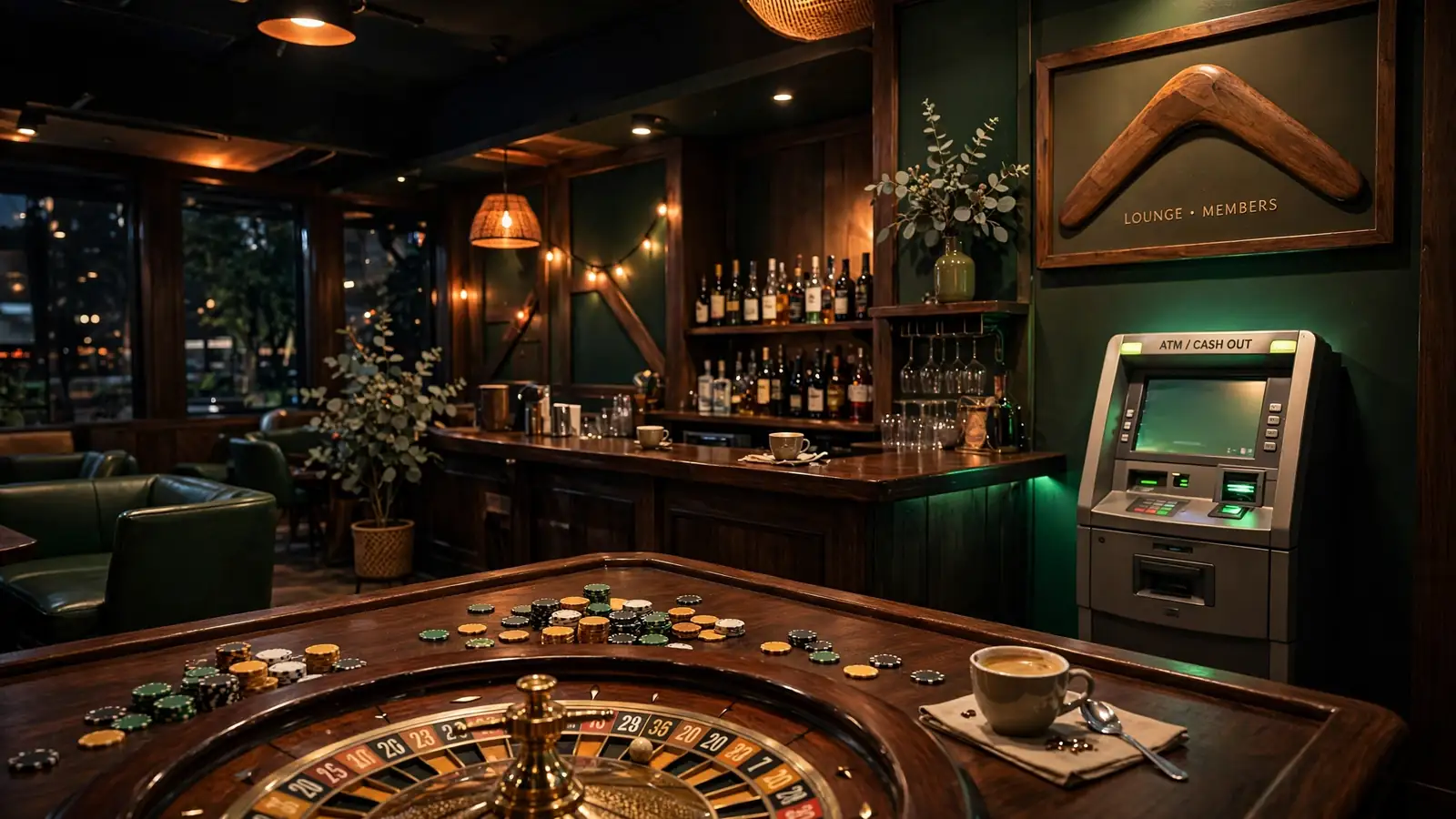
A VPN is not a remedy for those risks. Using one may lead to an account being seized and funds being lost, especially where access or location conditions are involved. The payment method does not change the legal position or create protection against an operator’s decision.
Before depositing, the practical record should be unambiguous: which asset is accepted, on which network, how it is credited, and what the withdrawal terms require. Cash-out conditions should be read before funds are sent, not after a balance has been built. NFT branding answers none of those questions by itself. The underlying mechanics do.
Dice Play and What Solana Adds to a Casino Transaction
A dice-style wager does not make the underlying payment faster: the useful distinction is between a Solana transaction and the casino’s handling of a bet. When SOL is sent, the network records the transfer. A specialist review reports confirmation at approximately 400 milliseconds, with balances updating immediately. That describes network activity, not the time an offshore operator takes to credit a deposit, approve a withdrawal or resolve an account query.
The network fee is small by comparison with ordinary payment costs: the average Solana transaction fee is reported as $0.00025 USD, effectively near-zero. It applies to the transaction, not to the casino’s internal service. An operator may impose separate conditions or charges, and its processing is not sped up merely because the blockchain confirms quickly. Two clocks are involved. The network’s, and the operator’s.
That distinction matters when a balance appears to be missing. A confirmed transfer establishes that the network processed it; it does not establish that the casino has credited it correctly or that a withdrawal has been authorised. Deposits and withdrawals are separate transactions, and neither a fast confirmation nor a low fee guarantees an account outcome.
SOL transfers are irreversible. Sending funds to the wrong address can mean permanent loss, so an address error cannot be treated like a card payment that can simply be reversed. A casino’s account balance is also not the same as a wallet balance held under the player’s control.
There is a more basic boundary in Australia: the Interactive Gambling Act 2001 prohibits offshore operators from providing online casino games to Australian residents. Solana’s speed or cost does not change that position, and using an offshore service is not legally safe simply because individual players are not directly penalised. Australian authorities offer no recourse if an offshore operator withholds funds or closes.
Account checks can still interrupt a cash-out. Larger withdrawals or bonus-related withdrawals may trigger KYC checks requiring identity documents; the blockchain cannot complete that review. VPN use can also lead to account seizure and loss of funds.
For anyone assessing the mechanics, the cash-out conditions need to be read before depositing, not after a win. A quick transaction is only one step in the process. It is not a promise of a quick or successful payout.
Casino Games, Contribution Rates and Bonus Playthrough
A wagering requirement is not a single target applied evenly to every game. The casino’s rules assign a contribution rate to each category, determining how much of a stake counts toward clearing bonus conditions. The distinction matters: a game can accept a bonus balance while contributing only a fraction of the required playthrough.

Slots typically count at 100%. A qualifying stake therefore adds its full amount to the wagering total. Table games such as blackjack and roulette may count at only 10–20%. The same stake then advances the target much less, so a player who switches from slots to a table game can find that the remaining requirement barely moves.
That is the part promotional copy tends to compress. “All games included” can mean that a game is available, not that it contributes fully. Eligibility and contribution are separate rules. A table game may be permitted while its contribution rate makes it an inefficient way to clear the bonus.
The mechanics are simple; the effect is not. When the contribution rate is reduced, more total wagering is needed to reach the same target. That can mean greater exposure to losses before a bonus becomes withdrawable. A bonus balance is not cash merely because it appears beside a real-money balance.

I have seen players focus on the headline offer and miss the game-category table underneath it. That table can change the practical value of the offer more than the headline figure. A clear set of terms states which categories qualify and how each is counted; vague wording leaves room for an unfavourable interpretation when a withdrawal is requested.
For SOL casino games, the token used to place a stake does not alter the contribution rule. The casino’s bonus terms determine whether that play counts and by how much. Cash-out conditions should be read before depositing, not after a balance has been built around a particular game category. Larger withdrawals or bonus cashouts may also trigger KYC checks requiring identity documents.
Offshore operators are prohibited under the Interactive Gambling Act 2001 from providing online casino games to Australian residents. Using one is not legally safe simply because a player has not been prosecuted. Australian authorities offer no recourse if funds are withheld or a platform closes. The bonus calculation is only one risk.
Bonus and Wagering
- Contribution rates determine how quickly a stake reduces the wagering target
- Slots typically contribute 100%, while table games may only contribute 10–20%
- Winnings from bonus funds must be wagered with real money before withdrawal
- Bonus conditions and KYC checks can delay or prevent cash-outs
SOL as a Gambling Asset: Tax and Value Risks
A recreational gambling win and the token used to stake it are not the same thing for Australian tax purposes. Gambling winnings from recreational activity are generally not taxable. SOL, however, is treated by the Australian Taxation Office as an asset for capital gains tax purposes. That distinction matters when gambling involves a crypto asset: profits made through gambling with SOL can have capital gains tax consequences, even where the activity itself is recreational.
The practical complication is that a balance shown in SOL is not a fixed cash amount. If SOL’s market price falls between a deposit and a withdrawal, the tokens returned may be worth less in Australian dollars than the funds originally converted into SOL. A rise can work in the other direction, but it does not remove the possibility of tax consequences tied to the asset. The casino balance and the Australian-dollar value are two separate measures.
I have seen players focus on the game result and overlook the token exposure around it. A winning balance can look unchanged in SOL while its AUD value moves; conversely, a favourable price move can make the cash value rise without any change to the number of tokens. The difference is financial, not cosmetic.
Losses do not automatically cancel out gains for tax purposes. A specialist tax commentary describes gambling losses as offsettable against gains only where the player qualifies as a professional gambler, a status with a high threshold. Recreational players should not assume that a losing session creates a deduction that balances a later win.
This is why the phrase “crypto winnings” can obscure two separate questions: whether the gambling prize is taxable as a recreational win, and whether the use or change in value of SOL has capital gains tax implications. The asset does not become tax-neutral merely because it is held in a casino wallet rather than an exchange account.

For any discussion of a Solana casino token, the relevant financial picture is therefore broader than the displayed balance. SOL price volatility can reduce the value of winnings between deposit and withdrawal, while the token’s treatment as an asset may create tax implications independently of the recreational-gambling treatment. Two ledgers. Two risks.
Bonus Terms That Can Turn a Casino Offer Negative
A bonus balance is not the same as withdrawable money. Winnings generated from bonus funds must be wagered with real money before they can be cashed out. That condition changes the offer’s practical value: the displayed balance may look available, while the withdrawal button remains out of reach until the required play is completed.
The wording matters. “Free” describes how the initial credit is awarded; it does not establish that any resulting winnings can be withdrawn without conditions. A specialist review describes free-spin winnings being credited as bonus funds and carrying a separate wagering requirement, with 50x given as an example. That is a reported offer condition, not a rule that applies to every promotion.
Game contribution can stretch the requirement further. If only part of a stake on a particular game counts, the player may need to wager more than the headline target suggests to reach the qualifying amount. A promotion can therefore be technically achievable yet poor value for someone who would otherwise choose games that contribute less.
Other terms can close the route to cash-out altogether. A promotion may require real-money play, restrict which games qualify, or set a maximum amount that can be withdrawn from bonus winnings. Those details determine whether a balance can become cash, not the promotional label attached to it.
I treat the cash-out clause as part of the price of accepting an offer. Read it before depositing, not after a win. The relevant question is not how large the bonus looks, but what must happen before the resulting funds become withdrawable—and whether those conditions suit the way the account will be played. A headline bonus can turn negative once its restrictions are counted.
How do I play at Solana online casinos from Australia?
You can buy SOL on an Australian exchange that accepts AUD deposits, then transfer it to the casino’s deposit address using the network and asset specified by the casino. Check the address and cash-out terms carefully: SOL transfers cannot be reversed, and offshore casinos do not provide Australian legal protection.
Is it legal to use Solana casinos in Australia?
Australian law prohibits offshore operators from offering online casino games to residents, although the Act targets operators rather than directly penalising individual players. Australians can buy and transfer SOL, but using offshore casinos carries legal and consumer-protection risks.
How fast are Solana casino withdrawals?
Native SOL transfers can take about 30–60 seconds, but casino approval adds time: automated withdrawals may take 5–15 minutes, while manual reviews can take up to 72 hours. Fees may also apply, with some casinos charging 0.1%–1% of the withdrawal.
How does a Solana casino work?
You buy SOL with AUD through an exchange, transfer it to the casino, and use it to play. For a withdrawal, the casino sends SOL to your wallet; you can then transfer it to an exchange, sell it for AUD, and withdraw the proceeds to your bank.
Are Australian Crypto Casinos Safe?
Using an offshore crypto casino carries significant risks: Australian players have no legal protection if an operator freezes an account or withholds winnings, and SOL transfers cannot be reversed. ACMA blocks unlicensed offshore gambling sites.
Are Solana casino bonuses worth claiming?
They can be, but check the wagering requirement, which games count toward it, the time limit, and any maximum cashout cap before claiming. Bonus funds generally must be wagered before withdrawal, and some games contribute much less than slots.
Can I use Australian dollars directly?
Usually not: most Solana casinos do not accept AUD deposits by bank transfer or card. You generally need to buy SOL through an Australian exchange and transfer it to the casino.
Written by the editors at Supabet Casino.