Pokies Parlour Casino in Australia: Meaning and Checks
 Available in AU
The term can describe a gaming area or be used by online sites, but the wording alone proves neither a venue nor authorisation.
- What “Pokies Parlour” Means in Australia
- Sign-Up Bonuses and the Australian Rules Behind Them
- Playing Online: What Access to a Site Does—and Doesn’t—Show
- Free Chips and Spins: Read the Domain, Not the Promise
- How to Read a Pokies Parlour Review
- The Australian Context: Casinos, Cities and Jurisdictions
- “Bonus” Without the Sales Copy
- VIP Parlour Language and Casino Entry
- Parlour Pokies in the Physical Casino Market
- Real-Money Claims and Casino Licensing
What “Pokies Parlour” Means in Australia
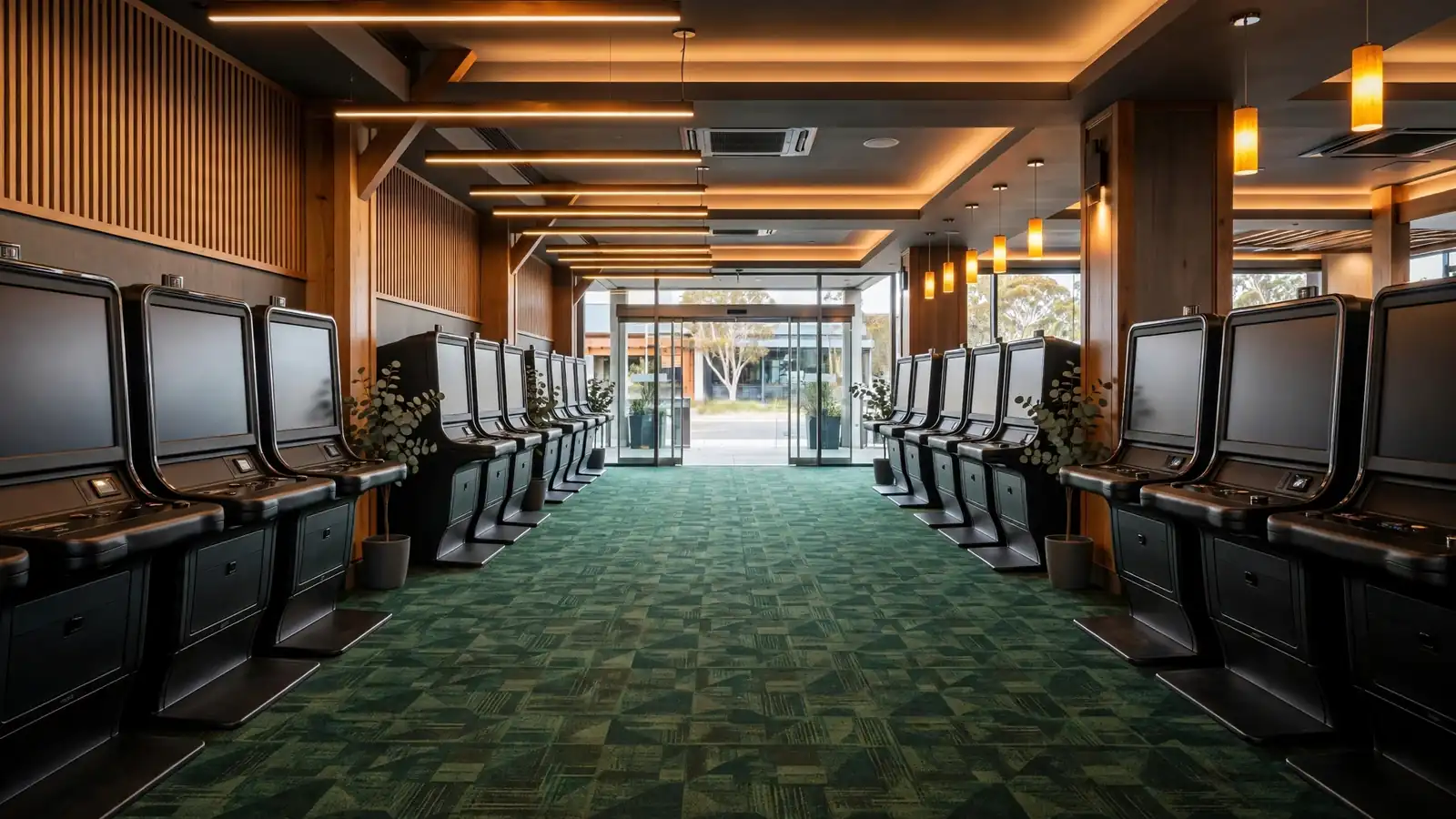
“Pokies parlour” sounds like a specific kind of venue, but in Australian usage it is more often an informal label than a formal category. It can suggest a room or gaming area centred on electronic gaming machines. When the phrase is paired with “casino”, it may also be used loosely to describe a physical casino’s gaming floor. The wording alone does not establish that a place is a separate parlour, a licensed casino, or even a real venue.
That distinction matters because the same language appears in descriptions of online sites. A website can borrow the atmosphere of a local gaming room in its name or presentation, but that does not turn it into a physical venue. Nor does the word “parlour” establish that an online service is authorised to provide casino games in Australia. In my experience, branding does a lot of work: it makes an unfamiliar business sound local and familiar. The label is not proof.
A venue, not a category
In a physical setting, a parlour generally suggests an enclosed area where gaming machines are available, often within a larger hospitality or entertainment venue. A casino is a broader establishment. Its identity is not defined by one room or one type of equipment; it is a substantial gaming venue operating under its jurisdiction’s arrangements.
Choosing a pokies site involves more than finding games: it is worth checking the available licensing and payment details before deciding where to play. This list gives a brief, fact-based reference for Australian readers.
License: Curacao eGaming OGL/2023/174/0082 (Dama N.V.) · Min. deposit: A$15 LevelUp Casino lists a Curaçao eGaming licence held by Dama N.V. Its minimum deposit is A$15.
License: Curacao · Payout speed: crypto 30-60 minutes, fiat 1-5 days · Min. deposit: A$10 Wild Tokyo lists a Curaçao licence and a minimum deposit of A$10. Its stated payout times are 30–60 minutes for crypto and 1–5 days for fiat.
License: Curacao Gaming Control Board OGL/2023/176/0095 (Hollycorn N.V.) LuckyVibe lists a Curaçao Gaming Control Board licence, OGL/2023/176/0095, held by Hollycorn N.V.
License: Curacao Gaming Control Board OGL/2023/176/0095 (Hollycorn N.V.) Rollero Casino lists a Curaçao Gaming Control Board licence, OGL/2023/176/0095, held by Hollycorn N.V.
License: Curacao eGaming (Dama N.V.) JeetCity Casino lists a Curaçao eGaming licence held by Dama N.V.
License: Curacao eGaming OGL/2024/923/0383 (Antillephone N.V.) · Min. deposit: A$30 WinSpirit Casino lists a Curaçao eGaming licence, OGL/2024/923/0383, held by Antillephone N.V. Its minimum deposit is A$30.
License: Curacao (operating since 2017) · Min. deposit: A$20 Uptown Pokies lists Curaçao licensing and says it has been operating since 2017. Its minimum deposit is A$20.
License: Curacao · Min. deposit: A$20 (POLi) Lucky Dreams lists a Curaçao licence and a minimum deposit of A$20 when using POLi.
License: Curacao eGaming (Roby Games Ltd) Roby Casino lists a Curaçao eGaming licence held by Roby Games Ltd.
Payout speed: crypto under 1 hour, PayID 1-3 business days · Min. deposit: A$20 (A$30 to qualify for the bonus) Ricky Casino lists crypto payouts in under an hour and PayID payouts in 1–3 business days. The minimum deposit is A$20, or A$30 to qualify for the bonus.
People may call a casino gaming area a parlour because the word gives a compact picture of the space: machines, seating and a contained room. But Australian casinos do not become a distinct regulatory class simply because someone uses that description. The practical distinction is between the place itself and the language used to describe part of it.
A search for a “pokie parlour casino” can therefore point in more than one direction. It may refer to a physical casino and its gaming floor, or it may be wording used by an online operator to evoke that environment. Those are not interchangeable. One is a venue people can enter; the other is a website presenting itself through text and design.
This is where I have seen the wording cause confusion. A familiar label can make a digital page feel like an extension of a local venue. It is still a separate service. The design may borrow a parlour’s vocabulary, but the word does not supply a building, a local operating status or a physical connection.
The Australian footprint
Australia’s casino market is made up of physical properties rather than a nationwide chain of venues sharing one “parlour” identity. Each major casino operates around the clock, so its gaming areas sit within a larger venue that remains in operation throughout the day and night. That is a more useful description of the real-world setting than treating “parlour” as a standard venue type.
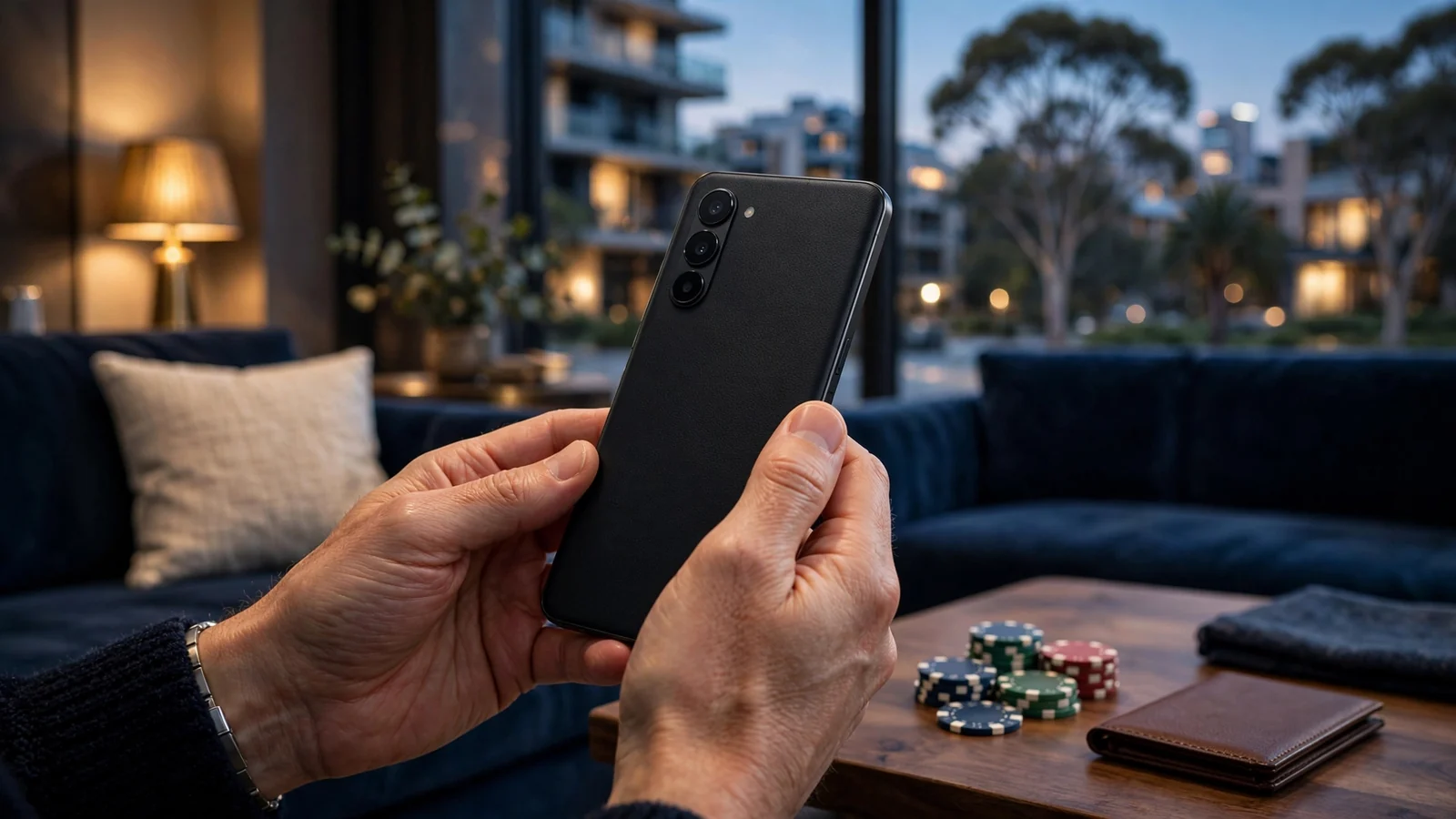

A specialist review has counted more than 20 full-scale casinos across Australia’s eight states. That is a source-specific snapshot, not a permanent definition of the market: venues and their operating circumstances can change. The point is the broad footprint. Casinos are present across the country, but the phrase “pokies parlour” does not tell anyone which property is meant or where it is located.
There is also a measurable physical scale behind the terminology. Australian casino licences endorse gaming machines, and 3,308 machines are recorded as installed in casinos nationally. That figure helps explain why parlour-style language can sound plausible when describing a casino gaming area. It does not mean every casino has the same layout, or that all machines are gathered into a separately named parlour. The room’s label is not a national standard.
I would read “parlour” as atmosphere unless the description identifies a specific physical venue and supports that identification. In promotional language, the term can be made to carry more certainty than it deserves. It might signal a room, a theme, or simply a choice of name. By itself, it settles none of those things.
What the phrase does not settle
The phrase “pokies parlour casino Australia” combines a machine-room image with a national setting. It is understandable as shorthand, but it can blur the difference between a casino floor and an online page using casino language. That blur is useful to marketing; it is not useful for identifying what is actually being described.
Attention: The term “pokies parlour” may be used by online operators to evoke a local atmosphere, but this branding does not prove the existence of a physical venue or a legal operating status in Australia.
A physical casino is a place with a real-world footprint. A website is a digital service, even when its wording imitates a venue. The word “parlour” cannot bridge that gap. It cannot verify a property, prove a site’s relationship to one, or establish that the same rules apply to both.
So the most accurate reading is a modest one: “pokies parlour” is a casual description that may refer to a gaming area, while “casino” names the larger venue. When the phrase appears online, it may be branding rather than a description of a local place. Familiar words. Different things.
Sign-Up Bonuses and the Australian Rules Behind Them
A “sign-up bonus” is a sales term, not a regulatory status. The same is true of a “no-deposit” offer: neither phrase establishes that an online casino may lawfully provide services to people in Australia. A polished promotion can make an operation look established, but the wording itself says nothing about whether its conduct complies with Australian law.
The distinction matters because the Interactive Gambling Act 2001 prohibits operators from providing real-money online casino services to people physically in Australia. That prohibition covers casino-style offerings, including slots, poker and table games. A bonus attached to such a service does not create an exception. Nor does describing an offer as a welcome gift, a reward for registration or a way to try a site alter the legal character of the underlying service.

From the industry side, I learned to read promotional language as a description of how a business wants to attract attention, not as evidence of permission to operate. “No deposit” sounds like a reduced commitment. In practice, it is still an inducement linked to an online gambling service. The absence of an initial payment does not establish that the service is authorised for the Australian market, and it does not change the rules that govern the operator.
The same applies to a pokies parlour sign-up bonus or a no-deposit offer carrying a casino-style label. “Parlour” can give an online promotion a familiar, local feel, but a label is not a licence or an approval. The legal question is not answered by the offer’s name, the way the promotion is presented, or how little the customer is asked to do before registering.
The enforcement role
The Australian Communications and Media Authority, usually called ACMA, oversees compliance with federal interactive gambling law and is responsible for enforcing the Interactive Gambling Act. Its role is not to certify the appeal or generosity of promotions. It monitors compliance and can take enforcement action when operators provide or advertise prohibited services.
One tool is a request to Australian internet service providers to block access to websites that provide prohibited interactive gambling services or advertise them in Australia. ACMA reports that, following enforcement action, it has blocked more than 1,455 illegal gambling and affiliate websites since November 2019. That figure reflects enforcement activity; it should not be read as a count of bonus offers, nor as a measure of how attractive or trustworthy any promotion may appear.
There is also a reported difference in the withdrawal figures. One account says that more than 210 illegal services have left the Australian market since ACMA began enforcement in 2017; another gives the figure as more than 190. Those versions do not match, so neither should be presented as an uncontested total. The shared point is narrower: enforcement has been associated with services withdrawing from the market.
Legal Prohibition
The Interactive Gambling Act 2001 prohibits operators from providing real-money online casino services to people physically located in Australia, regardless of any sign-up or no-deposit bonuses offered.
What a promotion cannot prove
A bonus page is written to convert interest into action. Its headline may foreground a reward while leaving the legal status of the service unaddressed. That is a commercial choice, not an assurance. An offer’s detail, tone or apparent generosity cannot substitute for the regulatory framework, and a promotional claim should not be mistaken for confirmation that an operator has Australian authority.
This is where the wording can mislead without making an explicit promise. “For Australian players” may sound like a statement about permission, but marketing language alone cannot settle that question. “Available now” describes the seller’s pitch, not a decision by the regulator. Even a promotion that appears tailored to local customers remains subject to the same prohibition when it concerns real-money online casino services supplied to people in Australia.
The practical reading is therefore restrained: a sign-up or no-deposit bonus tells what the advertiser is offering as an inducement. It does not establish that the offer is lawful, that the operator is authorised, or that a promotion can override federal restrictions. ACMA’s blocking and enforcement powers show why presentation and legality are separate matters. The offer is the sales layer. The law sits underneath it.
That distinction is easy to lose when a promotion is framed as a simple registration benefit. I have seen how a familiar label can make a commercial proposition feel routine. But routine presentation is not regulatory approval. A bonus remains a marketing claim, and the rules apply to the service behind it. No shortcut.
Playing Online: What Access to a Site Does—and Doesn’t—Show
A page loading in a browser is a technical result, not a regulatory finding. The same applies when a site accepts account traffic or appears at a different web address. None of those things establishes that the service is licensed to provide online casino games in Australia.
That distinction matters because an online casino can present itself as a “parlour” without being a physical gaming venue or an Australian-authorised service. The label is part of the site’s presentation. It does not change the legal status of the activity behind the page. Under the Interactive Gambling Act 2001, operators cannot provide real-money online casino games to people located in Australia.
I have seen access treated as if it were a quiet approval: the page opens, the account area works, so the operation must have passed some local check. That is the wrong inference. A website’s ability to operate across a network says nothing, by itself, about whether its service is lawful for Australian customers. Access is not approval.
The same reasoning applies when an address changes. A service may appear under an alternate domain, or one address may stop resolving while another loads. Those are changes in how the website can be reached. They do not turn an offshore service into an Australian-licensed online casino. Nor does a working sign-in page settle the question. It shows that the page is responding, not that the operator has permission to provide the underlying gambling service here.
This is where the phrase “play online” can blur two separate things. It may describe the action a site invites, but it does not describe what Australian law permits an operator to provide. Online casino-style games, including slots and table games, fall within prohibited interactive gambling services when offered to customers in Australia. Describing such a service as a parlour, a club, or a digital venue does not alter that classification.
Technical access to a website or the use of alternate domains does not constitute regulatory approval or a legal license to provide gambling services in Australia.
A search result, a saved bookmark, or a link shared elsewhere can also remain visible after the regulatory position has changed or enforcement has affected access. The internet does not work like a licensing register. A page can be reachable for technical reasons, and a page that once worked can later fail. Neither outcome is a reliable test of authorisation.
The practical distinction is plain: network access concerns whether a device can reach an address; regulatory status concerns whether the service may lawfully be provided to people in Australia. One cannot be substituted for the other. I have seen that confusion do real work for a site’s presentation, because a functioning interface feels official even when it proves only that the interface is functioning.
For Australian audiences, an online casino’s invitation to play should not be read as evidence that online casino play is an available, authorised option. The wording on a page, the presence of an account facility, and the persistence of an address do not supply that permission. Different signals. Different questions.
The boundary is easy to miss when a site looks polished and behaves normally. But a familiar layout is still just a layout, and an accessible page remains only an accessible page. No licence follows from a loading screen.


Free Chips and Spins: Read the Domain, Not the Promise
“Free spins” and “free chips” are offer language, not evidence that an offer can be used in Australia. The wording may make a page look like a simple promotion: a stated reward, a button, and a route to an account. From behind the counter, I learned to separate that surface from the practical question underneath it: what is the address actually connected to, and can that address remain available?
A specialist review reports that Australian internet providers may be affected by website-blocking action, changing which domains resolve, while alternate addresses can appear over time. That describes a shifting web address, not a fresh clearance for the service behind it. A changed spelling or a new suffix can make a familiar page appear reachable again without changing what the site offers or its status.
That is where the promise can do its work. A page may present complimentary spins or chips as if the offer were the main event. But the offer is attached to a service and a domain; it does not independently establish that the service is lawful for people in Australia or that the domain is a dependable route. A promotional label does not carry regulatory force.
The distinction matters because domains are easy to mistake for operators. A site name can be repeated across pages, while the address displayed in a message, advertisement or old bookmark changes. A working page at a replacement address may look continuous to someone following the promotion. It may be only a new route to the same material. The address changed. The promise did not become proof.
Attention: Promotional offers like free spins or chips are attached to specific domains; a change in the web address does not change the legal status of the underlying service.
I have seen promotional copy make conditions feel secondary by putting the reward first. “Free” sounds complete, but it says little about what service sits behind the offer or what happens when an address stops resolving. In this context, treating the offer as the decision point reverses the order. The domain and the underlying service come first; the promotional wording comes after.
Australian law prohibits operators from supplying real-money online casino-style games to people in the country. That includes services presented through casino language, whether the page foregrounds a bonus, chips or spins. A complimentary label does not make an online casino offer an appropriate option for Australian audiences, and a new domain does not alter the underlying restriction.
The practical reading is restrained: promotional copy can be copied, refreshed and attached to a different address. Blocking can also change which addresses are reachable through Australian providers. Neither movement makes the reward more reliable. Nor does a page’s temporary availability settle the question of whether its service is permitted.
I once gave too much weight to a polished offer and too little to the route behind it. The useful lesson was not to decode the reward. It was to avoid letting a reward headline stand in for the identity and status of the service it promotes. A fresh domain is still just an address. A free label is still just copy.
How to Read a Pokies Parlour Review
A polished review can make a description sound like a finding. In my experience, the useful distinction is between what the page asserts and what it can substantiate. “Trusted”, “verified” and “Australian-friendly” are promotional labels until the review explains the basis for using them. A confident tone is not evidence.

I read a review as a set of separate claims, not as one overall verdict. Does it describe a physical venue, an online service, or use “parlour” loosely for both? Does it identify who published the information and when it was checked? Does it distinguish firsthand observation from material supplied by an operator or repeated from another page? Those details help show where reporting ends and sales copy begins.
The same applies to claims about safety or oversight. A review that says a service is “approved” should make clear what that means and identify a verifiable basis. A badge, a policy page or a statement in the review is not, by itself, confirmation. Nor does a detailed description prove that the reviewer independently tested every claim. Fine print matters. So does what the review leaves unexplained.
There is a practical regulatory point that belongs in this assessment. ACMA, the Australian Communications and Media Authority, has used website-blocking measures against illegal gambling services. Regulatory enforcement material has also recorded action involving alternate domains associated with Fair Go. That is relevant context for assessing reviews that present a particular address as settled or dependable. It does not turn a review into an official ruling, and it should not be recast as a finding about every service or every address mentioned in an article.
A review can also become outdated without changing its wording. Sites may alter their presentation, and addresses may change; a review that once described one domain cannot automatically establish what a later page represents. Repetition across several review pages is not independent confirmation if they appear to rely on the same underlying claim. The wording may multiply. The evidence may not.
- Check for a verifiable basis for claims like “trusted” or “verified”
- Distinguish firsthand observation from operator-supplied material
- Mark uncertainty plainly in assessments
- Treat editorial confidence as independent verification
- Rely on repetition across review pages as confirmation
- Mistake a polished tone for evidence of safety
I also look at the balance of the page. If praise is specific but limitations are vague, or if the article moves quickly from description to a strong recommendation, that tells something about its purpose. A clear separation between factual description, opinion and promotion is more informative than a string of ratings or superlatives. A review may still have a commercial interest; the point is whether that interest is disclosed and whether its claims can be checked against material beyond the review itself.
None of these signals is a shortcut to a verdict. They are ways to avoid treating editorial confidence as verification. The strongest review is not necessarily the longest or most polished; it is the one that makes its claims traceable, marks uncertainty plainly and does not blur a commercial message into independent assessment.
A review is evidence of what its publisher says. No more.
The Australian Context: Casinos, Cities and Jurisdictions
Australia does not have a single national casino licence covering every property. Casino regulation sits with the state or territory where a property operates, and each casino holds a licence issued by that local jurisdiction. The map therefore matters: a casino’s regulatory setting follows its location, rather than a nationwide “Australian casino” permit.
I have found that this distinction is easy to lose in broad descriptions of the market. A city list can make the country look like one continuous casino district, while the licensing structure is local. The same phrase—an Australian casino—may describe a physical property within a particular state or territory, but it does not identify one common regulator or licence across the country.

Sydney is a useful example of how geographic claims need to be read carefully. A specialist review identifies Sydney, in New South Wales, as Australia’s largest gambling city and counts 11 gambling facilities there. That is a reported snapshot, not a permanent official count: facilities and classifications can change, and “gambling facilities” is not interchangeable with “casinos.” The distinction is practical, not cosmetic. A total that includes different kinds of venues cannot be treated as a count of casino properties.
The number also says something about concentration, rather than licensing. Sydney’s reported position places it prominently in a national view of gambling locations, but it does not create a Sydney-wide casino licence or replace the role of the relevant state authority. A list of places may help orient a reader; it cannot tell the whole regulatory story.
This is the part of the Australian landscape that matters when a location is presented as proof of status. A venue’s address places it within a jurisdiction. Its licence comes from that jurisdiction. The terms should not be collapsed into a general claim that a property is simply “Australian,” as though that label explained who regulates it. It does not.
There is also a difference between a city’s gambling footprint and the casino market alone. Counts of facilities may include more than one venue category, while a casino’s operating permission is tied to its local licensing framework. A tidy national ranking can obscure those boundaries. I treat the location and the licence as separate pieces of information.
For someone looking at the Australian casino landscape, the useful outline is not a single national map with one set of rules. It is a set of state and territory jurisdictions, with casino properties licensed locally and city-level figures serving as descriptive snapshots. Sydney’s reported facility count gives a sense of concentration, but it should be read with its source type and category in view.
Casino Regulation
Casino licenses in Australia are issued by individual state or territory jurisdictions rather than through a single national permit.
Geography first. Jurisdiction next.
“Bonus” Without the Sales Copy
“Bonus” is a sales label, not a description of what a venue is or what activity it may lawfully offer. A phrase such as a bonus attached to a pokies parlour can suggest an extra benefit, but the wording alone establishes neither that an offer exists nor that an online casino is available to people in Australia. It is packaging. The underlying service matters more.
I learned to separate the label from the mechanism. In promotional copy, “bonus” can make a condition sound like a straightforward addition. In practice, the word has no fixed meaning without the offer’s terms: it might refer to a credit, a reward, or something else entirely. Those details cannot be inferred from the headline, and they do not change the legal status of the activity being promoted.
That distinction is especially important online. Australian law prohibits operators from supplying real-money online casino-style games to people located in the country. A foreign company’s use of the word “bonus” does not create an Australian entitlement, and a local-sounding name does not make an online casino locally authorised. The label does not bridge that gap.
The same word can appear in connection with a physical venue, where casinos operate under licences issued by their state or territory. That is a different setting from an online promotion. A venue’s existence and its local licence do not establish that an online offer carrying similar branding is available or lawful. Different service, different framework.

I have seen promotional language do its work before the detail is read: it directs attention to the apparent extra, while leaving the reader to assume the rest. That assumption is the weak point. “Bonus” says nothing by itself about eligibility, practical value, or whether the advertised service may be supplied in Australia. A precise claim needs more than a prominent word.
For that reason, the phrase “pokie parlour bonus” should be treated as a description used in marketing, not as proof of a real benefit or a recognised Australian product. It cannot establish that an online casino is licensed here, and it should not be read as an invitation to use one. The word is easy. The legal and operational facts sit elsewhere.
No shortcut.
VIP Parlour Language and Casino Entry
“VIP” sounds like a formal status. In casino language, it is often just a label until the venue defines what it means. It might describe a room, a membership category or a promotional message, but the word alone confirms none of those things. It does not establish that a particular parlour exists, that entry is included, or that any special service comes with the label.
I separate the description from the conditions. A venue’s own entry information is what matters for practical details; a banner calling something a “VIP parlour” is not a substitute. That distinction is easy to miss because the label borrows the authority of a venue category while leaving the actual terms unstated. In plain terms: attractive wording, limited evidence.
For physical casino entry in Australia, the age threshold is 18, and valid photo identification is required regardless of any VIP status claims.
For physical casino entry, the age threshold is 18 across Australia. Major Australian casinos require valid photo identification at entry, so a claim of VIP access does not replace the ordinary age and identity checks. Nor does the word imply an exemption from venue rules. The label is about how access is presented, not proof that access has been granted.
I have seen promotional language do a lot of work before the basic conditions are made clear. “VIP” can make an invitation feel settled when it may only be a marketing description. The practical test is whether the venue identifies what the status covers and sets out its entry requirements. Without that, the label remains a label. No special meaning guaranteed.
Parlour Pokies in the Physical Casino Market
“Parlour pokies” can suggest a separate room or a distinct kind of venue. In the physical casino market, the useful distinction is less about the label and more about the equipment count: gaming machines installed in casinos under the terms of venue licences.

The recorded national total is 3,308 machines endorsed on venue licences and installed in Australian casinos. That figure describes the casino footprint, not every gaming machine in the country. Nor does it establish how machines are arranged within a property, which areas contain them, or whether a particular venue has a separate parlour. Those details depend on the venue and its operating arrangements.
I have seen how a number can acquire extra meaning in promotional copy. A count sounds concrete, but it does not tell anyone what the experience is like or what a venue offers on a given day. Here, the count is a measure of licensed casino equipment. Nothing more.
The word “parlour” may be used loosely in descriptions, but it should not be taken as proof of a standalone casino or a standard room format. In Australia, the figure concerns machines recorded against casino venue licences and physically installed in casinos. It does not convert every place described as a gaming venue into a casino, and it does not establish that all machines are available to every visitor.

That distinction matters. A national total provides scale; it is not a venue directory, a promise of access, or a guide to machine choice. The physical footprint is real, but the label can be elastic. The count is the firmer point.
Real-Money Claims and Casino Licensing
“Real money” describes how an offer is presented; it does not identify who has authorised the service. I learned to separate those two things because promotional wording can make an online casino sound like an ordinary extension of the physical casino market. It is not.
In Australia, casino licences are issued by the state or territory responsible for the individual property. That arrangement applies to casino operations within the relevant jurisdiction. It does not create a general Australian licence for offshore websites, nor does a foreign licence establish permission to provide online casino games to people in Australia.
The distinction matters because the Interactive Gambling Act 2001 prohibits operators from supplying real-money online casino games to customers physically located in Australia. Casino-style games, including slots, poker and table games, fall within that prohibition. A website’s use of “licensed”, “cash play” or “real-money casino” is a claim to examine, not evidence that the service holds an Australian casino licence.

The label can also blur two different questions: whether a physical property has a local casino licence, and whether an online operator may offer casino games to Australians. The first is determined by the relevant state or territory. The second is governed by federal law. They are not interchangeable credentials.
From the industry side, I have seen how a prominent licence badge can do more work in an advert than its small-print explanation. The badge may refer to another jurisdiction, while the headline implies local approval. The wording sounds official. The scope may not be.
So “pokies parlour casino real money” should not be read as a licensing category. Real-money language says something about the advertised transaction, not the legal status of the operator in Australia. A physical casino licence and an online offer are separate matters. No wording bridges that gap.
Prepared by the Supabet Casino editorial staff.