Supabet Withdrawals in Australia: Limits, Processing and Complaints
 Available in US
Supabet’s current AUD withdrawal structure is tiered by VIP level. The verified terms set Level 1 at A$800 per day and A$10,500 per month, Level 2 at A$800 and A$16,000, Level 3 at A$1,200 and A$20,000, Level 4 at A$1,600 and A$24,000, and Level 5 at A$2,500 and A$35,000. Supabet also states that its financial department works through withdrawal requests within three business days once applicable conditions and checks are complete.
Those are operator-stated rules, not a guarantee that every withdrawal reaches a bank, wallet or crypto address within three business days. Current complaint platforms contain repeated user reports of longer delays, including both resolved and still-active cases. The useful way to assess Supabet cashouts is therefore to keep the official process and the complaint record in two separate evidence columns.
- Current AUD withdrawal limits
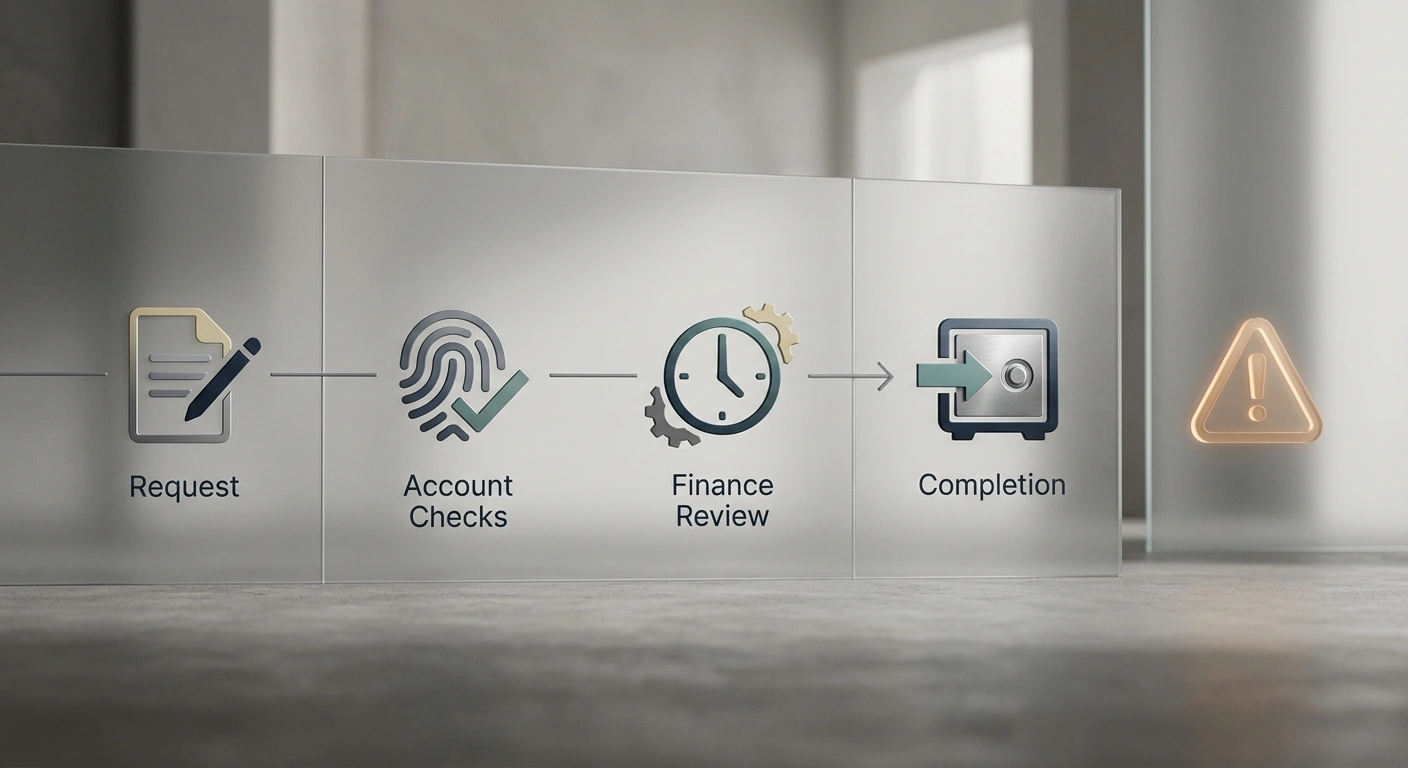
- What Supabet says happens after a withdrawal request
- KYC can sit between the request and finance approval
- Official rules versus user-reported delays
- Why the VIP table matters for large balances
- What to document if a withdrawal is delayed
- Business days are not the same as calendar days
- Common withdrawal interpretation mistakes
- A practical withdrawal sequence
- What to keep in mind before a Supabet cashout
Current AUD withdrawal limits
The AUD limits below come from Supabet terms current on 10 September 2026. Because limits are dynamic and tied to VIP level, they should be confirmed against the latest terms before relying on them. They should not be treated as permanent account entitlements.
| VIP level | Daily limit | Monthly limit | Decision implication |
|---|---|---|---|
| Level 1 | A$800 | A$10,500 | The lowest tier can make large balances take multiple withdrawal cycles even if individual requests are processed normally. |
| Level 2 | A$800 | A$16,000 | The daily cap is unchanged from Level 1, while the monthly ceiling is higher. |
| Level 3 | A$1,200 | A$20,000 | Both daily and monthly ceilings increase. |
| Level 4 | A$1,600 | A$24,000 | Higher daily capacity can reduce the number of days required to request a large balance. |
| Level 5 | A$2,500 | A$35,000 | The highest published AUD tier has the largest daily and monthly ceilings. |
The table is not a payout schedule. A daily limit defines how much can be withdrawn under the stated account tier, while a processing window describes how a submitted request is reviewed. A user can therefore be within a daily or monthly limit and still have a request pending because account checks, finance review or downstream payment processing are separate stages.
For deposit categories and the distinction between cards, e-wallets, alternative methods and crypto, use the Supabet payment methods guide. The focus here is moving funds out of the account.
What Supabet says happens after a withdrawal request
The operator’s terms state that its financial department works through withdrawal requests within three business days when the applicable conditions and checks have been completed. Current independent reviews also reproduce a three-business-day finance-review period. That is the strongest verified processing statement in the available sources.
The wording matters. “Within three business days” refers to the operator’s review or processing stage. It is not the same as promising that cleared funds will appear at the destination within three business days. A bank, e-wallet, card network or blockchain transfer can add another stage after the casino marks a request as processed. No universal end-to-end arrival time is stated because one figure cannot cover every method and account.
The terms also impose a minimum 1x rollover on deposited funds before withdrawal. In practical language, a newly deposited amount cannot simply be moved through the account and withdrawn untouched under the ordinary terms. Bonus wagering is a separate issue with its own conditions, so readers should not confuse the general 1x deposit rollover rule with the much larger wagering multipliers attached to some promotions.
KYC can sit between the request and finance approval
Supabet can require identity, residence and source-of-funds or payment-method evidence. The current terms list categories including certified identification, proof of residence and evidence showing ownership or transaction history for a payment method. These checks can affect a withdrawal even when the requested amount is inside the published VIP limit.
The important operational point is that limit compliance and verification compliance are different. A request can be below the daily ceiling but still pause if the account is asked for documents. Conversely, completing KYC does not remove the daily or monthly withdrawal caps. The two controls apply independently.
The current terms also give customers 30 days to provide requested KYC information. That response window should not be confused with the withdrawal finance-review window: one governs supplying verification material, while the other describes processing after applicable conditions and checks are complete. Full document requirements and the verification workflow belong on the Supabet account and KYC page. For this withdrawal page, the decision value is to recognise KYC as one possible dependency in the cashout path and to keep any requested documentation tied to the actual account notice rather than assuming every user will receive the same request.
Official rules versus user-reported delays
Current complaint records create a second evidence lens. AskGamblers currently publishes multiple Supabet complaints involving delayed withdrawals, including cases that have later been marked resolved and cases that were still active in the platform listings. Casino Guru also has recent Supabet cases where users reported lengthy withdrawal delays before a complaint was ultimately resolved.
These records are useful because they show that withdrawal delay is a recurring reputation topic, but they have to be attributed correctly. A complaint is evidence that a user reported a problem and that a complaint platform recorded a status. It is not independent proof that every underlying allegation is true, and it cannot be turned into a prediction that a new Australian user’s withdrawal will be delayed.
| Evidence type | What it supports | What it does not support |
|---|---|---|
| Supabet terms | Published VIP limits, minimum rollover requirement and stated finance-review workflow. | A guarantee of real-world arrival time for every transaction. |
| AskGamblers complaints | Existence of repeated user reports about delayed payments and visible complaint resolution statuses. | Proof that every delay allegation is accurate or that all users will experience the same issue. |
| Casino Guru complaints | Additional examples of reported withdrawal delays, including cases later recorded as resolved. | A statistical payout rate for Supabet or a legal finding against the operator. |
This separation is more informative than labelling the casino simply “fast” or “slow”. The operator publishes one process, while complaint platforms show that some users report outcomes outside that stated window. Both facts can be true at the same time without one proving the other false for every transaction.
Why the VIP table matters for large balances
A daily cap and a monthly cap create two different constraints. Suppose a Level 1 AUD account has a balance well above A$800. Even if every request is accepted, the daily ceiling limits how much can be requested or paid within the stated account tier. If the total balance is large enough, the A$10,500 monthly ceiling can become the tighter restriction over a longer period.
Level 2 illustrates why reading only the daily number is incomplete. The published daily limit remains A$800, but the monthly limit rises to A$16,000. Level 3 and above raise both figures. The structure therefore changes not only the size of an individual day’s withdrawal capacity but also the pace at which a large balance can move across a month.
These limits should be treated as rules to plan around, not as incentives to chase VIP status. Moving to a higher level can change withdrawal ceilings, but the page does not recommend additional gambling activity to obtain a higher tier. The relevant decision is whether the current account level creates a practical bottleneck for the balance already held.
What to document if a withdrawal is delayed
If a request passes the stated processing window, clear records make support conversations easier to follow and make any later complaint easier to understand. This is a documentation checklist, not legal advice and not a promise that an escalation will produce a particular outcome.
- Withdrawal request ID: save the transaction or request identifier exactly as shown in the account.
- Amount and currency: record the requested amount and whether the account is using AUD or another currency.
- Request timestamp: note the date and time the withdrawal was submitted and whether business-day timing is relevant.
- Account level: capture the displayed VIP level if it affects the applicable daily or monthly limit.
- Status history: save screenshots when the request changes from pending to approved, cancelled or processed.
- KYC requests: keep the date of each document request and the date documents were supplied, without publishing sensitive identity documents.
- Support correspondence: retain chat transcripts and emails, especially any case or ticket number.
- Payment destination: note the selected wallet, bank or other withdrawal route and any confirmation that the operator says the payment was sent.
A complaint platform can use this chronology to understand the dispute, but readers should review the platform’s own rules before submitting material. Broader reputation patterns and complaint-channel analysis are covered on the Supabet complaints page.
Business days are not the same as calendar days
The operator’s processing statement is expressed in business days. That distinction matters when a request is submitted near a weekend or public holiday. Counting three calendar days from a Friday request can produce a different expectation from counting three business days after the request enters the finance workflow.
For record keeping, note both the submission timestamp and the business-day sequence rather than relying on a vague memory of how many days have passed. This does not change Supabet’s obligation under its own terms, and it does not explain every reported delay. It simply prevents a timing dispute from being made harder to assess because calendar days and business days were treated as interchangeable.
Common withdrawal interpretation mistakes
Treating the three-business-day statement as an arrival guarantee
The verified wording describes the finance department’s processing stage after conditions and checks are satisfied. It should not be rewritten as “all withdrawals arrive in three days”. That stronger claim is not supported.
Assuming KYC replaces withdrawal limits
Verification and withdrawal caps solve different problems. KYC can be a prerequisite or review dependency, while the VIP table still governs the published daily and monthly ceilings. Completing one does not cancel the other.
Assuming a complaint proves systematic non-payment
Complaint platforms document user reports. Some current Supabet cases are recorded as resolved, while others have appeared as active in recent platform listings. That mixed record supports caution and documentation, not a blanket conclusion about every payment.
Using another currency’s limit as the AUD limit
Supabet publishes different currency tables. A EUR Level 1 figure should not be converted informally into an Australian value. The AUD limits above come from the AUD-specific terms.
A practical withdrawal sequence
- Check the current account VIP level and compare the requested amount with the published daily and monthly AUD limits.
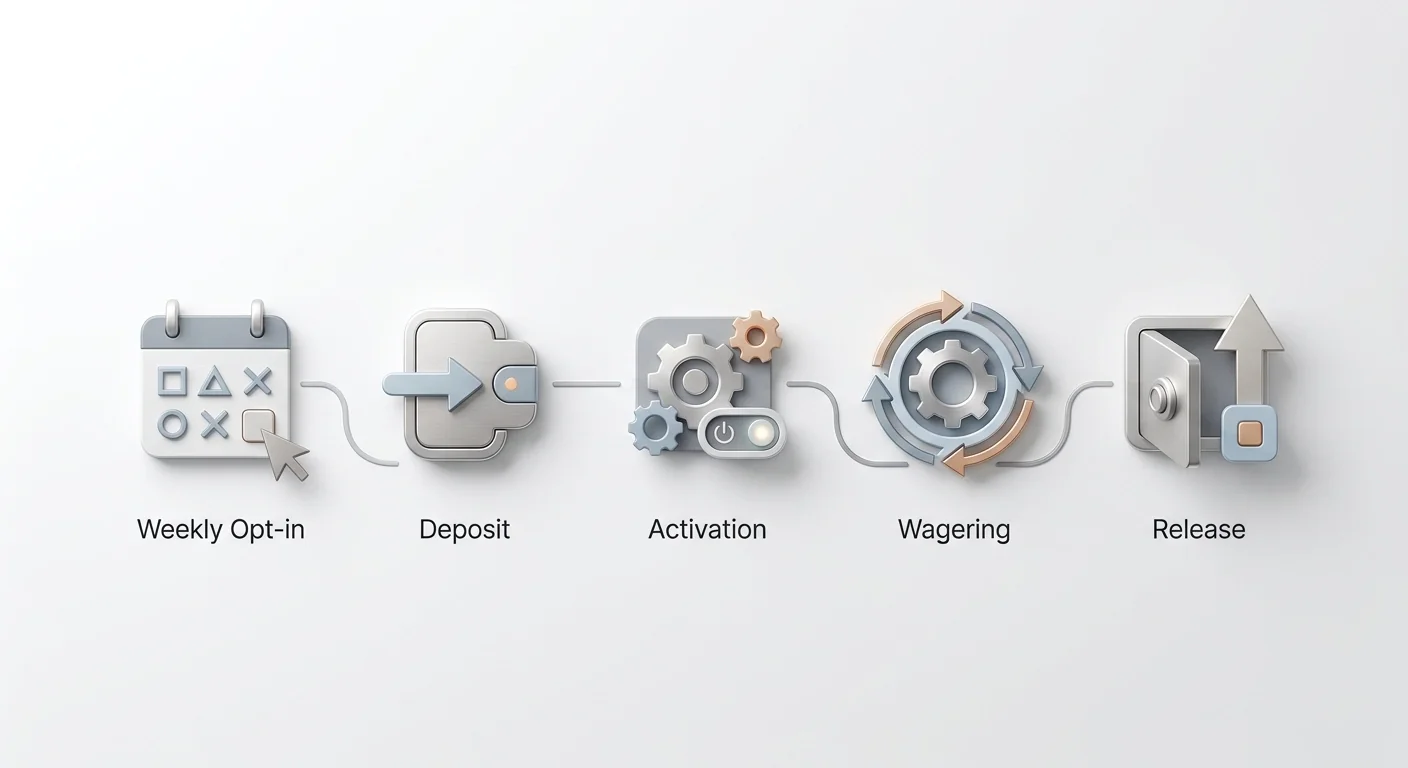
- Confirm that the deposit has met the ordinary minimum rollover condition and that no separate active bonus condition still applies.
- Check whether the account is requesting identity, residence or payment-method evidence before assuming the request is ready for finance review.
- Submit the withdrawal and record the timestamp and transaction ID.
- Separate the operator’s three-business-day review statement from any additional time taken by the destination payment method.
- If the request remains delayed, preserve the chronology before contacting support or using a third-party complaint channel.
This sequence does not guarantee a payout time. Its purpose is to isolate which stage is responsible for the delay: account limit, rollover condition, KYC, finance review or downstream transfer.
What to keep in mind before a Supabet cashout
Withdrawal conditions are a meaningful trust factor because they determine how quickly a balance can leave the account and how much friction can appear between a request and completion. Supabet publishes a clear AUD VIP limit structure and a three-business-day finance-review statement, which gives users concrete rules to compare with their account history.
At the same time, current complaint platforms contain repeated delay reports. That does not erase the official terms, but it is relevant evidence when evaluating operational consistency. The broader Supabet trust and safety page combines this with licensing and regulatory evidence; the withdrawal details here concern cashout mechanics.
For the wider casino picture, return to the Supabet Australia review. Before a cashout, understand the AUD tier that applies, satisfy account and rollover conditions, treat three business days as an operator-stated processing target rather than a guaranteed arrival time, and keep complaint reports clearly attributed to the users and platforms that published them.
Published by the Supabet Casino team.